hop on the good foot

This blog is definitive. Reality is frequently inaccurate.


70 Comments

Playa El Zonte – A warning to all travellers!

Playa El Zonte

Playa El Zonte

“I’m pretty sure all we need is a couple of days there, you know, just to say that we have seen the legendary coast of El Salvador.  Honestly, I don’t think it can be that great, I mean, we don’t even surf right?  That is roughly what I said to Ols when we decided to head for Playa El Zonte on the western shores of El Salvador.

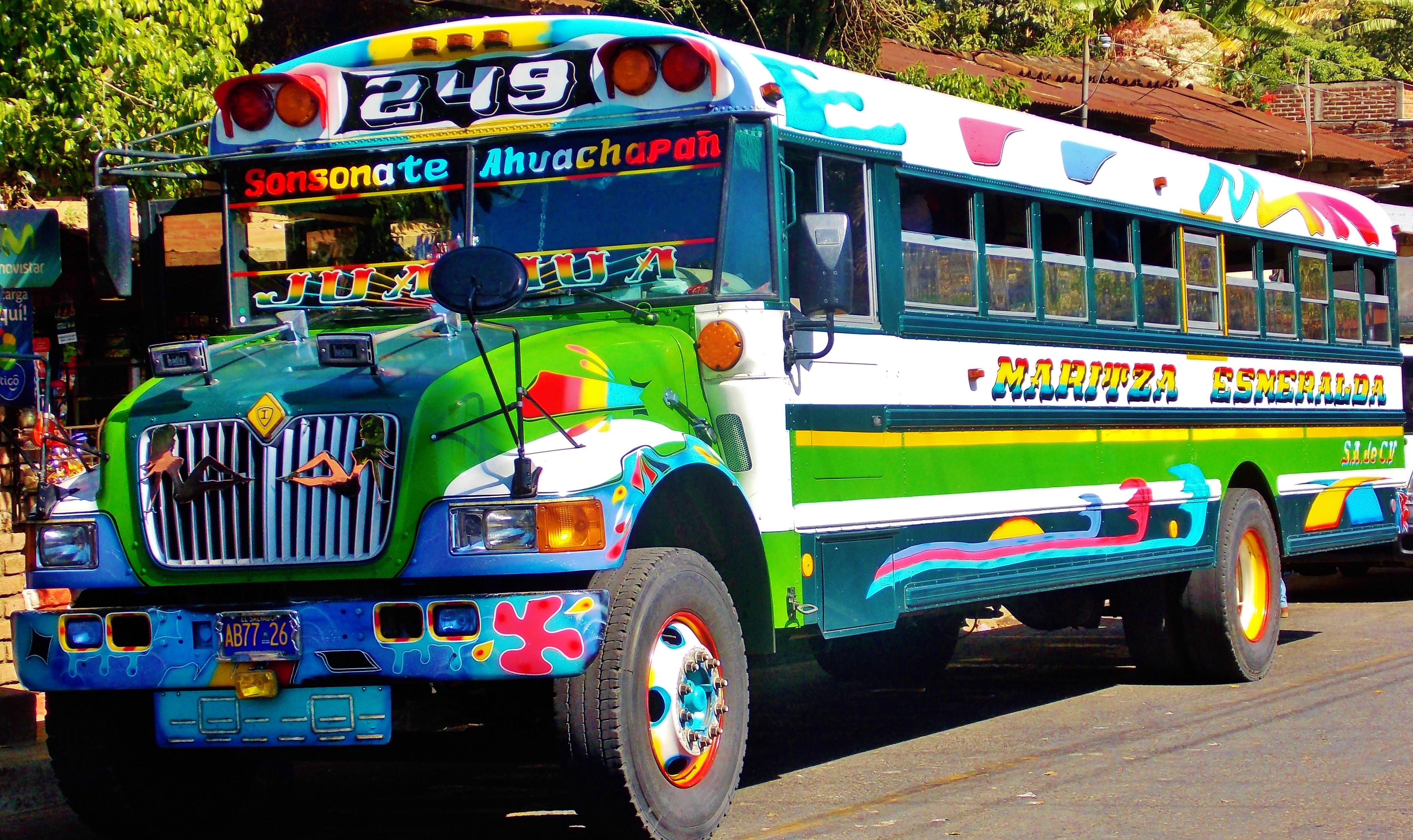
We left Juayua early and took part in a bus epic through the capital city of San Salvador, not surprisingly, the journey was long and there were four buses. I’m not going to talk about it.   For anyone who wants to bus from Juayua to the coast, it can be done very easily by taking the #249 to Sonsonate and another bus (I forget the number, but your hostal can tell you) direct to Zonte, all the way along to La Libertad. Note, the bus only goes once a day at around 3pm from Sonsonate.  We chose the hard way as we had a tedious errand to run.

Just want some pretty pictures?  Click here! 

Finally we got dropped off to at the side of a random road, and walked down a dirt track without signs in the faith that it was in the direction of the sea.  Soon, we were on one of the most impressive stretches of beach I have ever seen.  To our left lay a lagoon framed with palm trees and rickety looking shacks and to our right an expansive windswept beach that was pretty much empty.  We had obviously come the wrong way, but we were on a beach, so we kept walking, the wrong way, with packs, along the sea front until we find out we have to cross the lagoon to get to our desired lodgings.  We wade through and find ‘the town’ and the hostal of Esencia Nativa, along with a couple of well-earned and frosty cold Pilsners.

Arriving at the beach...boots n' all

Arriving at the beach…boots n’ all

Lagoon out let that divides Zonte beach

Lagoon outlet that divides Zonte beach

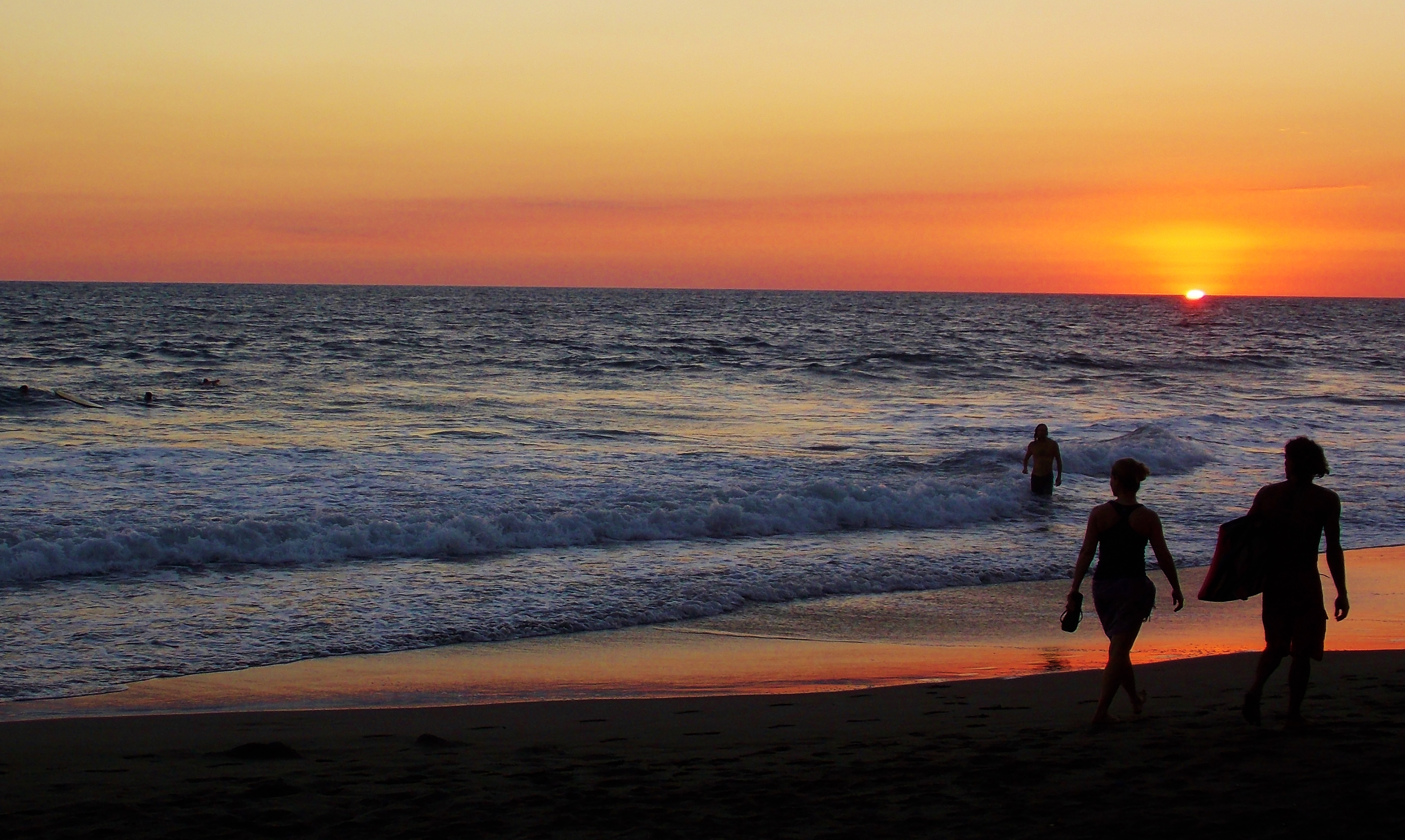
“I know a great place for sunset, follow me!” An invitation from another guest that we decline by telling her we want to check out ‘the town’.  She knowingly smirked and tottered off along down the beach.  After 2 minutes, we had seen the town of El Zonte, which consists of three small comedors, two shops well stocked in crisps, smokes and water, and a couple of hostals.  We decided to find the sunset straight away at Olas Permanentes along the front.  Wow…
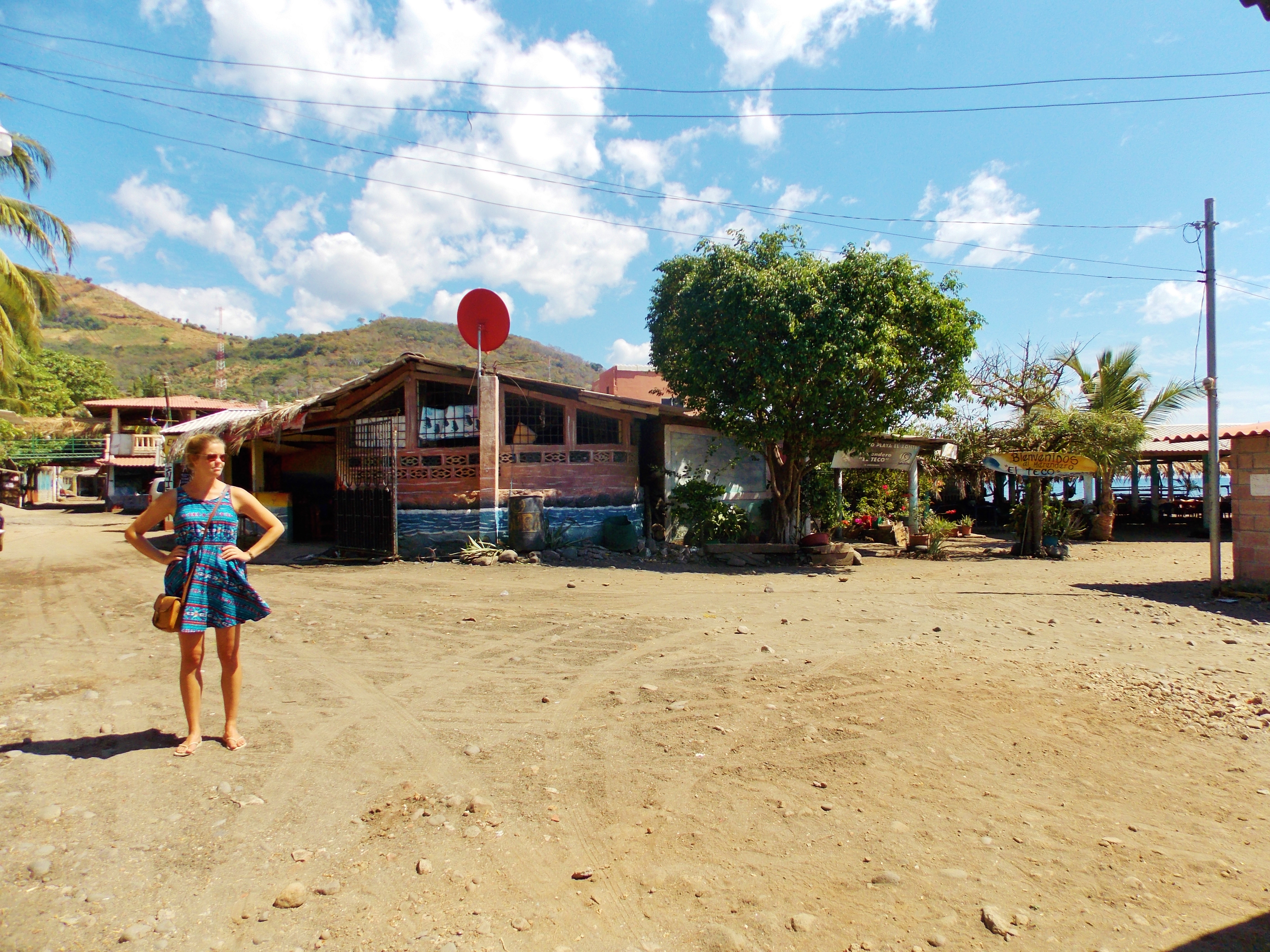
Checking out the town

Checking out the town

Like you would try and cycle through there!

Black (greyish) sand sunset

Black (greyish) sand sunset

Zonte Sunset

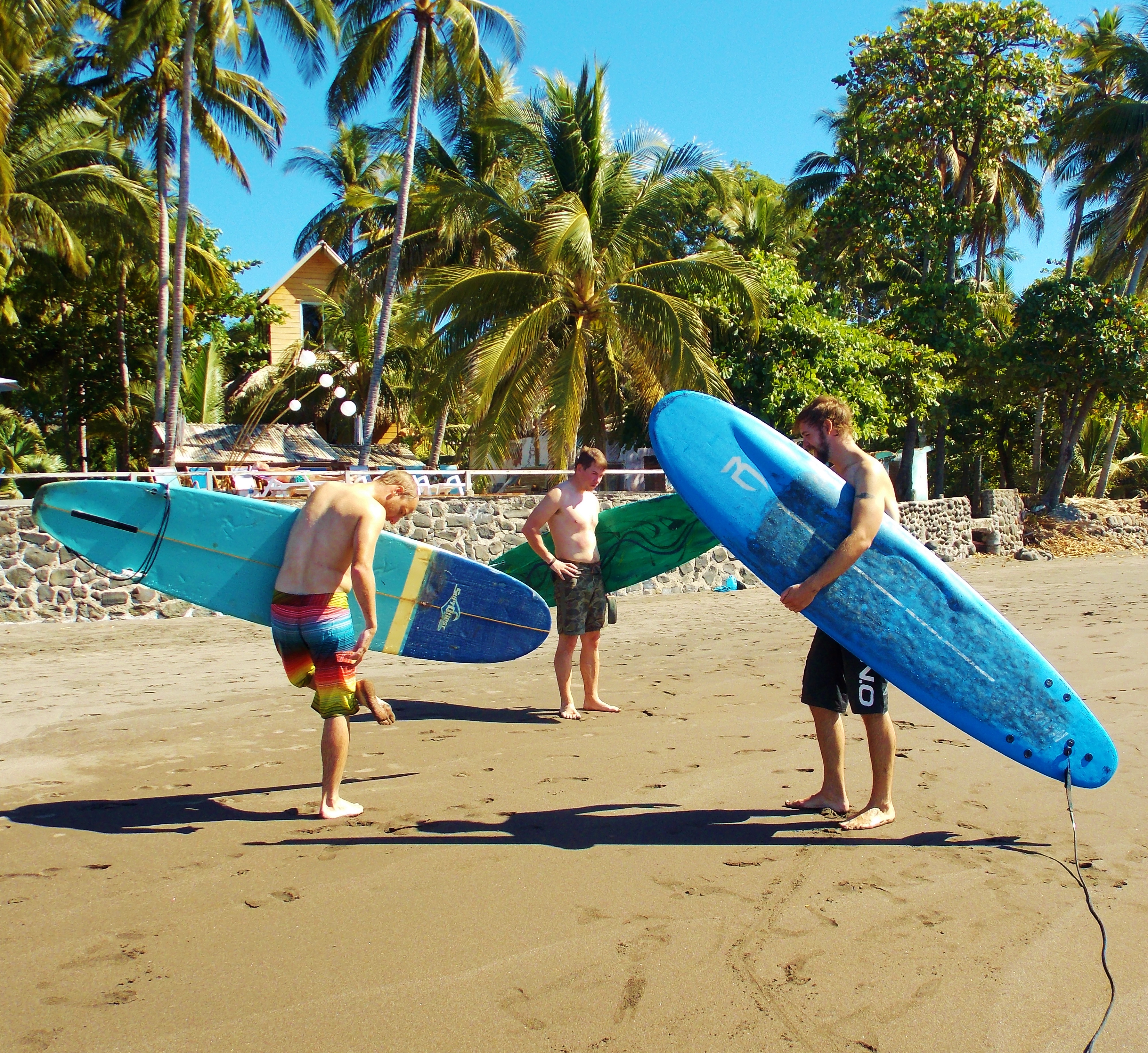
We returned in the dark, to find Rob and Will who we met briefly in Tacuba, who had also just arrived.  After a few beers and some damn fine pizza at the hostal we made a plan to go and surf in the morning.  They had surfed more than I had.  I have never surfed.  They had a couple of experiences between them, and some confidence everything will be ok.  Teco, the local longboard legend rented us some boards the next morning and we headed into the surf.  Let’s just say I have a new found respect for surfers. I was awful and came away with many cuts and scrapes from stupidly spending most of my time in the rocky area.  Board rash is an evil thing!   Ollie gave it a good go in the evening, but had a similar experience to me.  Good fun, and we did the same the day after, but we conceded our surfing careers would end there for a while. Like looking at volcanos rather than summiting them, watching surfers is much more entertaining than giving it a go yourself.

Teco's place

ToNar

Checking out the damage

Checking out the damage

A nervous giggle

A nervous giggle

Ollie showing us how its not done

Ollie showing us how its not done

Success...ish

Two days effortlessly turned into five and then melted away to ten.  The guys are good people (even though Rob is from Sidcup) and we spent plenty of time collectively doing not much apart from ping-pong, cards, frisbee and drinking.  Serious surfers Josh and Michelle joined us when they were not ripping it up out in the surf.  It became an easy routine.  Breakfast at Teco’s for $3 each while we watched the surfers was almost compulsory on a daily basis.  Beers at the sunset bar was a given.  Bottles of Flor de Caña rum were imbibed alarmingly rapidly between us over pizza some nights that resulted in ill-advised acrobatics and questionable dance moves.  Joined by some more fellow Brits, Sarah and Glen, we had some great nights.

This is what rum makes you do

This is what rum makes you do

A walking advert...I know

El Zonte's eastern beach

El Zonte’s eastern beach

Looking out from the cave
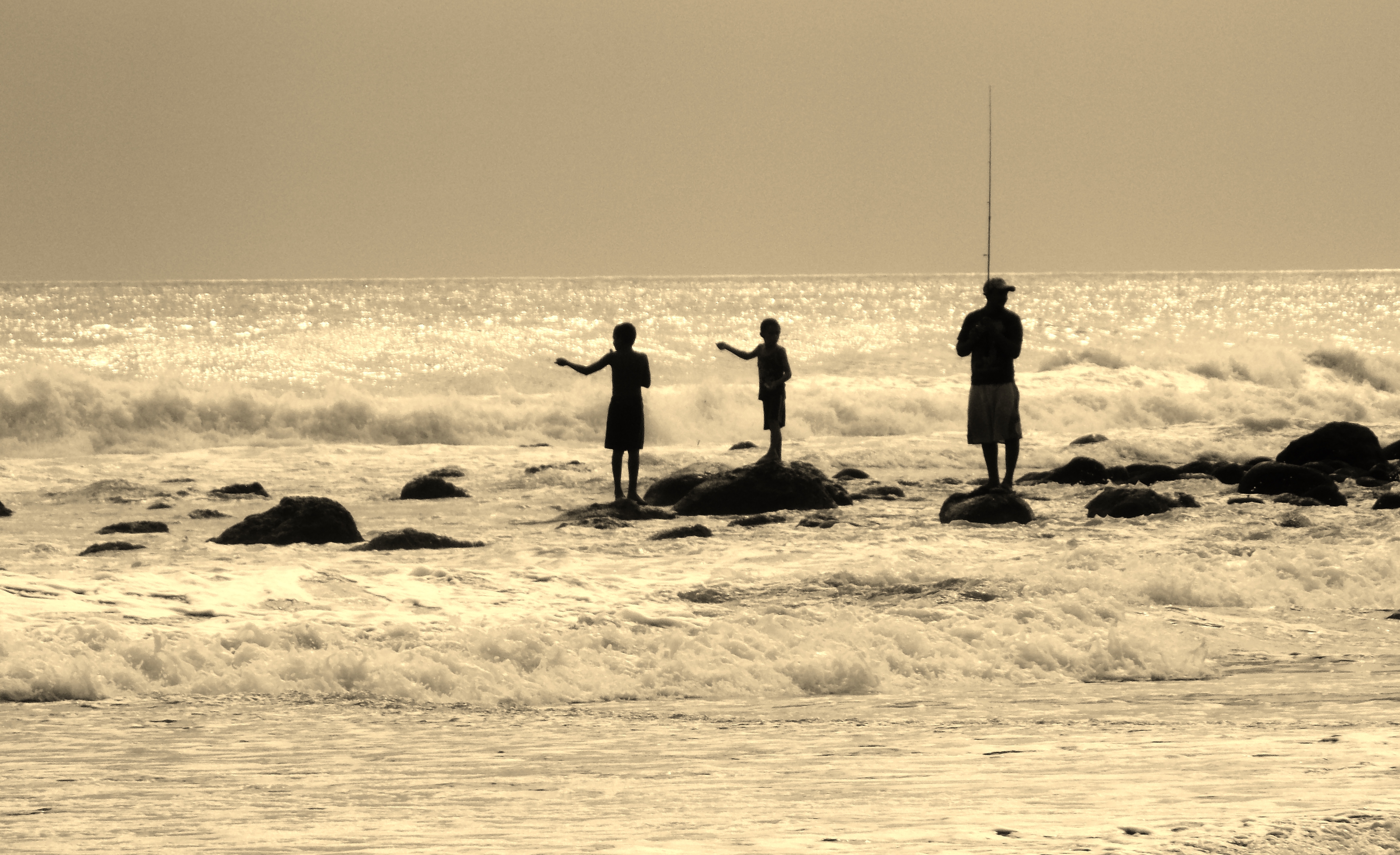
Looking out from the cave

Kids fish with wire attached to wood while dad casts his line out

Kids fish with wire attached to wood while dad casts his line out


Coffee at Teco's watching the point break surfers

Coffee at Teco’s watching the point break surfers

The need for cash took us to the ‘party town’ of El Tunco one day, where many travelers stay a while and learn to surf in the day and drink hard by night.  We had to leave by 6pm (which was unfortunately when the craft beer house opened its doors) as the last bus back along the front ran at that time.  Chicken buses are named so because people pack onto them like battery farm chickens.  There is also a strong possibility that you will be taking your journey along with some actual chickens (twice so far for us).  This bus offered both, and we had to squeeze on at the front, where some were hanging out the door and I nearly in the drivers lap.

Playa El Tunco

Playa El Tunco

The Tunco rock...could be a beers advert really!

The Tunco rock…could be a beer advert really!

On recommendation we headed west to the end of the beach and up a dark pathway then onto the coastal road for five minutes until we came found a great little restaurant run by Aldo and his wife.  There is no name yet, but ‘Cuidemos El Agua’ is painted on the front.  Lobster was on offer at $10 a throw as well as the fishy option of ‘Sopa de Mariscada’ which had so much fishy goodness in it, it was overflowing.  Aldo has only just opened and they serve up some fine cuisine (the same fare as where his wife works at a fancy hotel up the road, but for cut down prices) along with welcoming service.  Not having a name for the place yet, he is debating whether to call it ‘Carisa Café’ after his daughter or ‘Tube Café’ after his love for surfing.  Aldo is soon to be offering accommodation and also runs some tours.  He is top bloke and passionate about his business.  On our second visit and last meal in Zonte he arranged for a cake to be taxied in from La Libertad for the birthday girl at Will’s request.  Support this guy’s business if you go there.  Make the effort.  It’s worth it just for the nighttime walk along the beach back to your lodgings while you dodge crabs and waves under the stars.
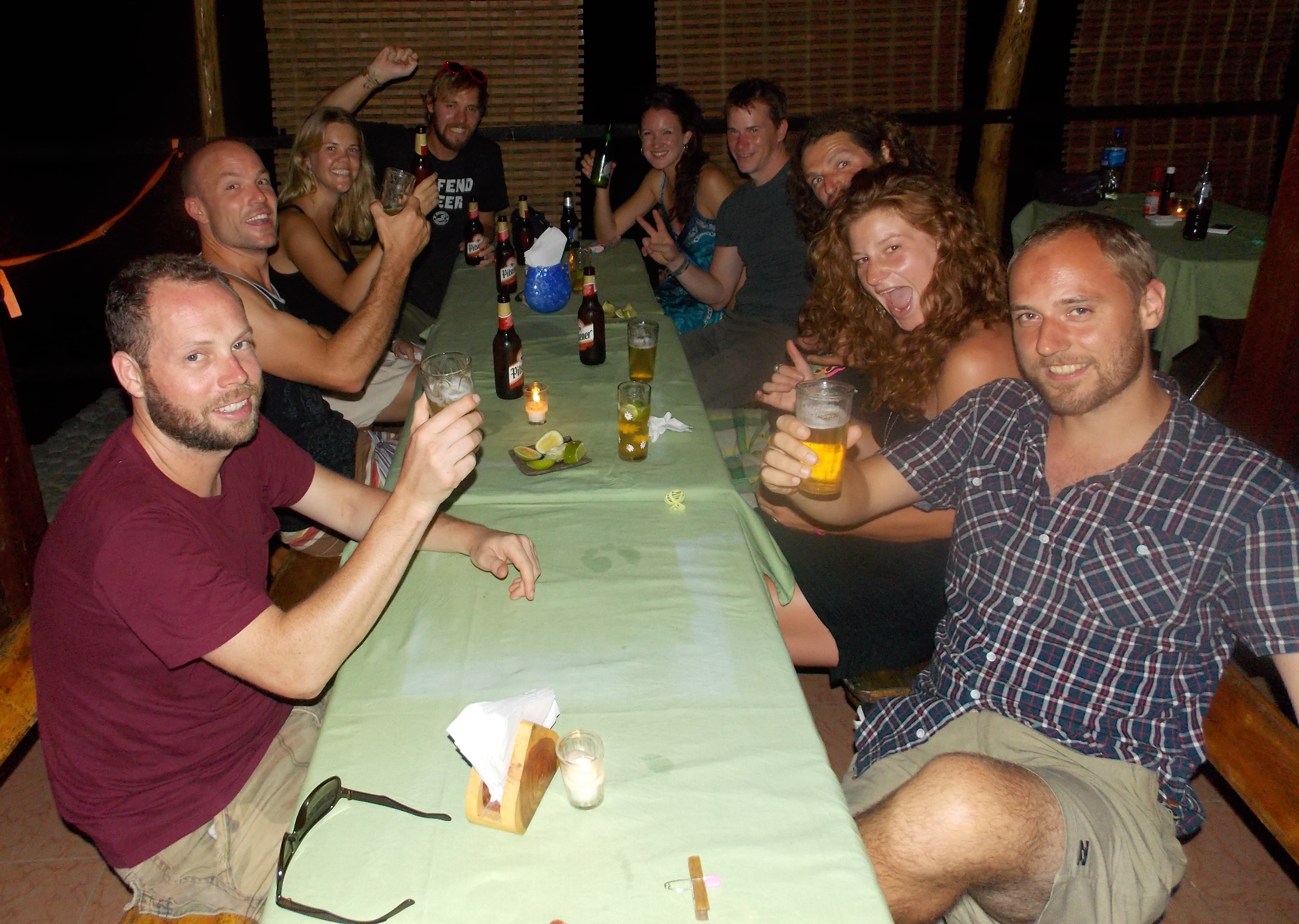
Farewell dinner at Aldos restaurant

We are not ‘beach people’, but we found it hard to leave.  You could spend months along this stretch of coastline and not get a lot else done.  Ollie partook in the surfer geared yoga some days while I got to know some hammocks better.  One day, spotting whales breaching the surface just past the surf was a special moment that I won’t forget soon.

hoponthegootfoot


Surfs up


Rock pools of El Zonte


I've taken to wearing a bandana...don't judge me too harshly

I’ve taken to wearing a bandana…don’t judge me too harshly
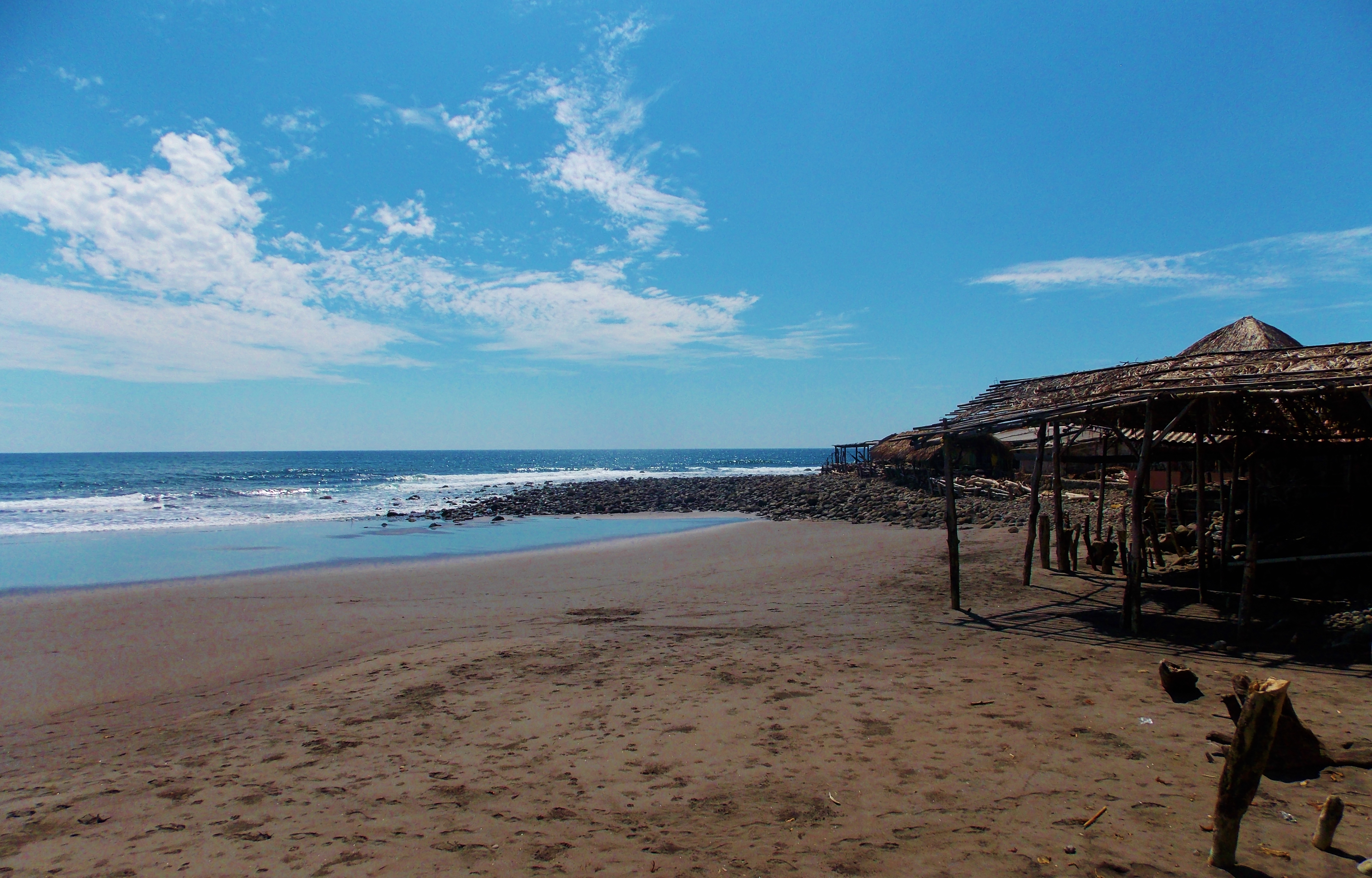
Zonte point break

Zonte point break

So, take heed of this warning.  El Zonte is not conducive to a productive travel experience!  Luckily (or unluckily as we felt) we had a boat booked to Nicaragua, so had to leave….

Playa El Zonte

Playa El Zonte

Thanks for reading.For the full photo gallery, click here

2 Comments

Ruta de las Flores – Waterfalls, coffee and a beast of a food festival in Juayúa

Juayua chicken bus

Juayua chicken bus

It could have been the fried chicken dinner from Pollo Campero.  It could have been the over-consumption of Pilsner.  It may even have been the $1.30 pupusa breakfast on that street corner.  Whatever it was, I was suffering horrendously in the gastric region.  I will leave it at that.  However, we hopped on a bus #210 from Santa Ana bound for Ahuachapán with the intention of changing to bus #264 to take us to Tacuba, where we could explore the El Bosque Imposible national park.  As we left Santa Ana we slowly crawled out of the market, while through the aisle came an endless stream of vendors for 10 minutes straight, selling everything you could ever need from parasite medication, avocadoes, rat poison, gaffa tape, ice cream, socks and not surprisingly, pupusas.  You wouldn’t need to get off the bus to do your weekly shop here!

For the full picture gallery, click here.

We got to Tacuba, a tiny town cobbled street town, sitting 1300m above sea level and found our way to Hostal Mama y Papa, where that have a great mirador looking over the town and the national park, relatively cheap rooms and some aggressive attack ducks.  Unfortunately, I was unwell for two more days, so we decided to move on without doing a hike, but it was a nice place to recuperate in peace.  There really is nothing to do in Tacuba, unless you want to go to the Bosque.

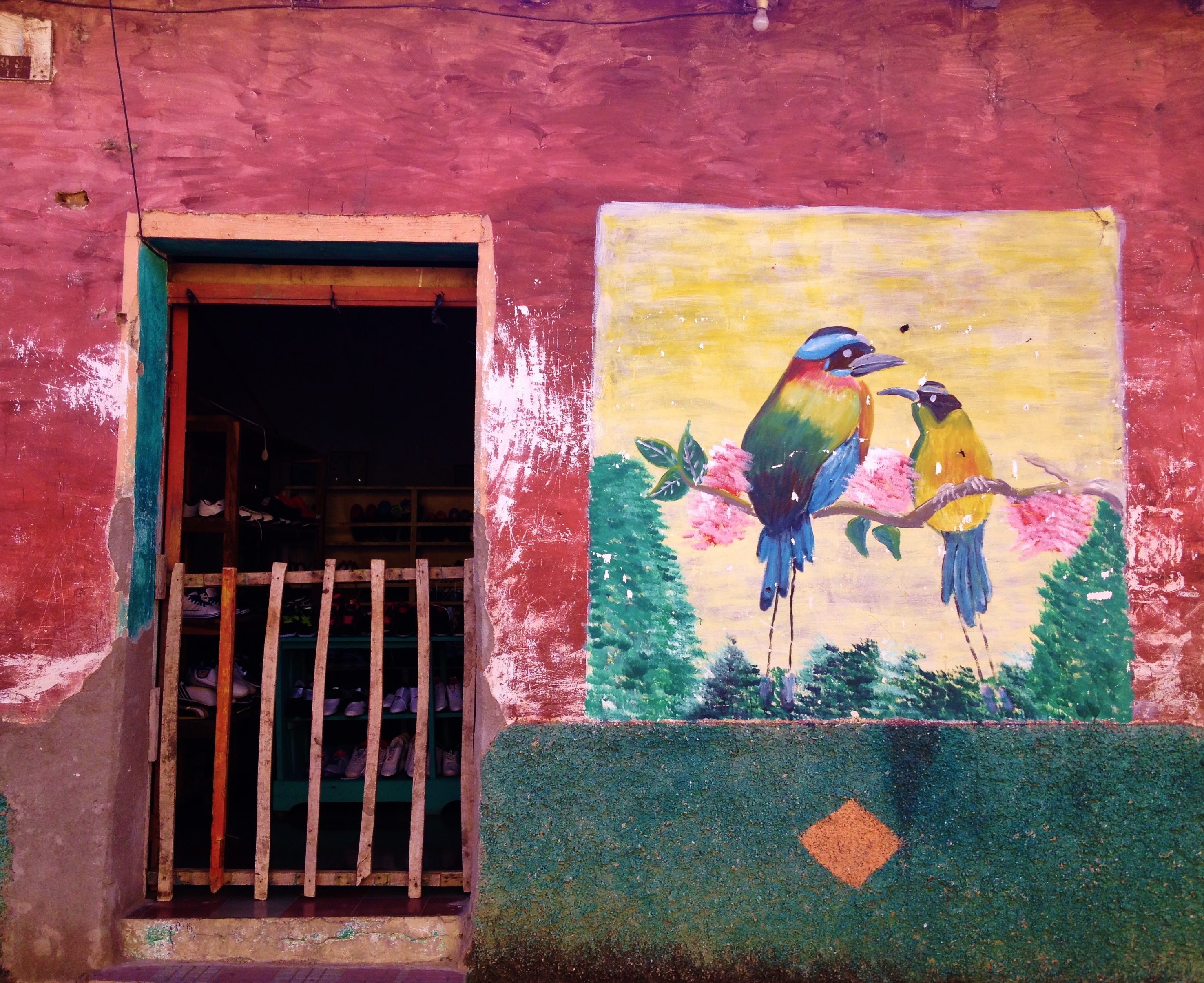
Random Tacuba wall art

Random Tacuba wall art

Streets of Tacuba

Streets of Tacuba

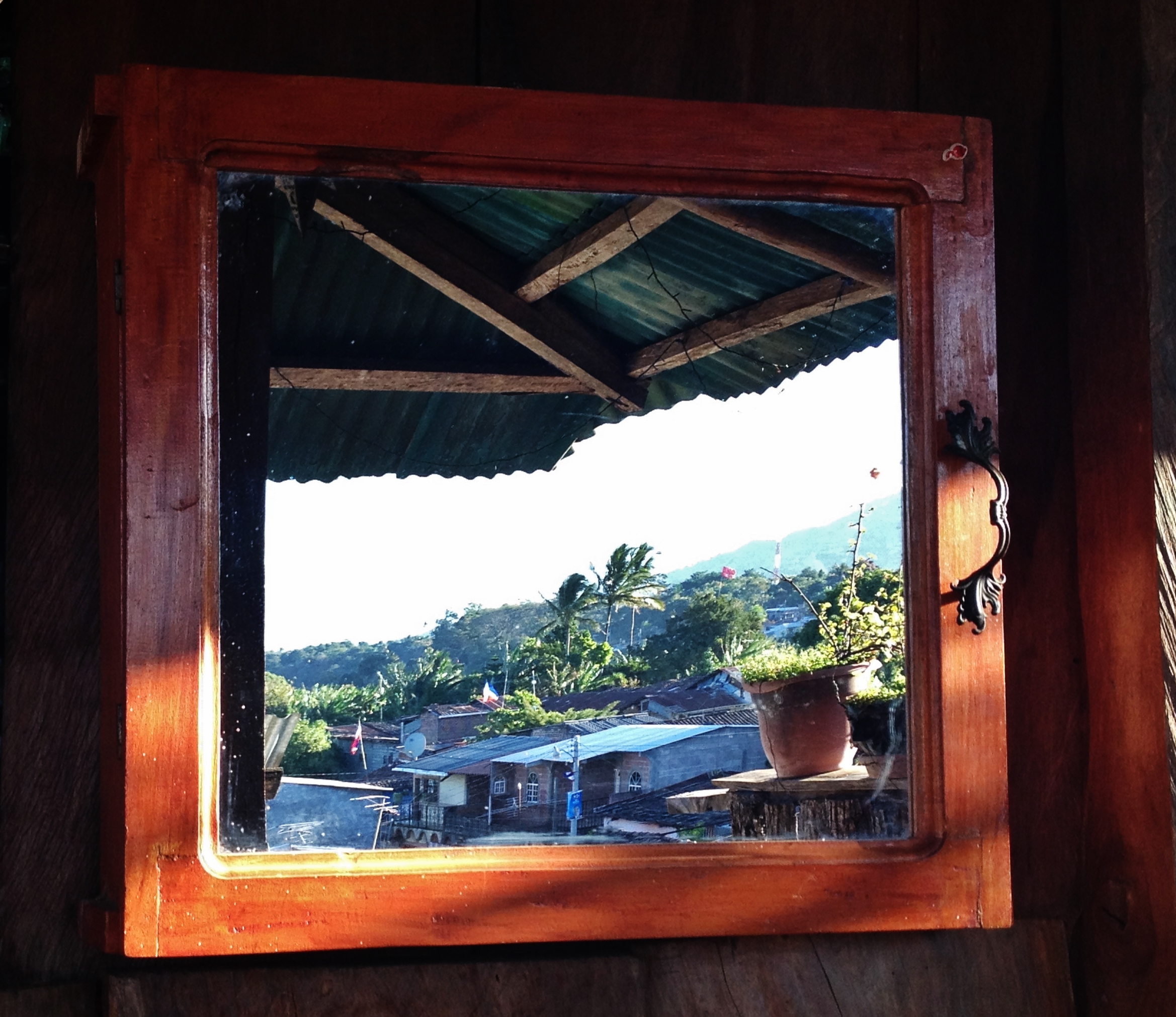
Reflection of the view from the mirador at Mumas and Papas

Reflection of the view from the mirador at Mumas and Papas

Attack duck!

Attack duck!

Packed into a mini chicken bus made for 35 people with approximately 80 other souls we were back to Ahuachapán, where we were soon an a #249 headed down the Ruta de las Flores, which is another of the areas that the country is marketing to tourists.  It’s about a 30km stretch of road lined by wild flowers and framed by some 16 long since extinct volcanoes that now serve as coffee plantations.  The driver ‘tazzed’ past the towns of Ataco and Apaneca bound for our next destination Juayúa, at such a speed I couldn’t tell you if there actually were any wildflowers.  Some locals took pleasure in laughing at Ollie’s facial expressions during the ride, as did I.

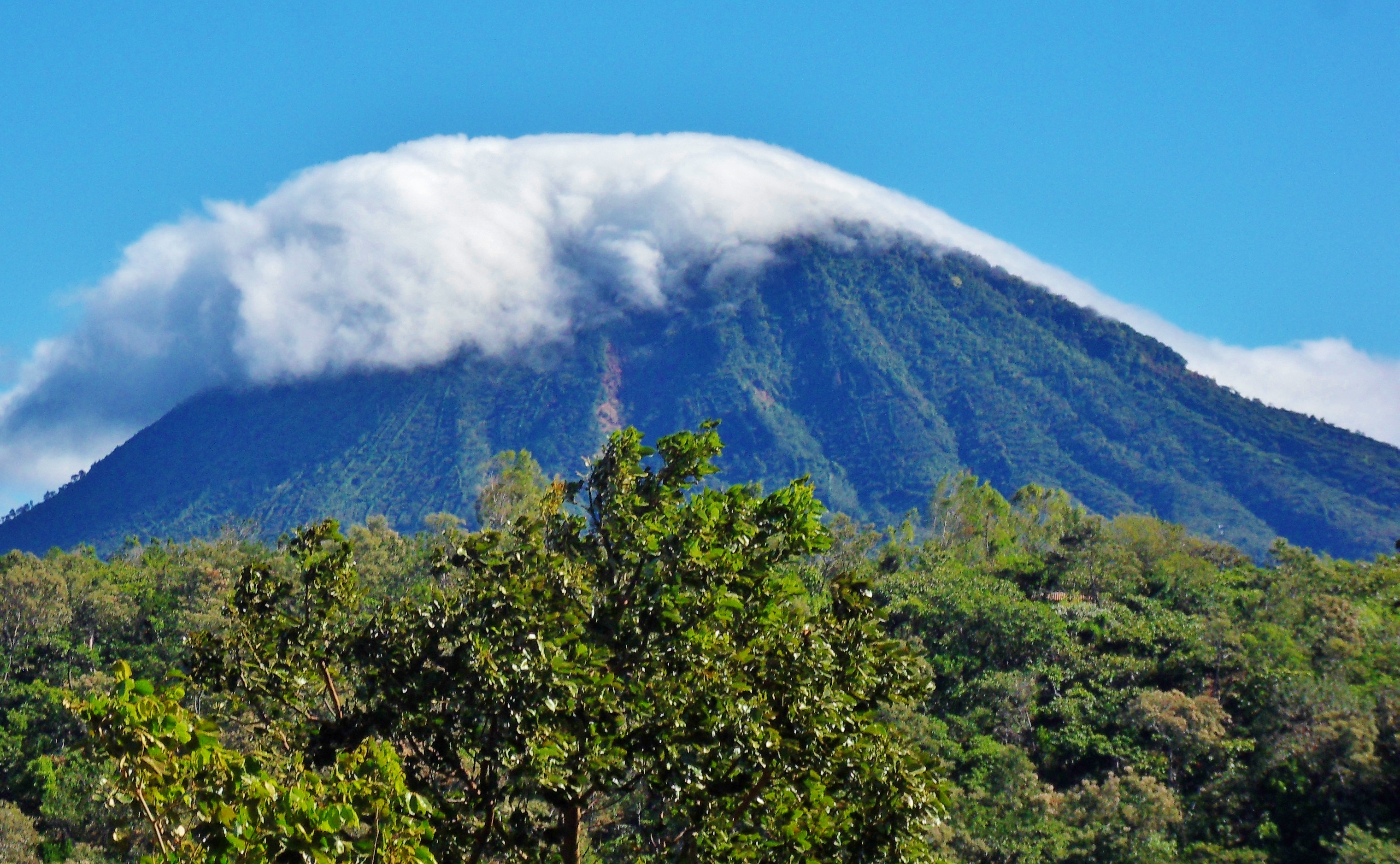
One of the extinct volcanoes along the Ruta de las Flores

One of the extinct volcanoes along the Ruta de las Flores

Juayúa is yet another attractive cobbled street town with a handsome white-washed church, peaceful centre square and colourfully painted buildings.  What sets it apart from the rest is the weekly food festival held on Saturdays and Sundays 11am-5pm.  We wandered around until we came to the little haven of Hotel Anahuac where we checked in for 3 nights and booked a waterfall hike for the next day.

The busy streets of Juayua around the white washed church

The busy streets of Juayua around the white washed church

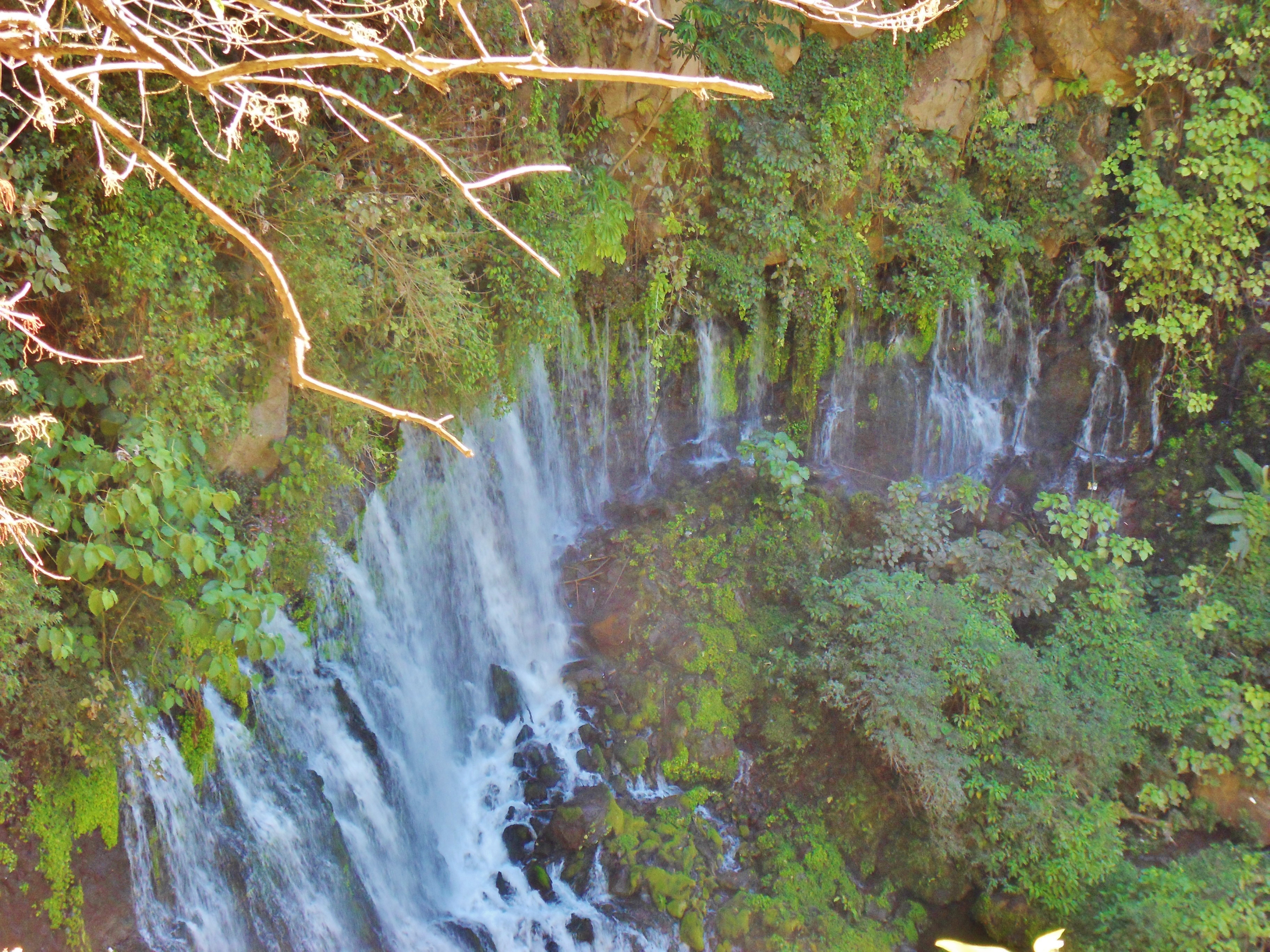
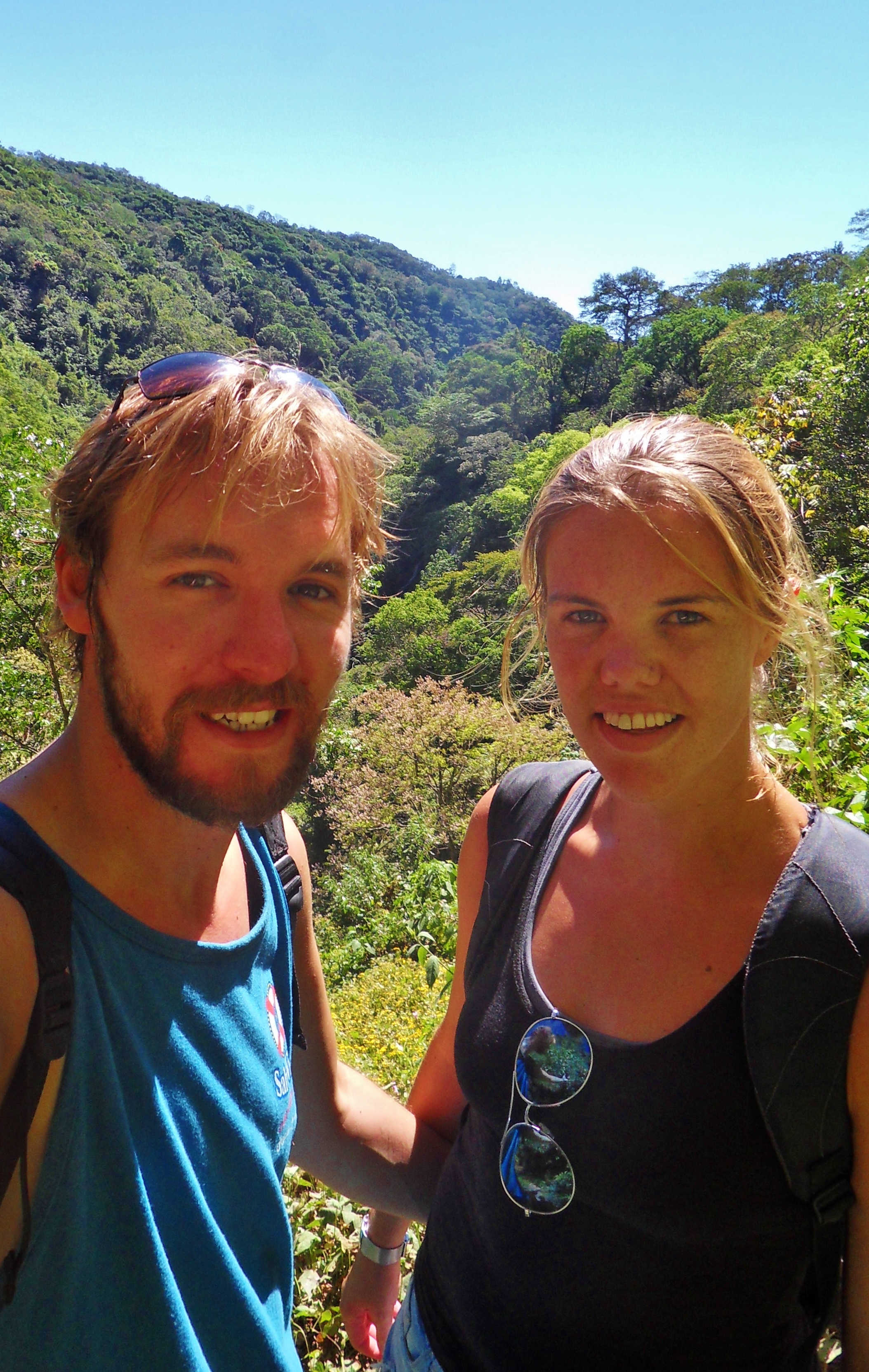
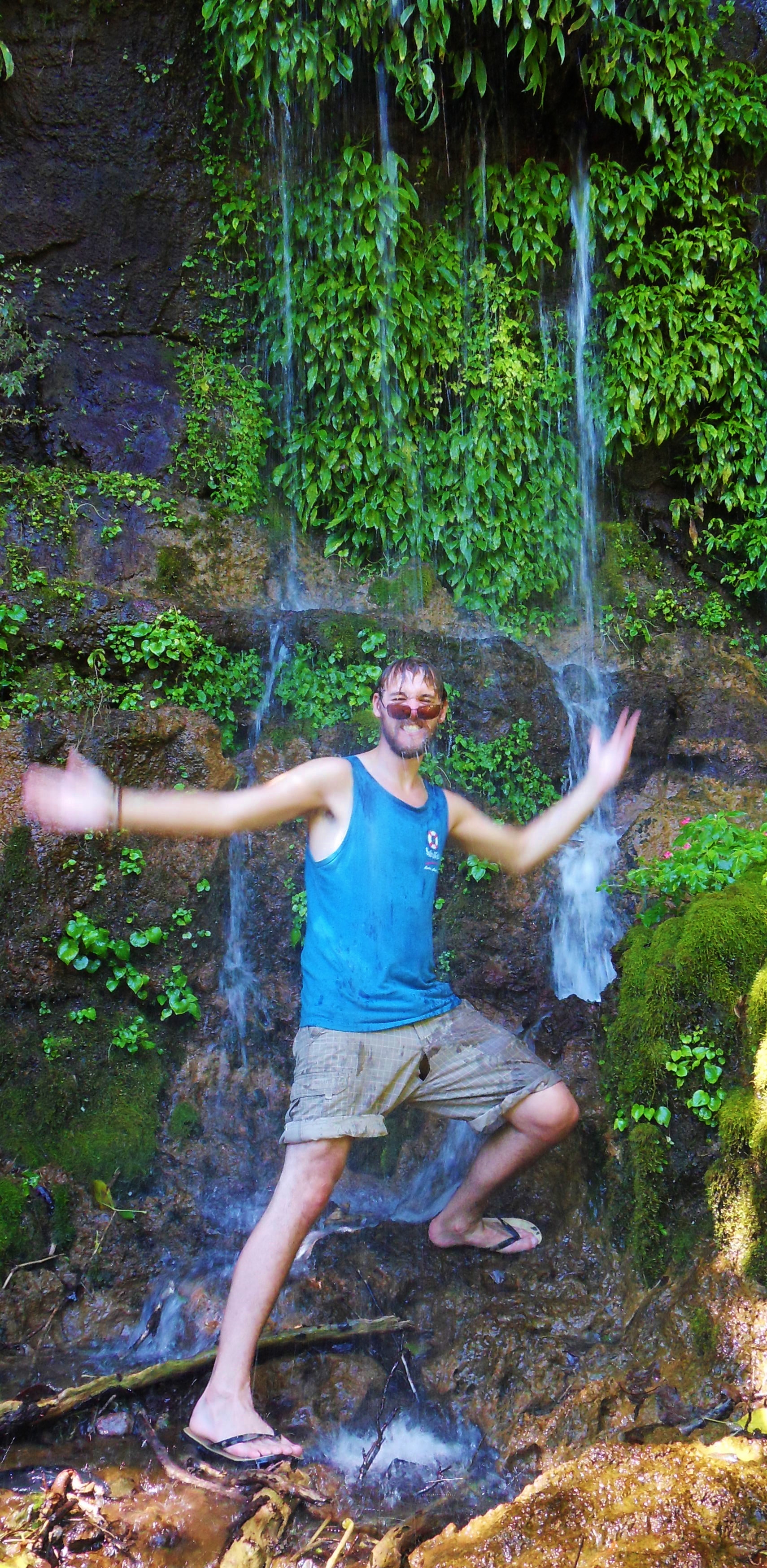
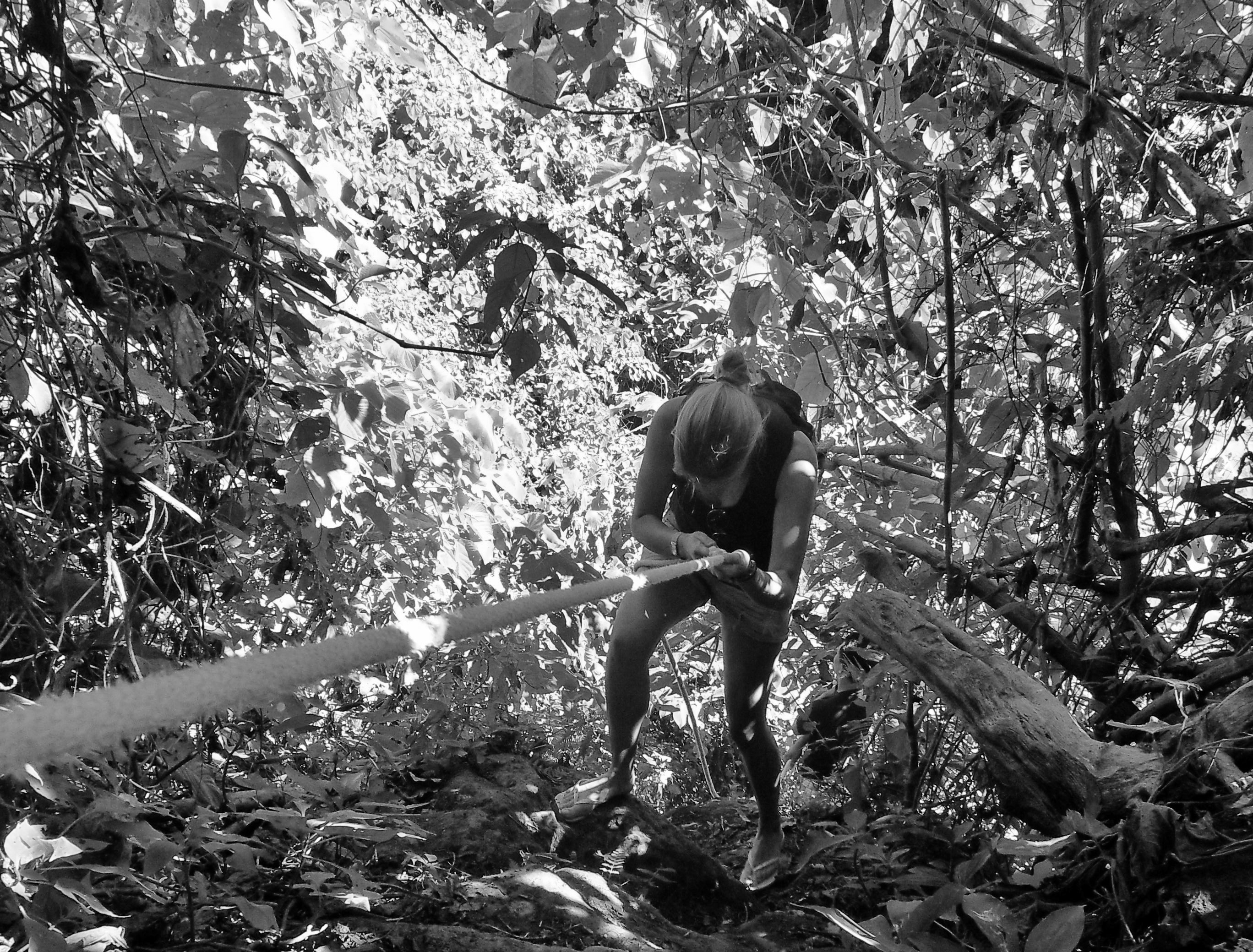
Up at 8am, we follow our local guide called Douglas into the hills with a Canadian couple, and a pack of dogs headed by the guide’s own pooch.  We signed up to hike through the fields and see seven waterfalls along the way.  It was so much more than that.  We approached the edge of what we soon discovered to be a dried up waterfall we could see the first cascade of the day which was streaming out of the rock face in front of us halfway down from underground rivers.  We then walked to another waterfall popular with local tourists where the Canadians took a dip.  I could go on and describe each waterfall in detail.  Let’s just say they were all beautiful and different from each other in remarkable ways.  Douglas disappeared for some time, when he returned we discovered he had tied some ropes so we could rappel down the face of a waterfall into the valley below.  This was unexpected and very challenging in flip-flops, but we all made it down without falling to a watery death.  Here are some pretty pictures of waterfalls now….

Waterfall from underground river appears mid cliff

Waterfall from underground river appears mid cliff

Local lads have a dip in one of the  waterfalls

Local lads have a dip in one of the waterfalls

Hike selfie

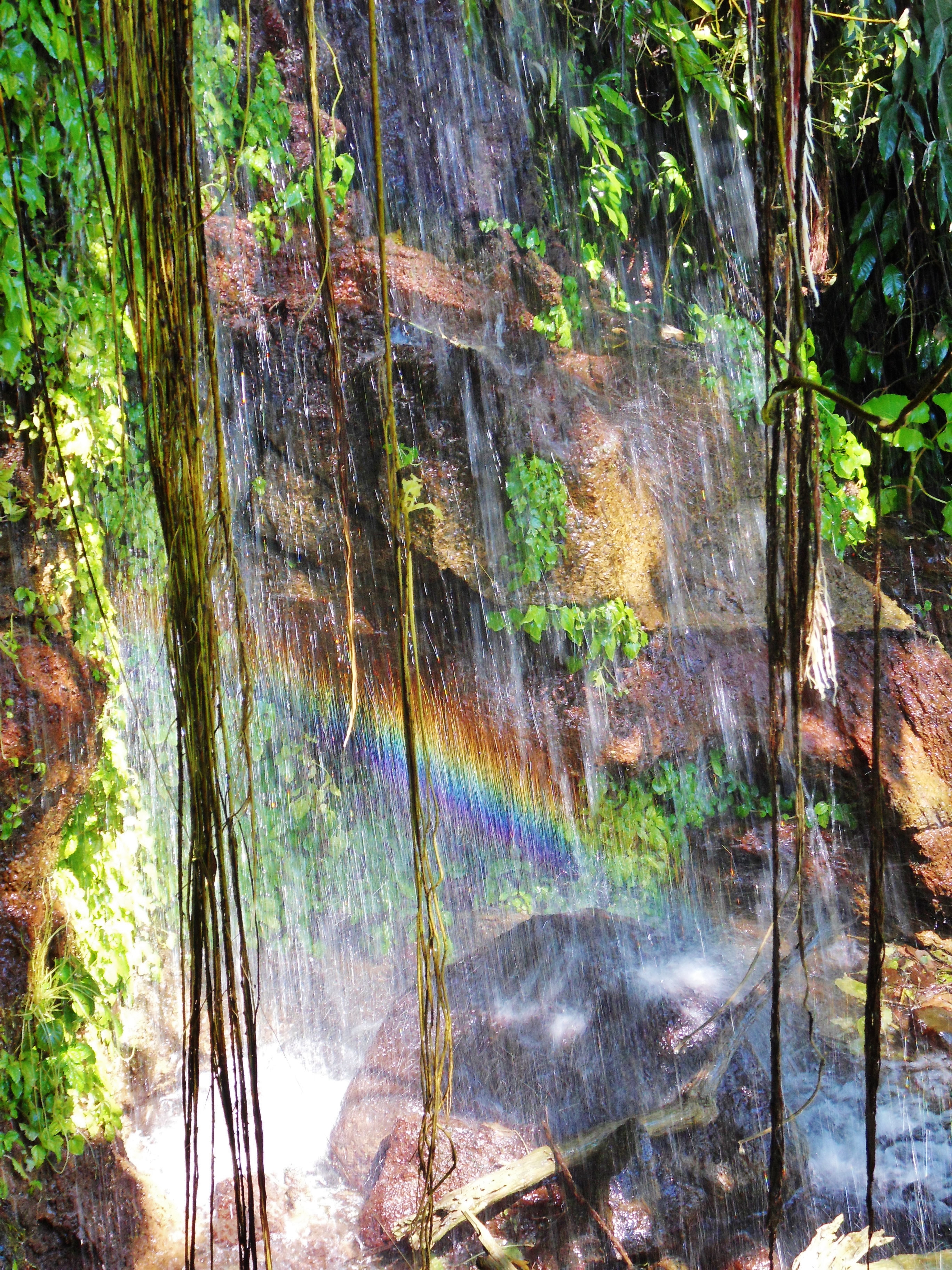
Waterfall rainbow

Waterfall rainbow

Waterfall drench

Rappel number one for Ollie

Rappel nummber 2 - My go!

Lunch break

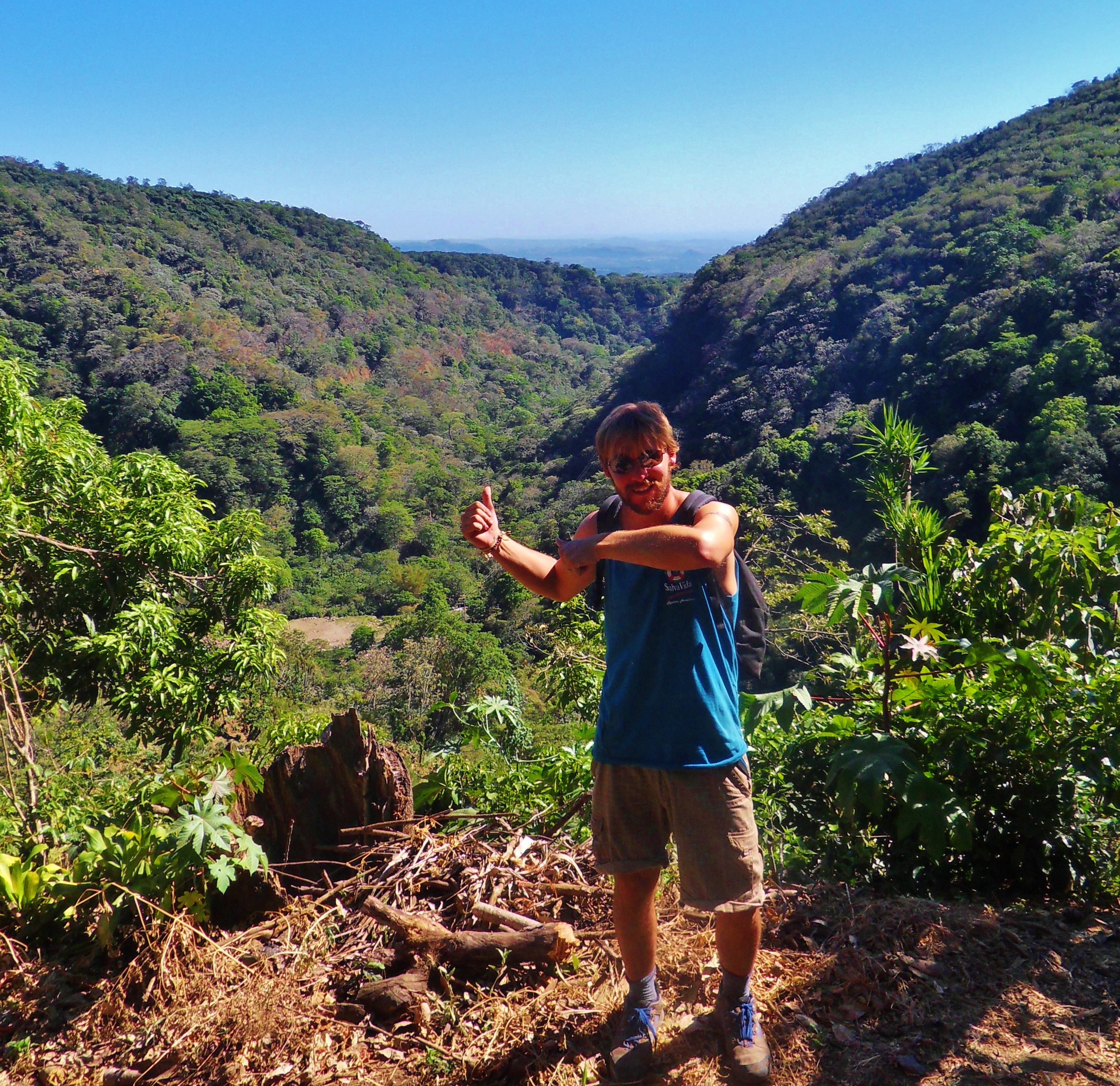
As I have said, the area is a huge producer of coffee.  The conditions of high altitude and volcanic soil are perfect for the industry.  The area is green with coffee trees and an unusual line formation is seen in the lush hills, which are trees planted by the coffee farmers to serve as wind breakers to protect the precious crop.  Hiking through these plantations gave some incredible views of the surrounding country, which seemed to be endlessly green and unspoiled as far as the eye can see.  It was a remarkable hike.

El Salvador...wow

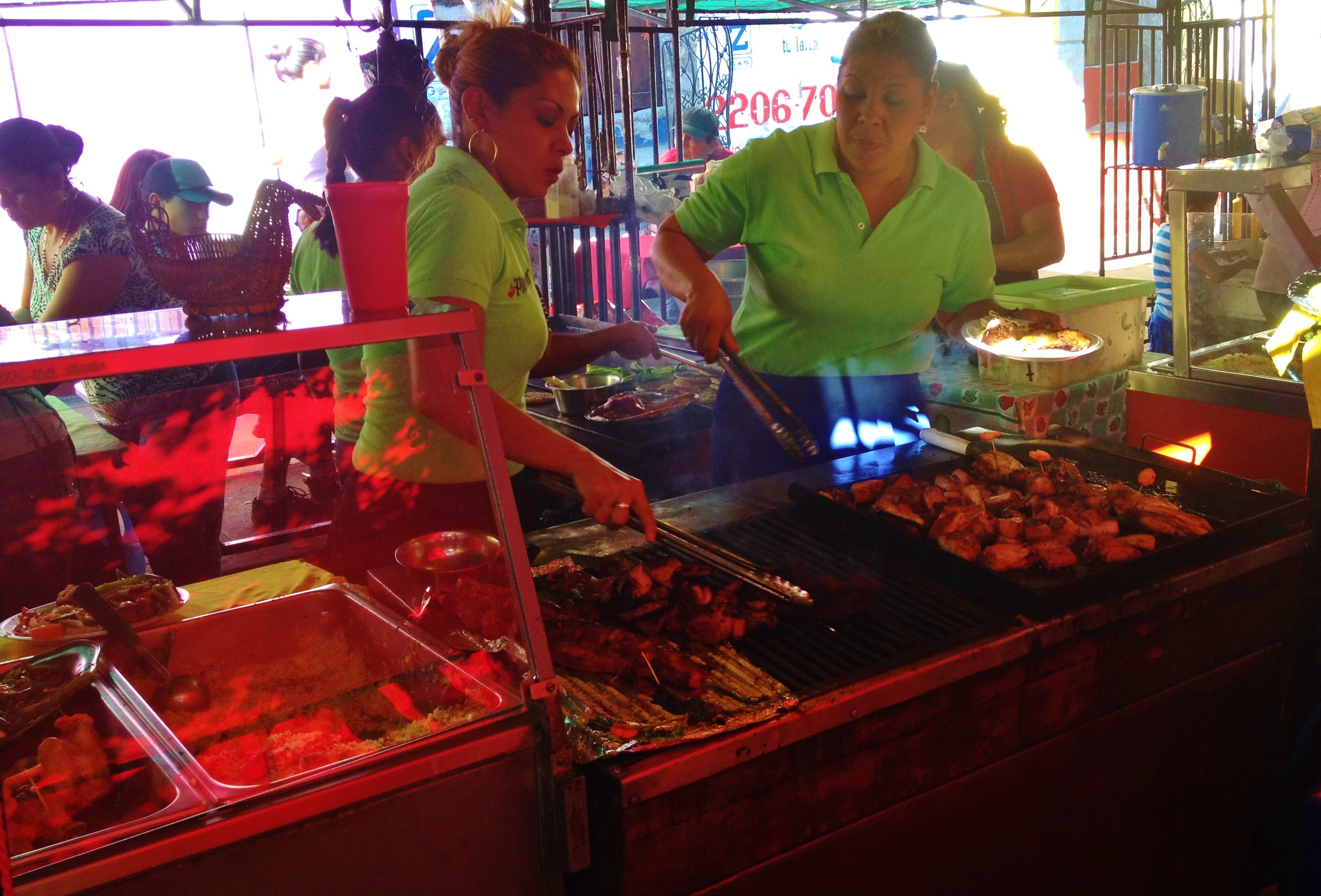
The food festival.  Wow.  We got to the centre square for some serious lunch at 2pm on a Sunday and the place was packed.  Locals and tourists (mainly El Salvadoran) shuffle excitedly past the two streets of food vendors that set up side by side, sniffing the meaty air, tasting tit-bits from touts and looking at what everyone else is eating around them.  Rabbit, Iguana, Frog and even snake are all on offer, but for us hungry traditionalist backpackers we settled on a plate of ribs and a huge chorizo, served with heaps of sides and  a couple of beers for the attractive price of $10 all in.  We then treated ourselves to a couple of crispy fried prawns for dessert.  It was a fine festival, and it happens every week.  Amazing stuff.

Food festival stall - Juayua

Food festival stall – Juayua

Our humble meals!

Our humble meals!

Watching people people watch

Watching people people watch

More food stalls

The center square packs with people who scramble for a place to eat their plates of meat

The center square packs with people who scramble for a place to eat their plates of meat

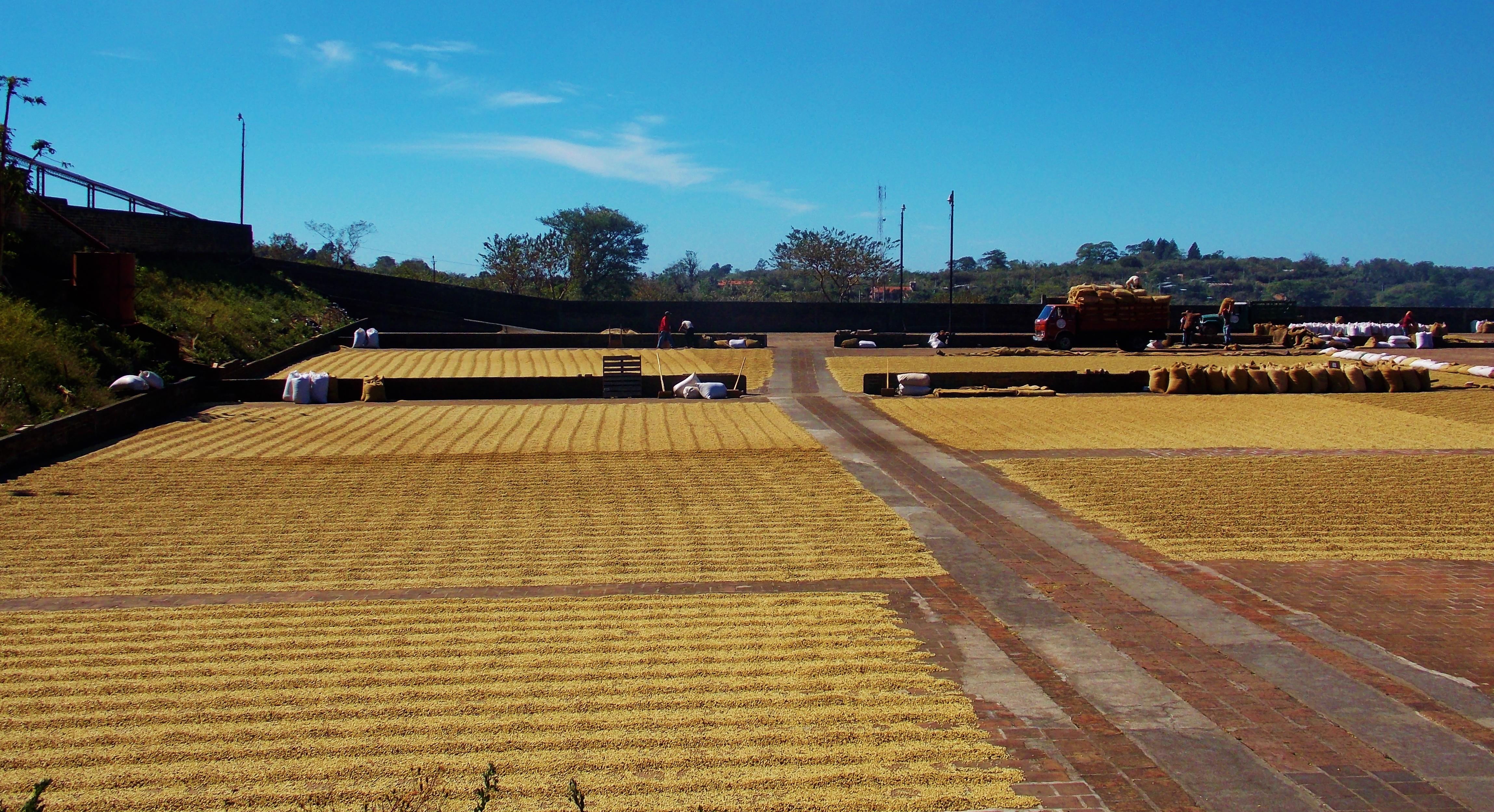
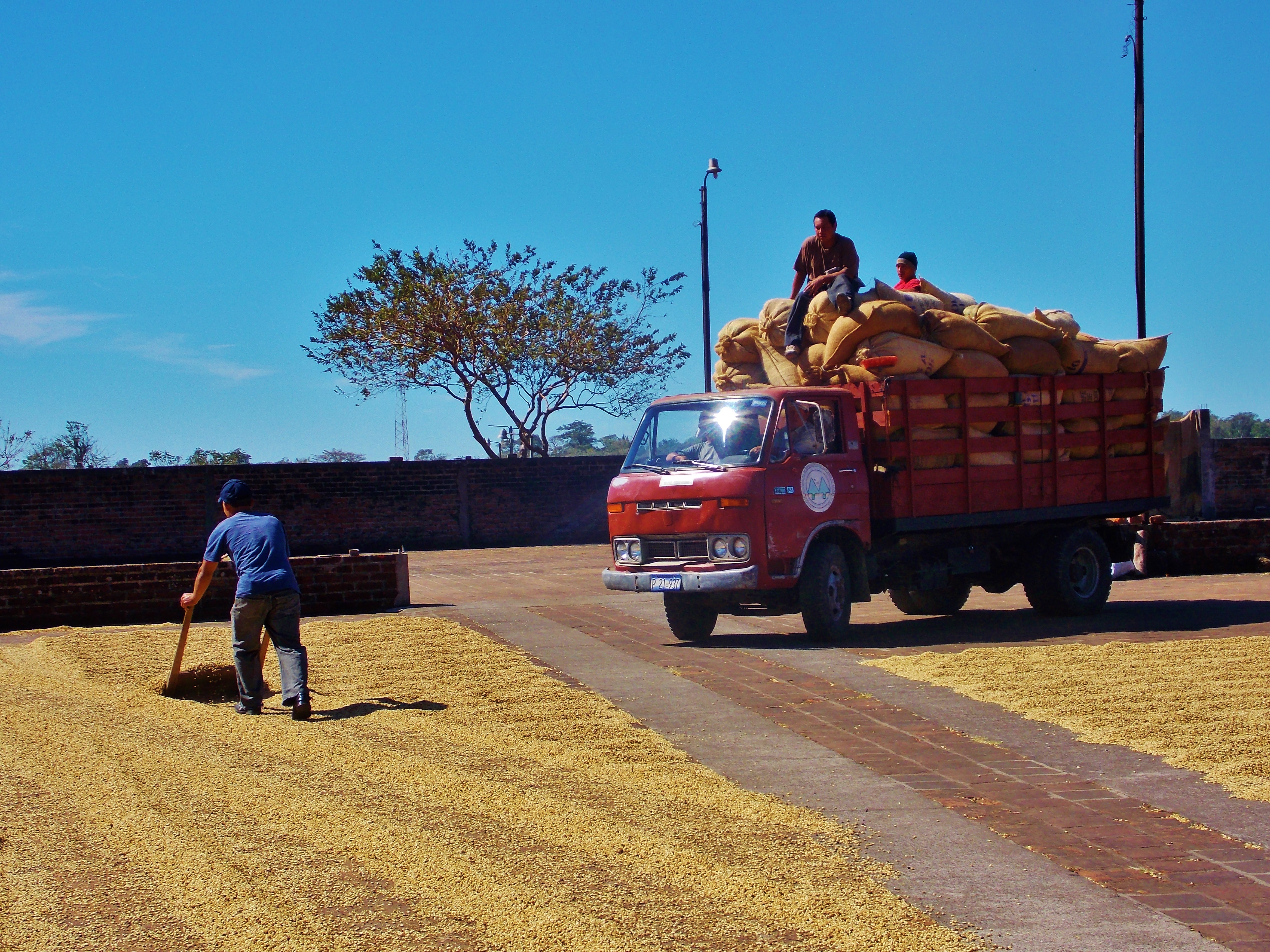
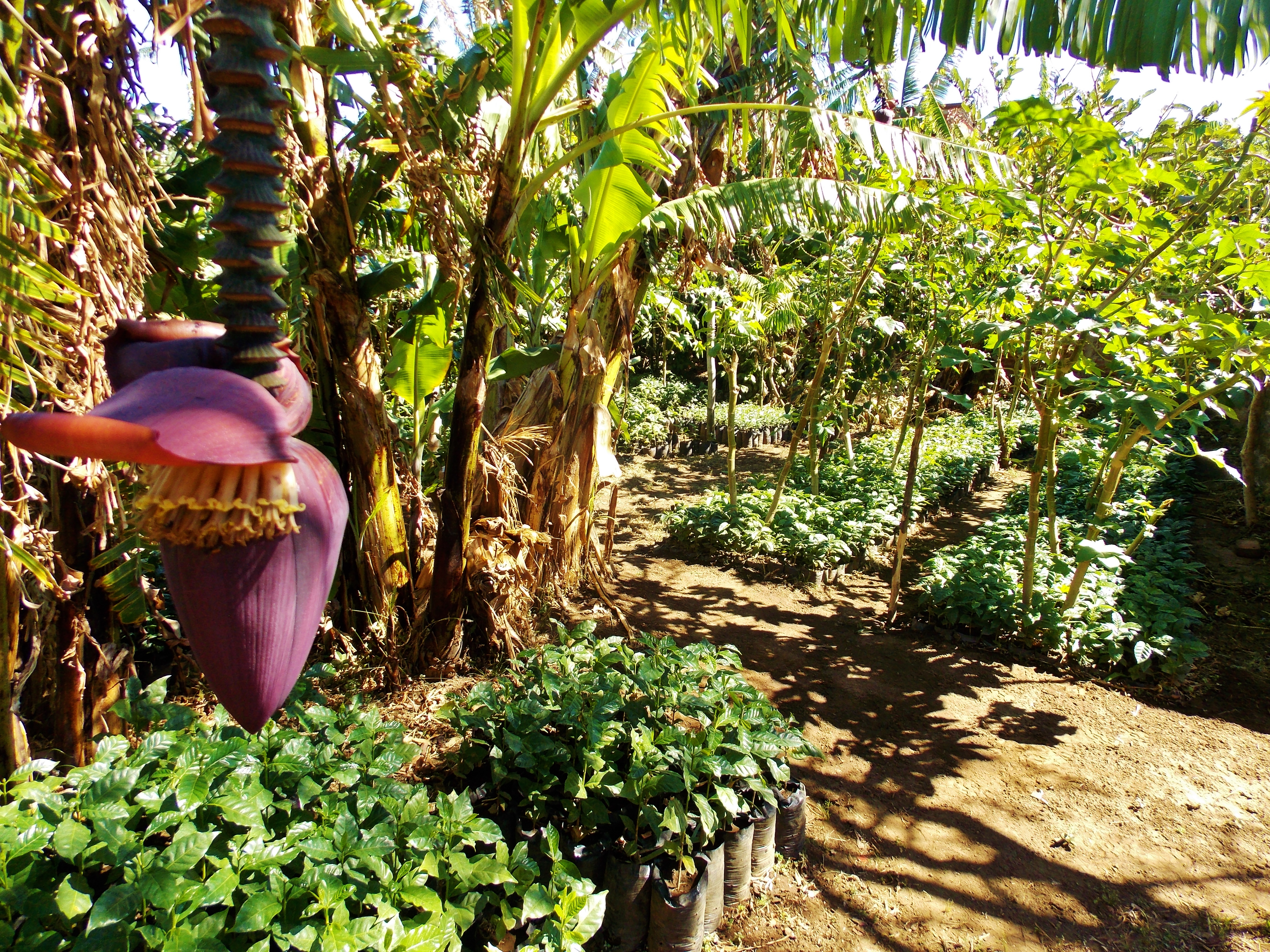
We decided we liked Juayúa so spent another day, where the owner of Hotel Anahuac, Cesar, took us and another guy on a tour of the local coffee factory where he seemed to have free rein of the place, showing us each stage of the production of my favourite drink and explained the processes in detail. The coffee industry here is huge, as the conditions are perfect for growth.  The higher the better for coffee growth.  The flavour improves the higher you go, and it is grown up to 1800m here.  The highest in the world is in Africa at around some 2300m I am told.  It is not a native crop and was introduced many years ago with the foresight of demand from the US.  It is now shipped worldwide as the photo below will show you.

The lines of the wind breakers to protect the coffee cover most of the scenery around Ruta de las Flores

The lines of the wind breakers to protect the coffee cover most of the scenery around Ruta de las Flores

This ones going to Japan

This ones going to Japan

Good quality coffee is dried by machine and by the sun like this

Good quality coffee is dried by machine and by the sun like this

Truck load of coffee ready for the roast

Truck load of coffee ready for the roast

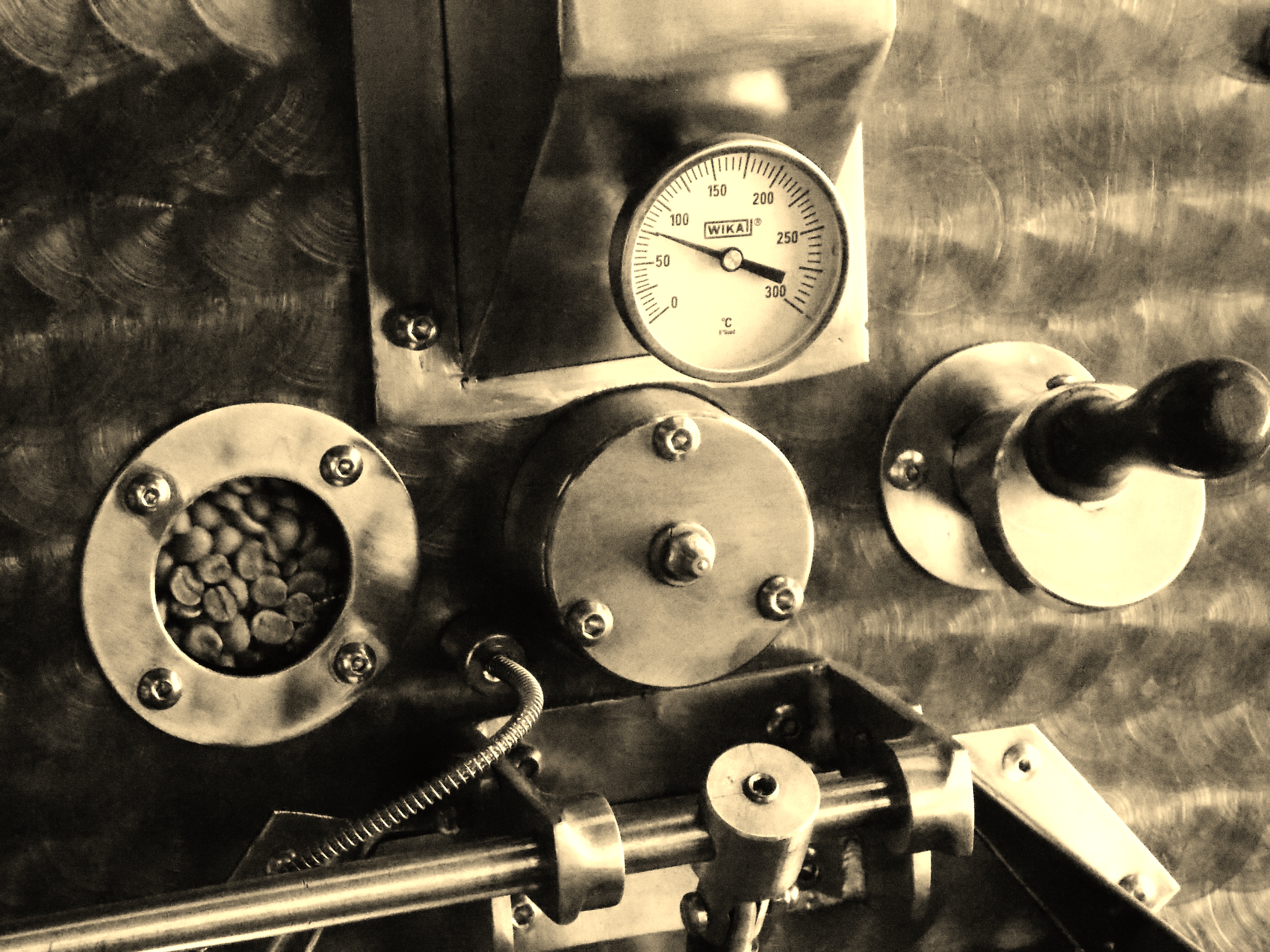
I’m gonna talk about coffee for a while now so skip ahead a couple of paragraphs if it doesn’t interest you.  Cesar then took us to his own ‘coffee compound’ in town where he hand-dries his beans in the Juayúan sun, then roasts on a small scale for local sale whilst preparing some of his most prized breeds of  coffee plants before they are ready go on the hills.  Cesar roasted some beans in front of us, while explaining the process for the 17 minute duration using a graph to help.  He instructed us on the importance of the timing, as seconds longer could change the acidity, sweetness or the body of the drink that the beans will produce.  There is basically a hell of a lot that can go wrong before the beans of your morning cup of Joe are even ground.  There is also a lot that can go wrong at the next stage…

The roast is a delicate process

The roast is a delicate process

Coffee by Chemix

Coffee by Chemix

I’m a coffee fiend.  Addict is probably more accurate.  I gave up grinding my own beans long ago for lack of success in my technique.  Cesar gave us some excellent tips on how to grind the perfect consistency for the style of coffee you are making.  Of course, he is an excellent Barista as well, and after introducing us to a re-emerging brewing method from 1940’s America called Chemex, he set to work on the machine.  The difference between good espresso and bad espresso is unreal.  I believe I have only been drinking the ‘bad espresso’ by my own untrained hand.  Ollie was treated to the best cappuccino of her life and instructed on how one should sip it in order to get the most out it.  After too many cups of coffee Cesar gave us a pound of coffee, that had been ground to the perfect consistency for use with our trusty coffee sock whilst on the road.  What a dude he is.

Cesars baby coffee trees

Cesars baby coffee trees

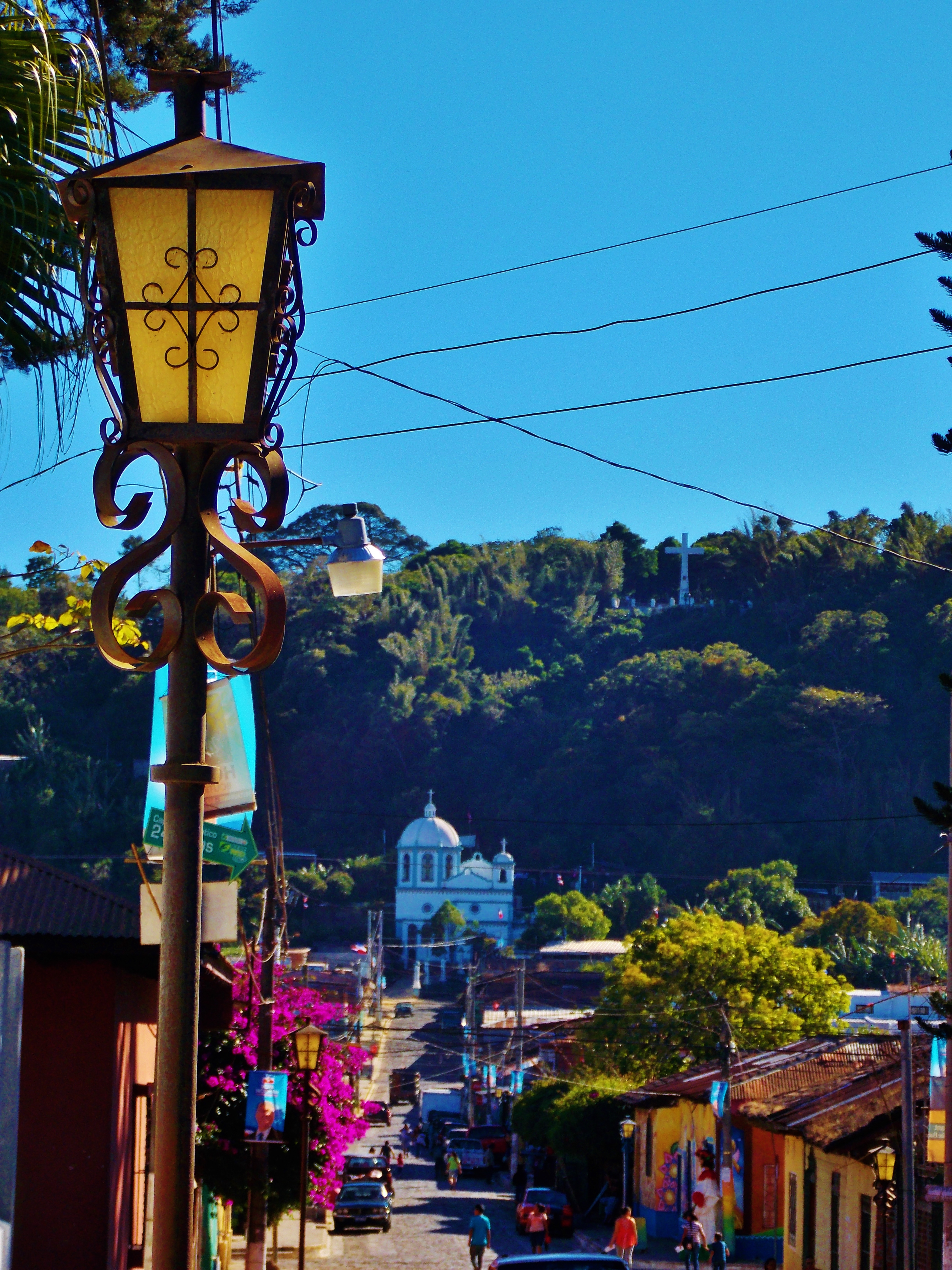
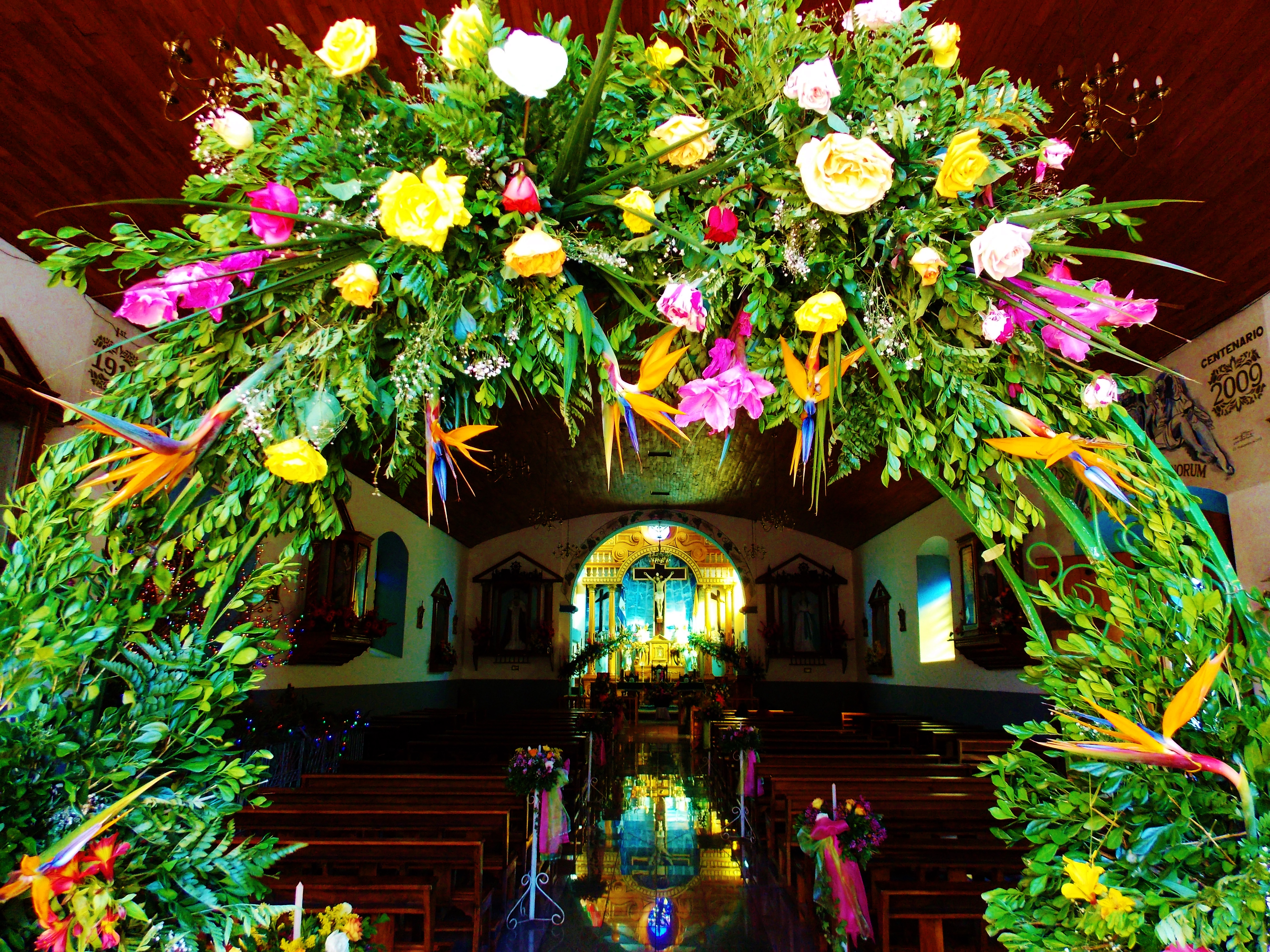
We also visited the towns of Ataco and Apaneca that we had passed on the way to Juayúa.  They were pleasant enough in a similar way, both following the trend of cobbled streets, pretty painted houses, white-washed churches near a central square and surrounded by stunning scenery.  Both very pretty, but very quiet towns.

Old fashioned lamposts of Ataco

Old fashioned lamposts of Ataco

Ataco church

Inside the Ataco church

Inside the Ataco church

The distinctive wind breakers and crosses of Apaneca

The distinctive wind breakers and crosses of Apaneca

El Salvador…wow.  That should be the advertising poster for this country.  What have you got in store for us next?

Thanks for reading!

For the full photo gallery, click here!


11 Comments

Bienvenidos a El Salvador! – Crossing the El Poy border, Suchitoto and Santa Ana

Painting of the Vista de Lago hostel and lake Suchitlan

Painting of the Vista al Lago hostel and lake Suchitlan

Whilst Ollie was spending her time bobbing around with the turtles and the trumpet fish on Roatán, I found myself with quite a lot of spare time.  I decided to plan our trip through El Salvador, including the public transport options.  The buses are all numbered chicken buses and seemed to run on a pretty reliable and cheap network.  So we set off to get a bus from Copán in Honduras to Suchitoto in El Salvador.  As the crow flies, this is not a long way.

For just the full photo gallery, click here.

We started our journey on a 7am and after two cold bus rides through the moody Honduran landscape we found ourselves at the El Poy border.  An uninterested Honduran official stamped us out with not so much as a grunt, we changed some money to US$ (as that is the currency of El Salvador since 2000), wandered through an army of stationary trucks (that we later found out were blocking the borders to vehicle traffic in protest at a new tax) and were then met by a small El Salvadoran official who greeted us warmly and welcomed us to his country.  He showed us the way to the immigration office where we were met with another friendly official who took time to find out where we were going and told us to take off our fleeces as it was warm in his country.  Already, we felt welcome in El Salvador.

Bienvenidos a El Salvador

Bienvenidos a El Salvador

Walking through the peaceful border we hopped on a #119 bus which chugged along for around 2.5 hours through the handsome town of La Palma and some other red tiled roofed communities stashed in the north of this hilly little country.  We were soon off this bus and standing by a strange road in Aguilares, with no sign of the bus I knew we needed.  We asked many people, including the child vendor Ollie nearly gutted with her pack dismounting the last bus, where the next one would stop.  They all told us to wait where we were.  The bus didn’t come so after 40 long minutes and after many hopeful cigarettes smoked (the theory being when you light a cigarette, your bus always comes) we followed another local’s advice who directed us through the heaving market.  Packs getting heavier in the heat of the sun and the desire for a cold beer and a solid recline growing by the minute, the goal seemed out of reach. We finally found the #163 sitting there tucked away one block away, after we had of course done a lap of the market.

Iglesia Santa Lucia over Park Centenario

Iglesia Santa Lucia over Park Centenario

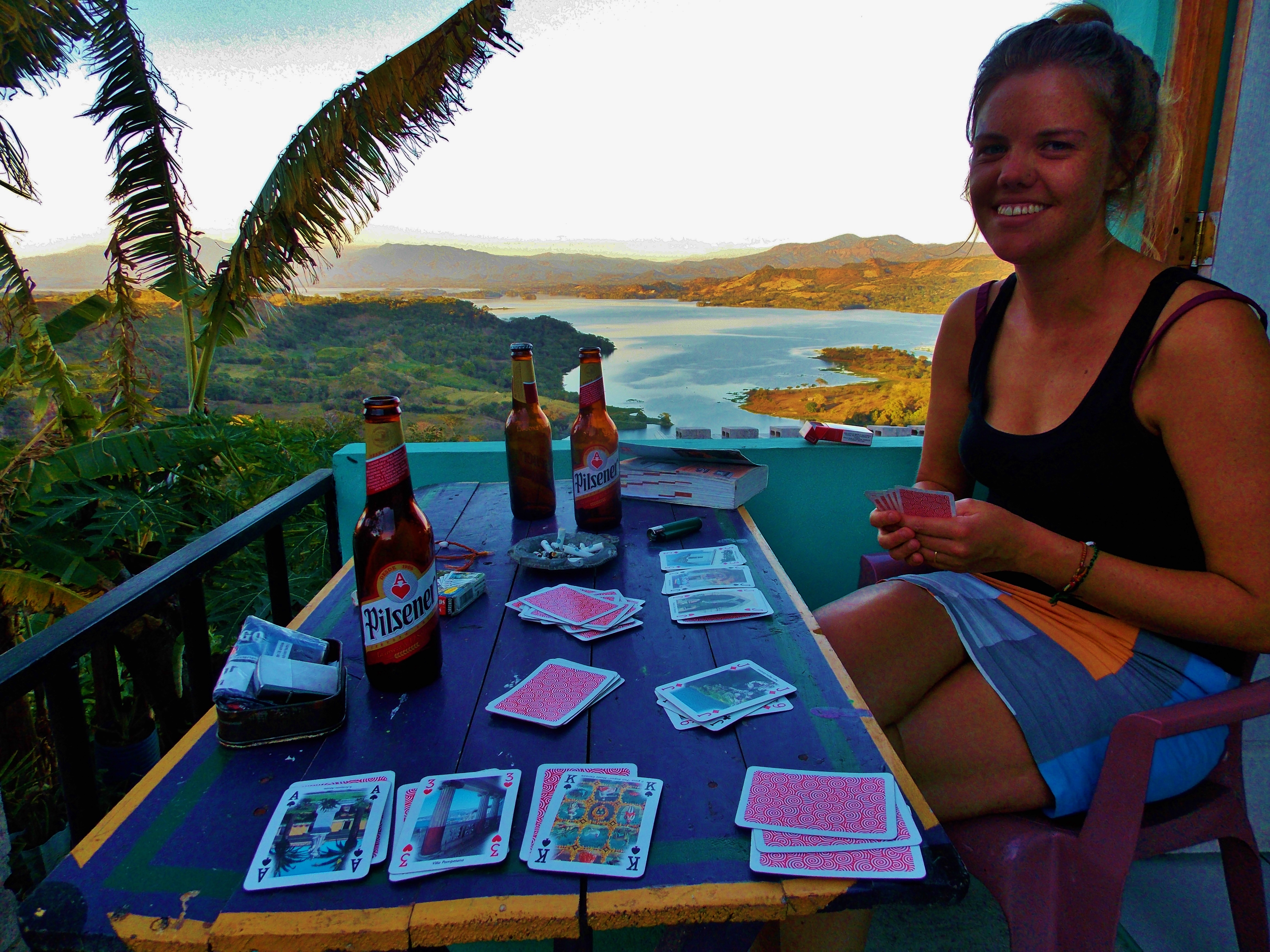
Suchitoto, our first overnight stop, was accessed by a pleasant 50 minute bus ride away from the chaos of Aguilares, west-bound through the peaceful countryside framed by the sun-kissed peaks of long extinct volcanos and hills.  Arriving at about 5:30pm we were greeted by a colourful cobbled street colonial hideaway that overlooks a large manmade reservoir, Lake Suchitlán.  We headed for our desired lodgings, Hostel Vista al Lago, which does indeed have a view of the lake.  They were out of rooms, but the mother of the family-run hostel offered us her emergency room (a cupboard with a bed) for the night until a better option became available.  Arrested by the stunning view of the sun setting over the mountains and the lake we happily agreed and tucked into a few bottles of the local brew called ‘Pilsner’ which tastes fine when ice cold and having done a 11 hour bus epic.

Our first view of Lake Suchitlan, El Salvador

Our first view of Lake Suchitlan, El Salvador

This town, combined with the view from our room that we finally got, was the perfect combination for rest and relaxation.  It’s an easy going place, and feels like it is El Salvador’s push for colonial town tourism.  Except, there were not many foreign sightseers around.  A few pasty Americans, who I assumed were on some kind of church/mission trip, were really the only tourists we saw.

Cobbled streets of Suchitoto

Cobbled streets of Suchitoto

Bright colours of Suchitoto

Bright colours of Suchitoto

We took a walk down to the quaint little tourism port of San Juan one morning, where they have a selection of restaurants, full of El Salvadoran families, and spent the rest of our time in the town just admiring the colours and taking in the tranquility the place seemed to ooze.  A solid local market kept us in bananas and avocados and the town had a few excellent options for coffee so, we were set for three days…which turned into four.  We spent one night out with an Aussie couple, Josh and Anna, who we swapped stories with over pupusas and tinnies in the town square, but the remainder of time was spent outside our room overlooking the captivating lake below us.  We were going to visit a nearby waterfall, but it was the dry season, so it was not…erm, falling.

Puerto San Juan

Puerto San Juan

Lake Suchitlan pose

Lake Suchitlan pose

Lanchas for hire on Lake Suchitlan

Lanchas for hire on Lake Suchitlan

Zip line from main land to island

Zip line from main land to island

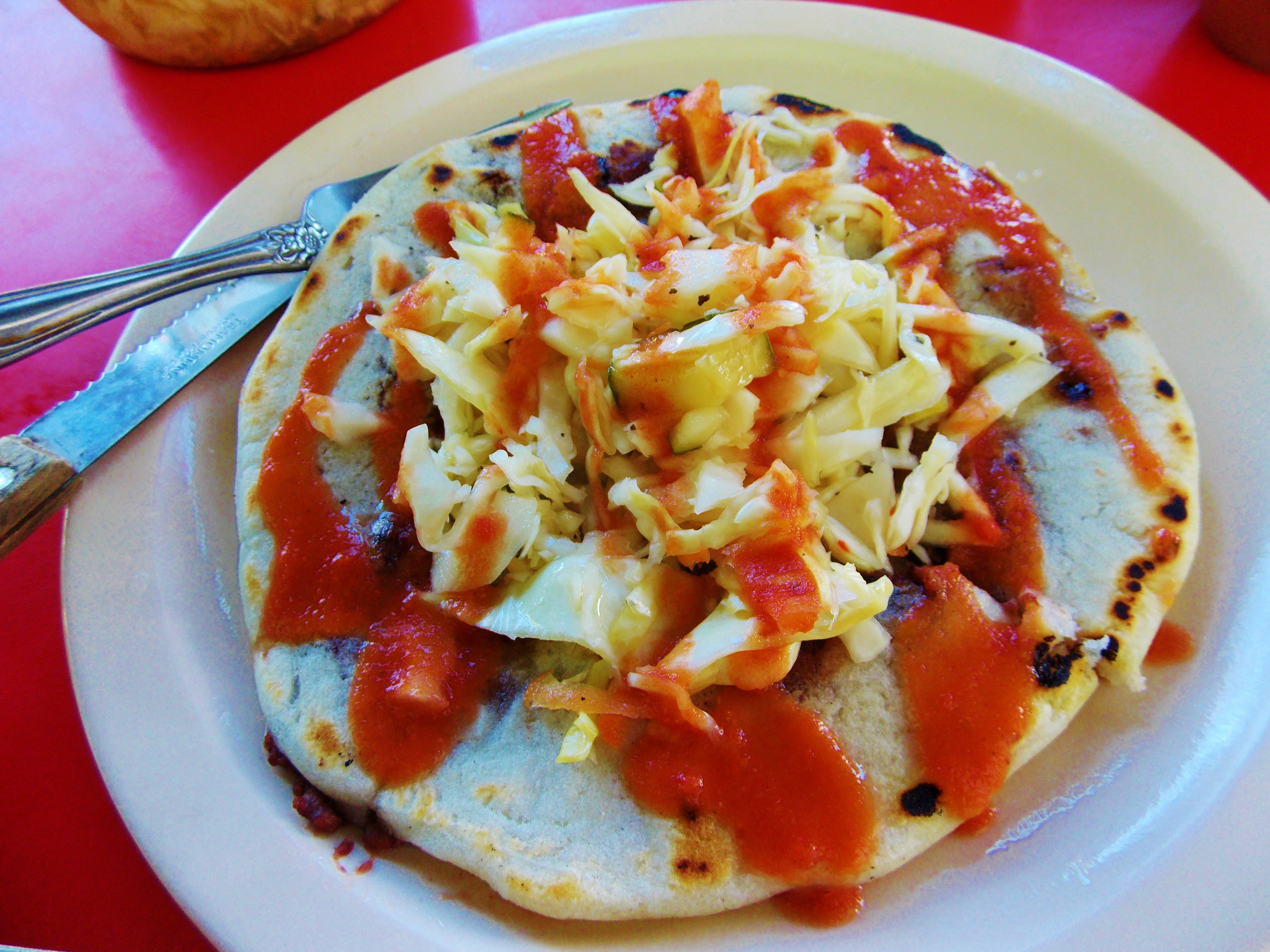
Pupusas are our favorite new thing.  They are El Salvador’s way to serve beans and cheese, but instead of using the corn to make tortillas, the pack the ingredients inside the corn dough and then grill it, resulting in a cheesy, beany dough pocket, which you cover with chili sauce and pickled veg.  We were dressing them like a pizza and eating them with cutlery until we observed locals eating with fingers and dipping/scooping their way through meals.  At less than $1 a go, they are a fine backpacker snack.

Not the traditional way to dress a Pupusa, but, it looks pretty

Not the traditional way to dress a Pupusa, but, it looks pretty

The Pupusa lady, she was awesome

The Pupusa lady, she was awesome

This town is beautiful and you can really slow down here.   I would go as far as to say my favorite stop so far on our whole trip. For our first experience in El Salvador, we certainly felt spoiled and had high expectations of the rest of the country.

Quiet colonial charm

Our view at Hostel Vista de Lago.  We got a better one the next day!

Our view at Hostel Vista de Lago. We got a better one the next day!

Anti Domestic violence stencils are outside most houses in Suchitoto

Anti Domestic violence stencils are outside most houses in Suchitoto

Santa Lucia at dusk

Santa Lucia at dusk

The day came to leave and we reluctantly jumped on a bus back to Aguilares, to continue the journey cross country to Santa Ana, El Salvador’s second city.  It’s probably about 40km to the west of Suchitoto and I planned a route across country on three local buses to save time.  Let me just say, I was not completely wrong, but one of the buses only goes once a day, so this journey turned into four buses over six hours.  (If you’re planning this trip, just go to San Salvador and back up, faster and cheaper.)

Santa Ana, El Salvador

Santa Ana, El Salvador

Eventually arriving in Santa Ana we were dropped off in the extreme south of the city, with no cabs in sight so started walking in the rough direction we thought we needed to go, until we were stopped by a local in his car advising us about walking a in a certain direction.  He conceded we had to keep walking that way, but make sure we don’t stop.  A busy local market scene confronted us with everything you can think of on sale, with all of the foul smells and soft underfoot feel to boot.

Casa Verde doesn’t have a sign, it’s just a green house, in a road full of different coloured houses.  We walk into this gringo compound and are confronted by a group of middle aged Europeans in their pants eating watermelon and drinking red wine.  It was a confusing moment to say the least and a bit of a contrast from the grubby streets of Santa Ana.  However, the local owner, Carlos apologised for his lack of rooms (no apology needed!) and showed us to our dorm beds, whilst giving us a tour of his bachelor pad that any lad could only dream of.  Along with the (clean) pool he had two incredible kitchens, free coffee for guests that you had to grind yourself, as well as a wine cellar and cheap frosty beer (it was Pilsner, but hey).  I could go on, but just look at the Trip Advisor.

Street of Santa Ana

Street of Santa Ana

We had some drinks with other guests while the older German lady moaned about the Finnish (we think they were Czech) who were using the kitchens at all times in their pants without the decency to have a nice body.  Up on the roof terrace at night, the city is dead.  No sound at all from the second largest city of El Salvador gives a slightly eerie feeling, yet the endless vista of red tiled roofs under the moonlight with the cathedral poking out above all is a pretty special sight.

The next day, we ventured out to explore the town centre, and after quite possibly the cheapest breakfast ever of five pupusas for $1.30 at the side of one of the city squares (the trade-off being however that you must eat with about 30 El Salvadorans gawping at you throughout the entire meal) we checked out the neo-gothic cathedral as well as the sprawling central market that sells quite literally anything you could need.  The city is hot, possibly too hot for us, so we retreated to the hostel to cool down.

Parque Mendez, Santa Ana.  Great spot for Pupusa breakfast

Parque Mendez, Santa Ana. Great spot for Pupusa breakfast

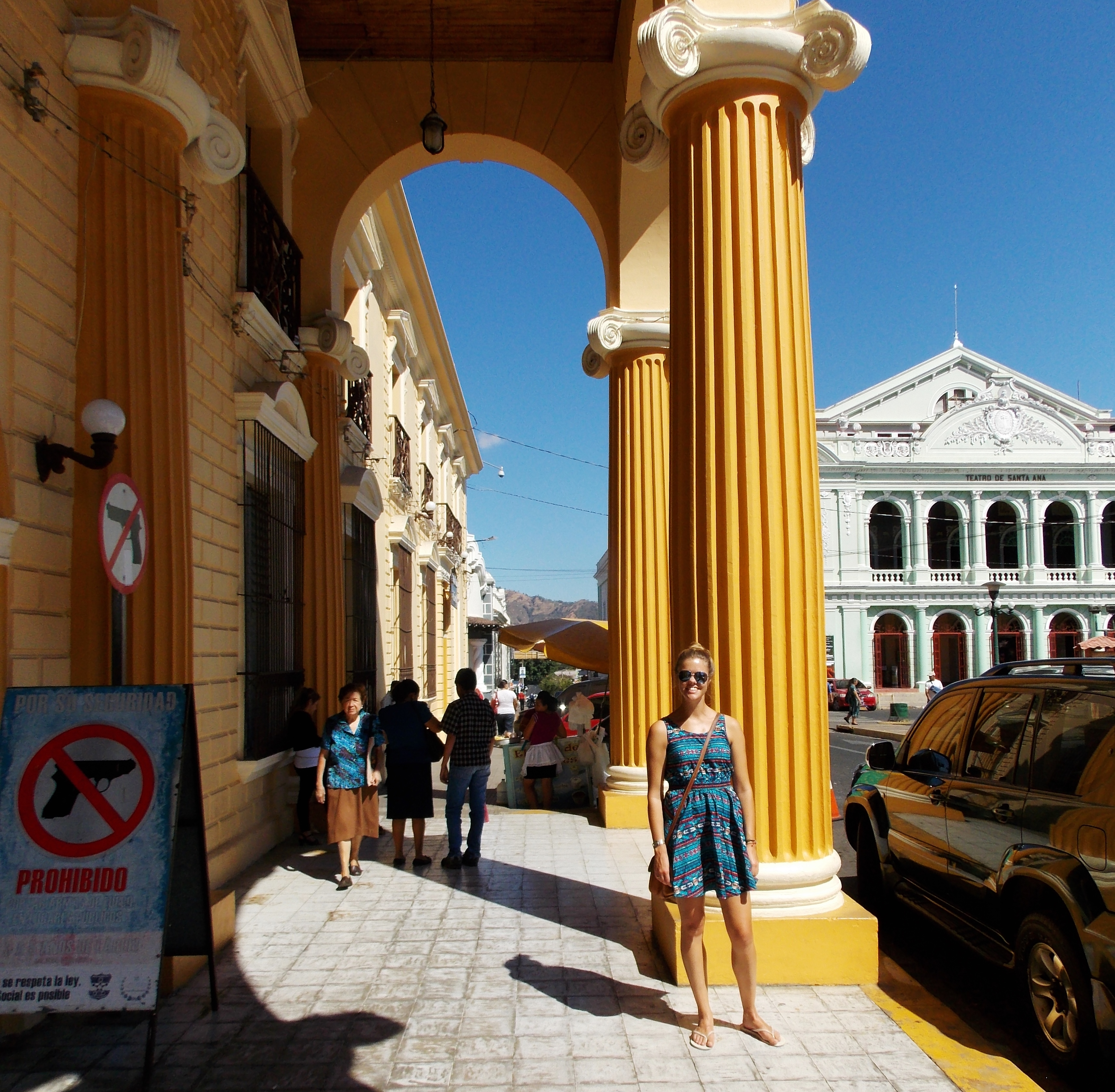
What, no gun? In the government offices? Outrage!!

What, no gun? In the government offices? Outrage!!

Parque Libertad Santa Ana

Parque Libertad Santa Ana

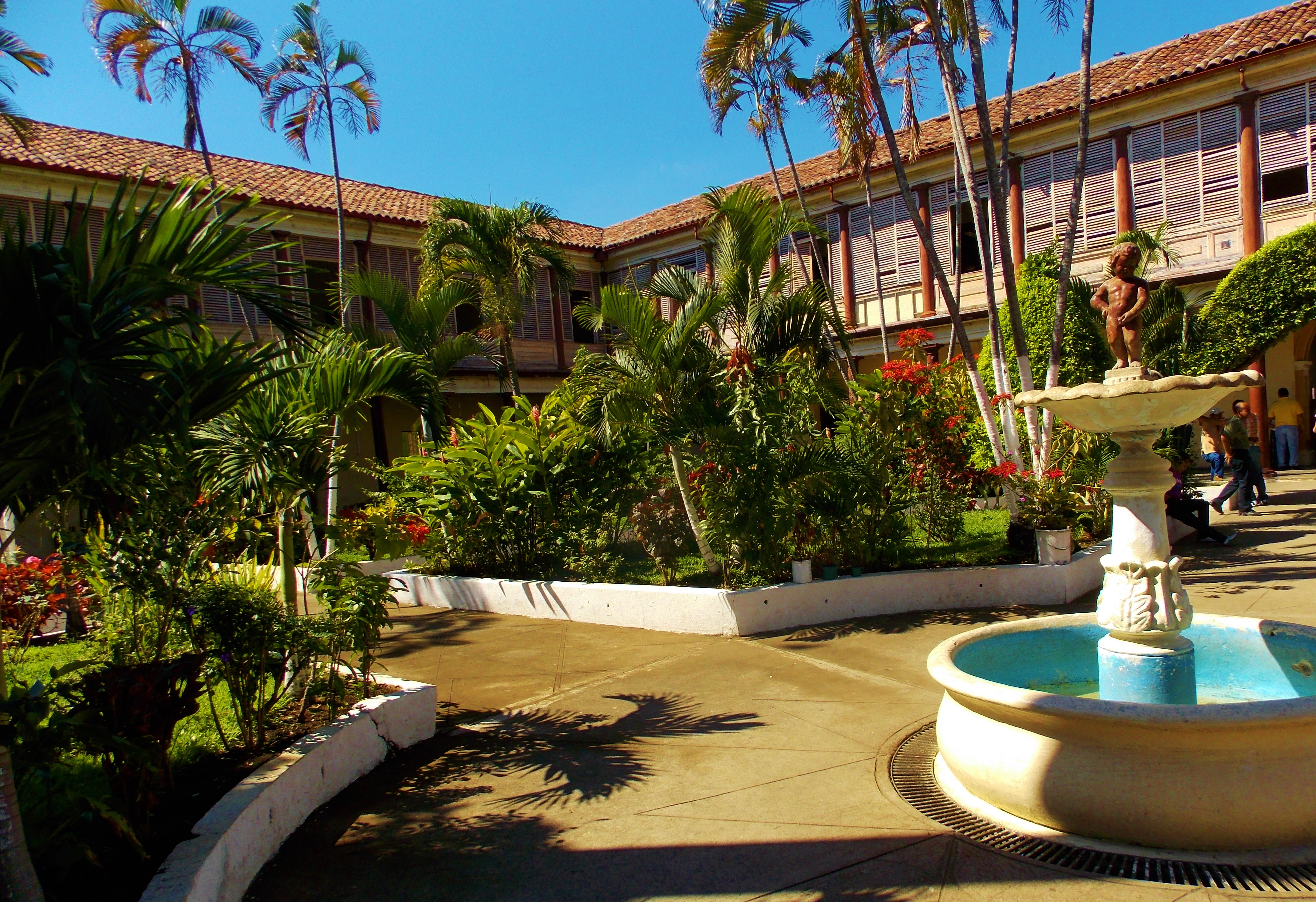
Inside the Alcaldia, Santa Ana

Inside the Alcaldia, Santa Ana

Catedral Santa Ana

Catedral Santa Ana

Since crossing the border we have been amazed by the friendly nature of the El Salvadoran people.  Of course the children stare at you like you have come from Mars some times, but everyone is incredibly friendly and most will greet you when you catch their eyes, in the places we have been anyway.  Stark contrast from Honduras, our experience crossing the border is a perfect example of the two countries attitudes towards tourism.  Despite being classed officially as one of the world’s top five most murderous countries, we have felt nothing but safe so far.  There is an excellent tourist police visible and willing to help, as well as (so we’re told) one of the most effective and corruption free police force in the Americas.  I just hope this great experience keeps up and so far hasn’t been a fluke.  The El Salvadorans we have met want to help us, even when they have told us the wrong information about buses I get the feeling they are not being devious, they just wanted to assist in any way they can.

Thanks for reading.

For the full photo gallery, click here.