hop on the good foot

This blog is definitive. Reality is frequently inaccurate.


2 Comments

Oaxaca City – Chocolate box beauty, a big tree and some stunning scenery.

Hierve el agua pool 2We tackled the DF subway system one last time, this time with our packs, after visiting the tasty bakery Ols had previously championed for some Mexican cheese, ham and jalapeño pasties for the journey.  We were moving on to Oaxaca City, and it is something we had both been looking forward to.  It is in Oaxaca State, which in itself is the same size as Portugal.  As always, we were not sure how long we were going to stay in the city, and also, if we would adventure further into the state and visit the much talked-up coast of Puerto Escondido and surrounding beaches.   A 7 hour bus ride later took us through some excellent scenery, this time the seemingly endless hills were dotted with various cacti as we snaked round the passes.  The driver warned us of delays of the ‘environmental kind’.  We thought it was just a mis-translation, but when the storms came and parts of the surrounding hills were falling into the road, I was confident Ollie’s Spanish was still up to scratch.

Had enough of this waffle? Click here for the pictures.

The Zocola Plaza OaxacaThe colonial center of the city promised us beautiful tree-shaded plazas, colorful scenery and a bustling artisan crafts scene where Ols could dispatch some pesos.  On arriving at the bus terminal we joined up with a Canadian called Lee and he came with us to Hostel Pochón.   Soon we were out of the door and eating tortas the size of our heads on the recommendation of the French contingent at the hostel.  We all settled in for the night at Pochón, and exchanged stories round the table with the many other residents.  Really nice place…

The first day and we were out of the door, walking round admiring just how pretty the town is.  But my god…it’s a tourist trap.   Being sort of prepared for that, it didn’t bother me as much so we just joined in the natural flow, past the churches, boldly coloured buildings and into the Zócalo (main square).  Being in Mexico over a month now has given us only a tiny insight into the local way of life for many people.  What I have been impressed with is the quality and use of communal spaces.  The local squares or plazas are places where people come to sit and just be.  With their family or friends.  They may have an ice-cream, play the trumpet, practice a dance routine or have their shoes shined.  Unlike the UK, there are no urine soaked Tennants drinkers growling at passersby with tobacco stained whiskers.   We found ourselves just sitting enjoying a fizzy pop, watching the world go by.

Bold colours of Oaxaca And some more bold colour

Onto the local food market, we walked around admiring the selections of chillies, Oaxaca-style cheese, meat and mole Sauces.  Mole described very simply is like Mexican curry sauce, and Oaxaca is known as the land of the seven moles, with the main one, mole negro, including locally grown chocolate.  After doing some grocery shopping and picking up some chapulines (grasshoppers) we headed back for a chilled day and a rest.  Even though Lee was a vegetarian, he still enjoyed the tasty little garlic and chili roasted insects.

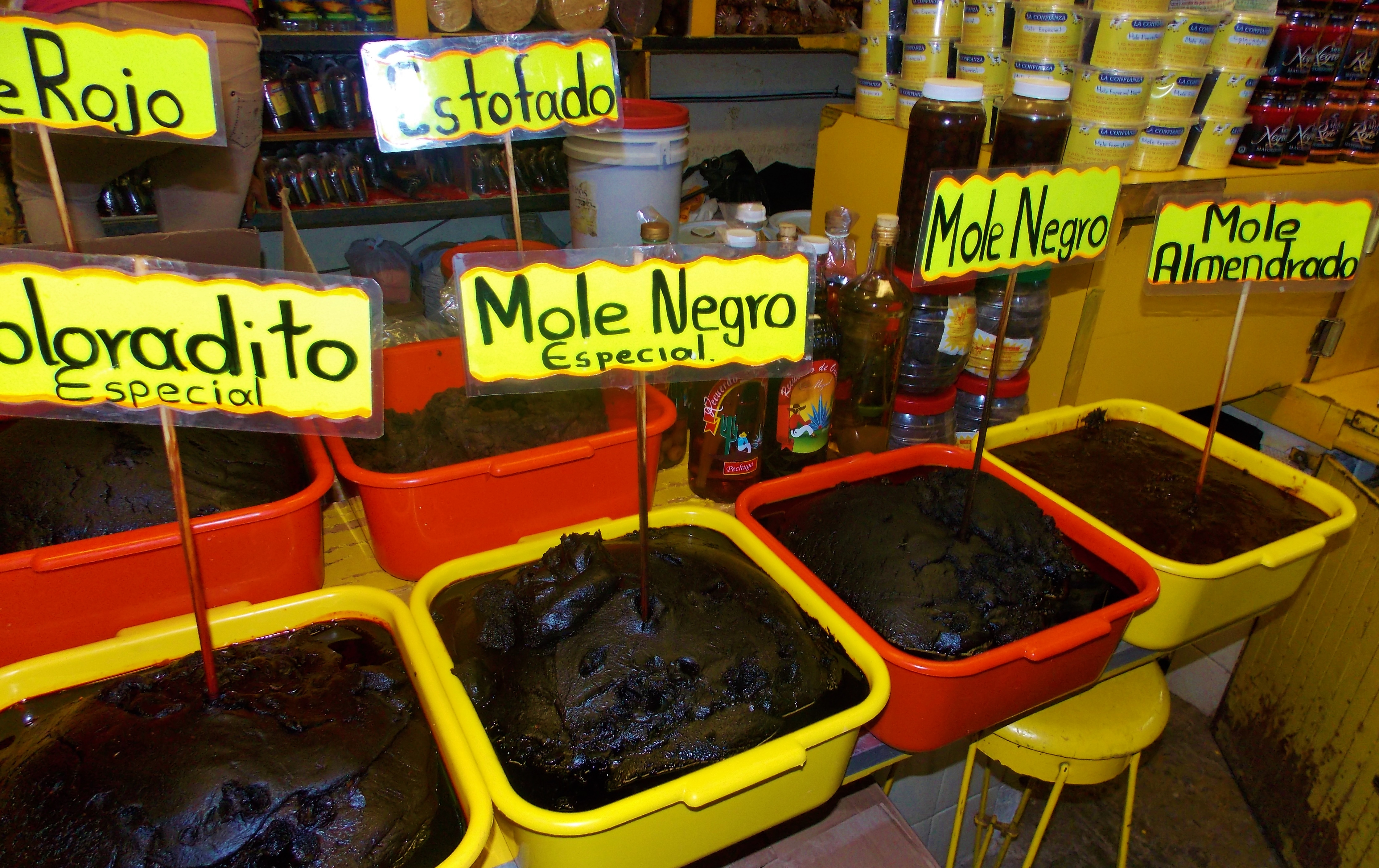
Oaxacan's take ther meat seriously The Mole catalogue Standsard dried chilli selectionGarlic and Chilli Chapulines, or crickets to me and you

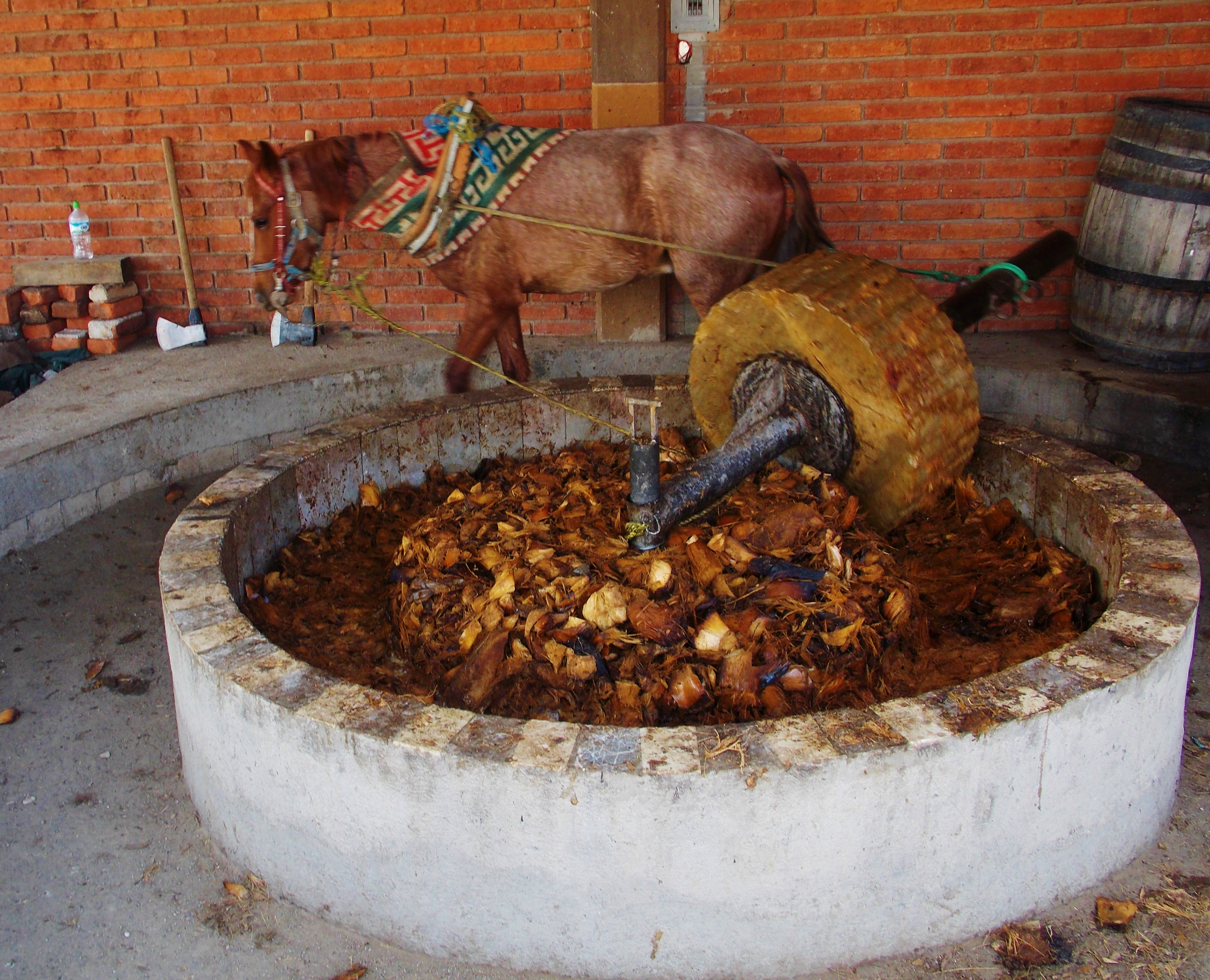
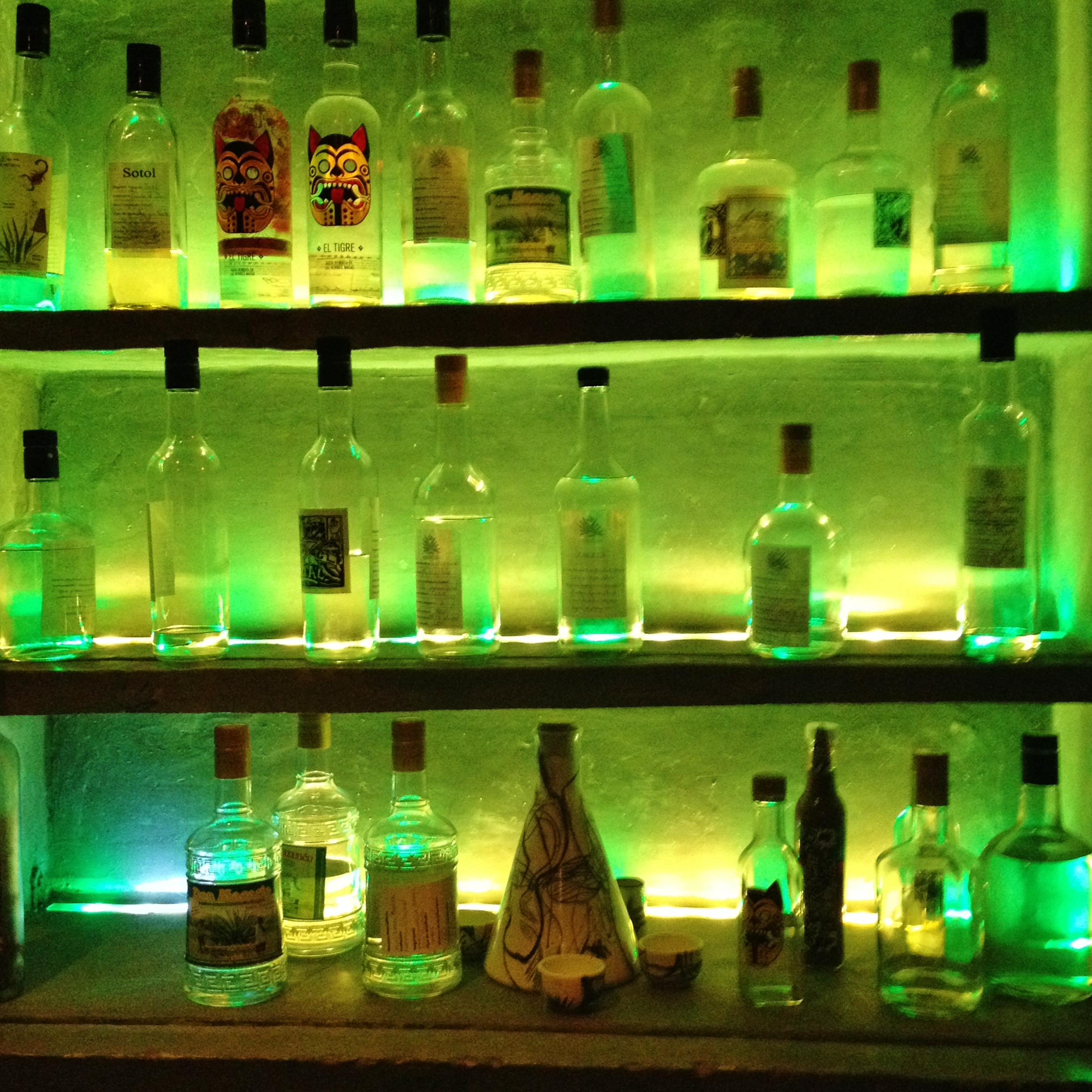
The next day, we took a tour of the local area and found ourselves with two older Colombian couples.  The first stop was a tree.  Not just any tree, but the 1500-2000 year old tree of Tule.  It’s huge and dwarfs the surrounding buildings.  The second stop took us to the village of Teotitlán del Valle, where they are famous for weaving, using natural dye made from a base of Cochineal bugs that live in cacti.  The bug is squashed, then mixed with things like chalk, lemon or leaves to achieve different colours.  After, we headed for the Don Agave Mezcal distillery, where after a short tour, the Colombians helped us along, trying various tipples and eating more chapulines which cleanse your pallet after a harsh sip of mezcal, like a sorbet might during a meal.  Now the worm: most people have heard of the worm in tequila.  The worm is never in tequila, only mezcal and is just a marketing gimmick.  I downed the worm from the bottle and can confirm, with some disappointment, that it does not get you impressively drunk/high.  It’s just a worm…

2000 Year old tree of Tule.  It's fookin massive! Natural Dyed wool and the ingredients used Weaving Apprentice Mezcal and Chapulines with some Colombians at the Don Agave factory 55% Mezcal, made from 100% Horsepower

The frozen falls of Hierve El Agua..or a massive outdoor stalactite

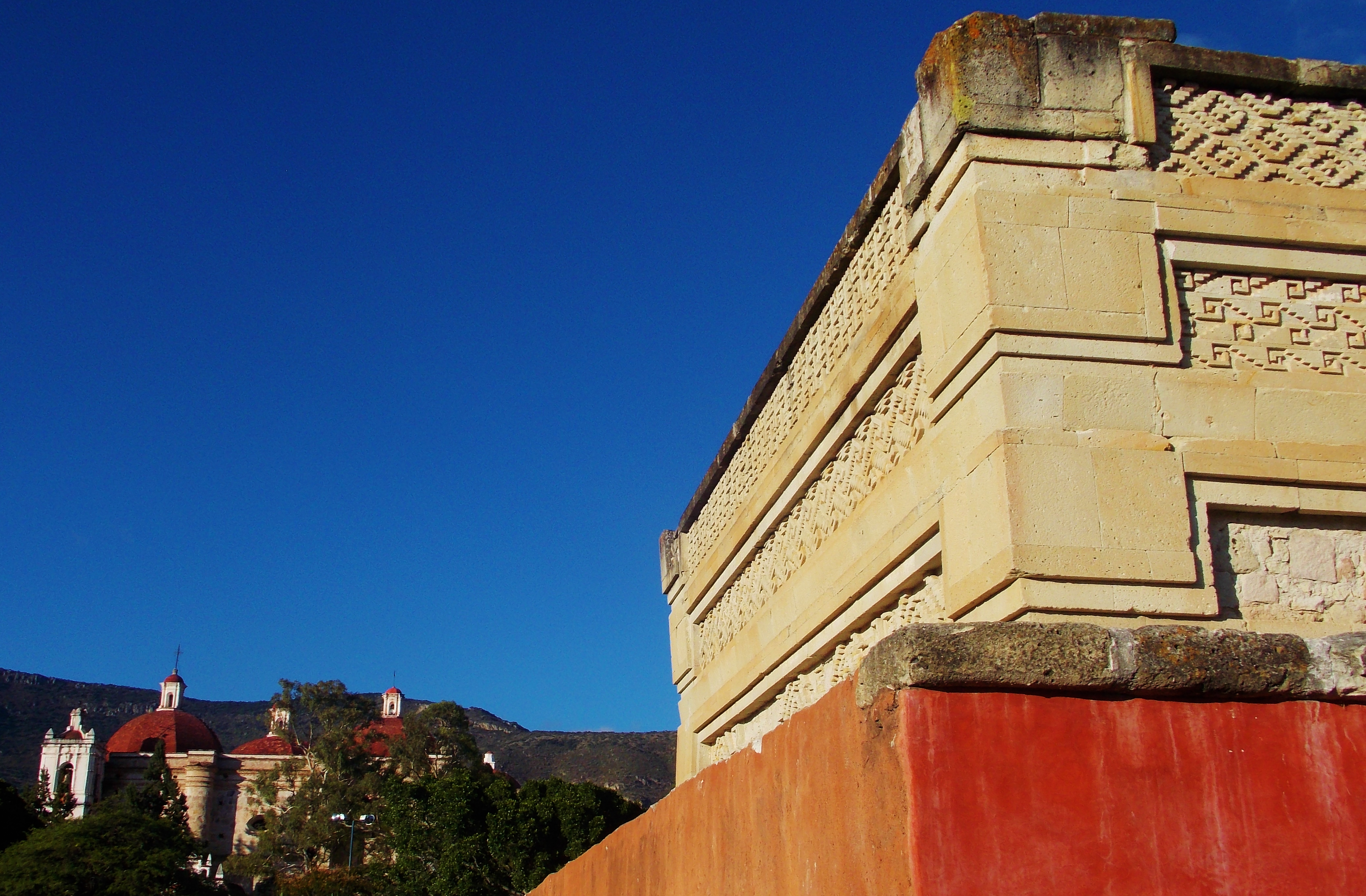
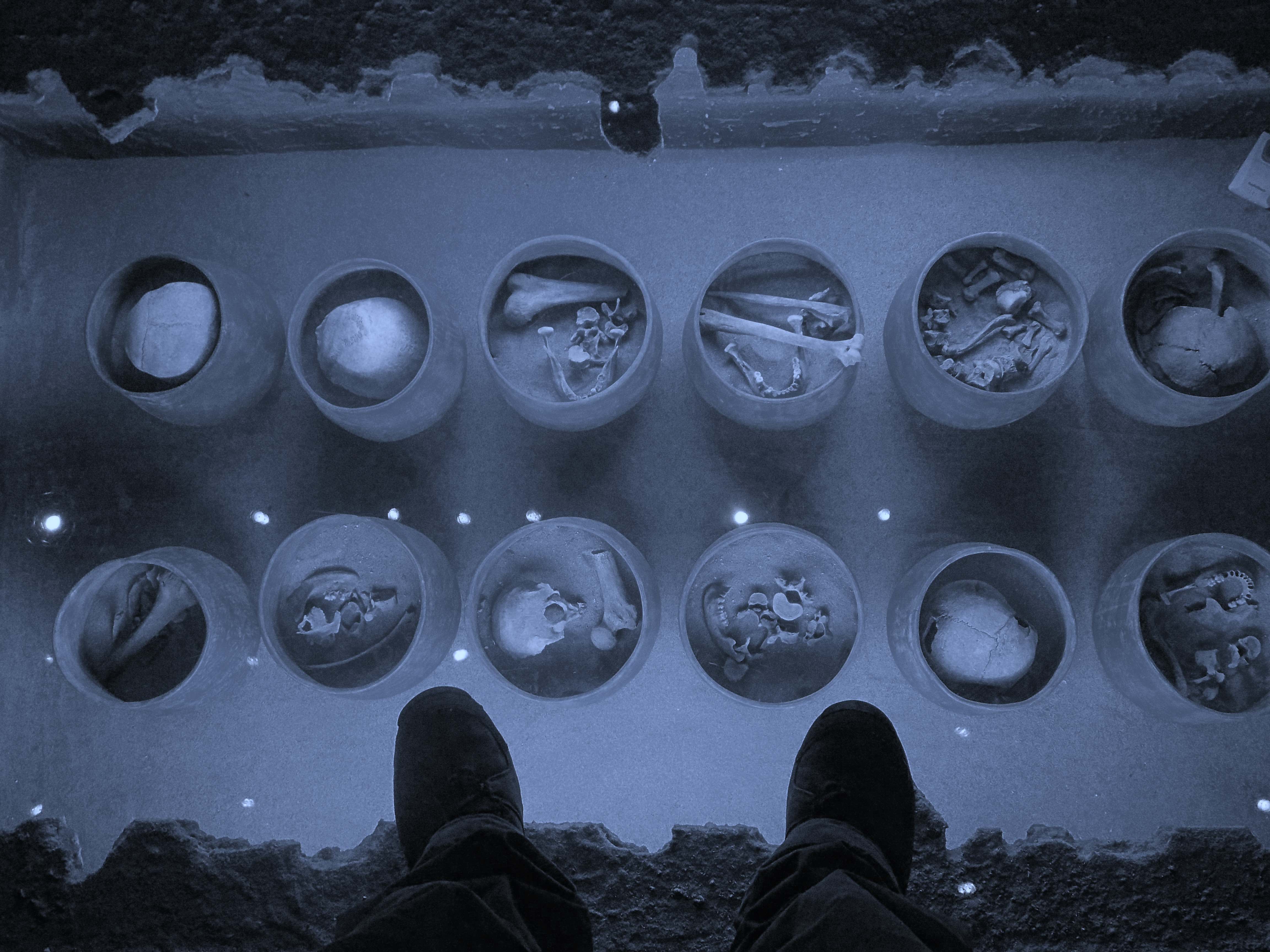
After Ols was told some dirty jokes in Spanish by an increasingly intoxicated Colombian lady, we jumped in the van and headed to Hierve El Agua; two large white rock formations similar to stalactites look like waterfalls cascading down the cliffs.    Hierve El Agua, meaning “the water boils” in Spanish, has naturally bubbling (but cold) mineral pools, that appear to disappear over the cliff.  A beautiful spot, where we sat to soak it all up until a chap called Manuel (or Manny Pacquiao as he styled himself) arrived and spoke at us in a friendly, yet aggressive manner.  After some nonsensical conversation with our new-found fried we headed back to Mitla, a town with Zapotec  ruins.  These were pretty impressive structures, with a chance to go into some burial chambers.  The whole day was a great little tour, and for a value of M$150 per person it was incredible value for money.

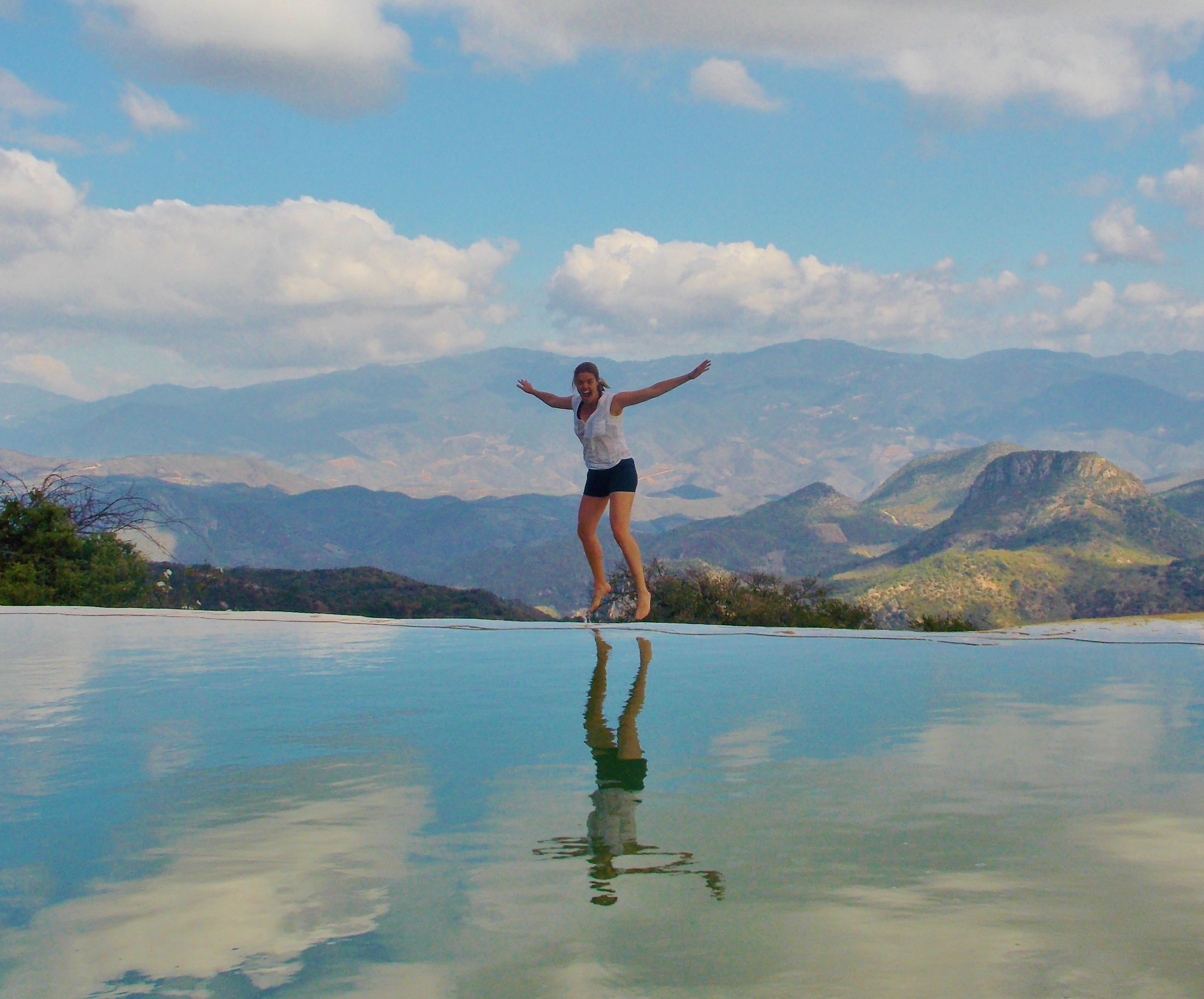
At the edge of the Infinty Pool at Hierve El Agua A starjump on the edge of the pool

Hierve El Agua

The Zapotec Ruins of Mitla Cheeky spanish church right next to the ruins

Our last day was similar to the first, idling around the markets and admiring the town and square.  Oaxaca city centre is an extremely beautiful place, which it would be easy for some to spend lots of time in.  For me it was far too touristy, being a well-established must see place in Mexico.  Ols was also disappointed by the lack of ‘local crafts’ promised, as the markets we visited yielded only clothes mainly.  There may have been another market somewhere, but we didn’t find it.  We decided not to go to the coast, but everyone else we met was heading there.  We decided to start our descent into Guatemala instead, by travelling to San Cristóbal de las Casas via night bus.
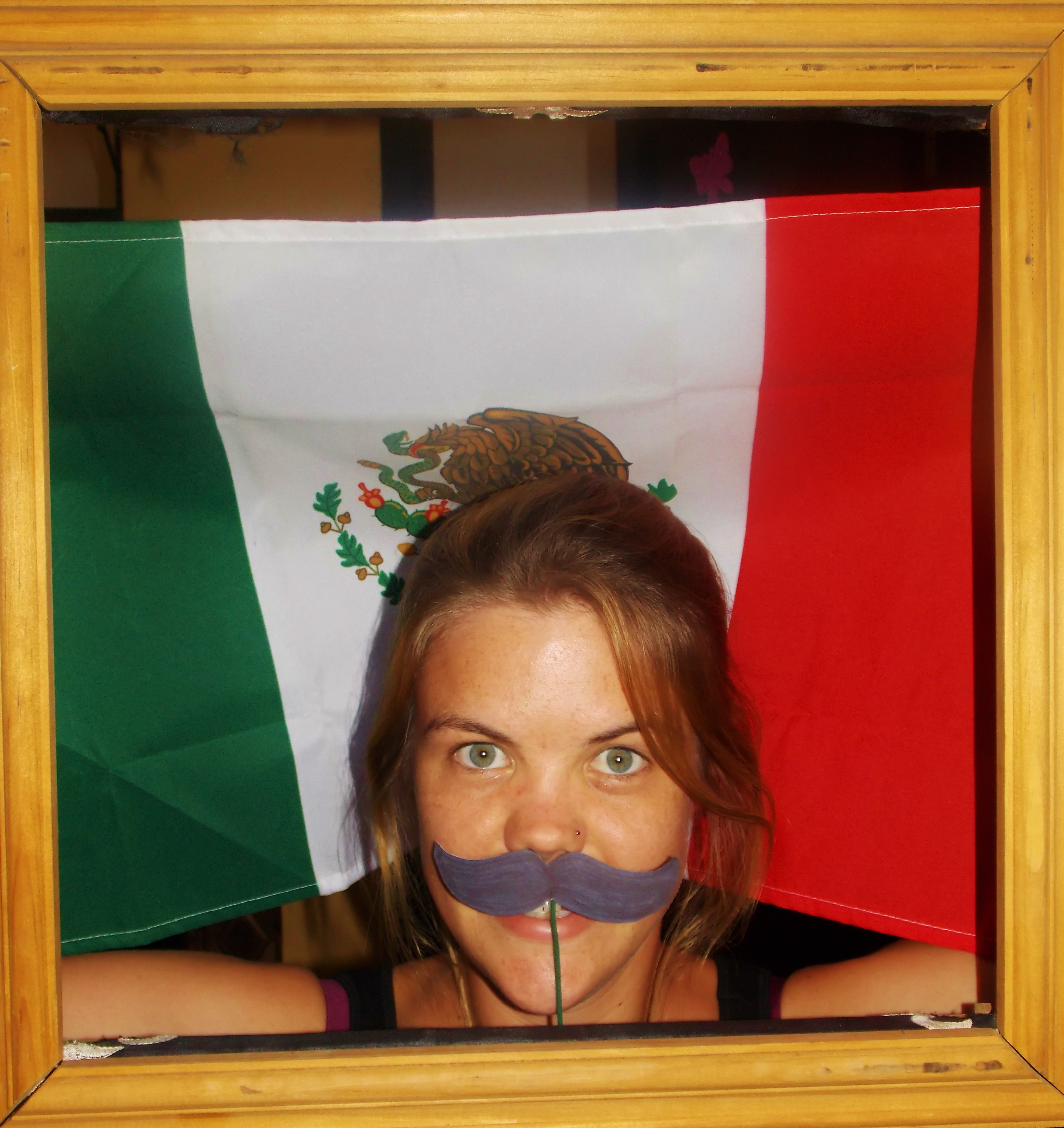
Ollies moustash envy becomes worrying


2 Comments

Mexico City – El DF, Teotihuacan and an intro to mezcal…

Templo Mayor ruins and the Spanish Cathedral behind

Mexico City (also known as Distrito Federal, or el DF) is one place where I genuinely didn’t know what to expect before I arrived.  It has had plenty of bad press in the past but I know people who’ve lived here for some time, and one thing Mexico has taught me so far is to take what you read in the papers with a big pinch of salt! The one thing I was sure about was that it was BIG. On the bus in on a Sunday lunchtime I confidently declared to Rich that we were only a few km out, so would be there in no time. This time his raised eyebrows were correct. The suburbs and stop-start traffic rolled on for miles and miles, but we eventually arrived at the North bus terminal, and got off, where much to my amusement Rich was repeatedly elbowed out the way by several elderly Mexican ladies half his size when trying to retrieve our bags. After the scrum we climbed into a cab and started towards the centre. Being a Sunday afternoon on a bank holiday weekend the streets on the way in were quiet, with lots of shuttered shops; it felt like driving though the suburbs in the early hours. We wondered where everyone was. On arriving at the hostal by the main square in the centre, the Zócalo, we found out.

As usual, if you’d prefer the pictures to the words, click here.

Ollie and some Mexican legends

Ollie and some Mexican legends

We stepped out into the throng and walked around for a while as Rich’s blood pressure slowly rose. Respite was found at a hole in the wall selling some of the best tacos so far (beef and chorizo in one – why has no-one done this before….) then into the bar next door for an overpriced warm beer. Rich looked ready to declare that Mexico City was rubbish, till we found Al Andar mezcal bar on Av. Regina. 10 minutes later he declared that the city wasn’t half bad and mezcal was his new favourite drink.

Muchos mezcales

Muchos mezcales

Not cheap but lovely and smooth, with orange slices and spicy nuts/beans/roast garlic on the side. A whole night’s accommodation budget later we went back to the hostel for a rather early night!

Looking out from the Moon  towards the Sun

Looking out from the Moon towards the Sun

The next day we were up with the birds (and only a hint of a mezcal headache) and tackling the DF metro system for the first time. I was pleasantly surprised at how easy it is to navigate and the price – 3 pesos (about 15p) per journey. Also, all the stations have symbols as well as names which is surprisingly handy! We headed out on the bus (after Rich was frisked 3 times, which he was delighted about) to Teohuaticán, a huge site of pre-Aztec civilization ruins, about 20km north-east of DF. The site is anchored around a 2km wide pathway called the Calzada de los Muertos that runs north-south through the site. Towards the top end on the east side is the Pirámide del Sol (Pyramid of the Sun) – one of the most impressive structures I’ve ever seen. The third largest pyramid in the world and you can still climb up the steep and uneven steps to the top and get a fantastic view of the whole site, including the second temple Pirámide de la Luna (Pyramid of the Moon) that lies at the top of the pathway.

Before the climb up...

Before the climb up…

The view from the top of this second one is just as spectacular, possibly more so as it allows you to grasp the sheer size of its counterpart. The whole thing is even more awe-inspiring when you realize it was built without metal tools, pack animals or even the wheel. The site also contains many other smaller structures, including some remnants of murals of jaguars, pumas and birds (owls and quetzals) in faded colours that must once have been rich reds and bottle greens.

With only a touch of heatstroke and shaky legs from climbing hundreds upon hundreds of steps we caught the bus back into the city, then back into the bowls of the metro to visit the city’s leafier (i.e. richer/whiter) districts – Roma and Condesa. Things were very quiet due to it being a bank holiday Monday, but we found a suitably hippyish café where I could satisfy my craving for salad after weeks of tortillas/meat/cheese/sugary snacks. I must be getting old when I start dreaming of courgettes…

The next day was our big tour of just a few of the city’s historical and cultural highlights. You could spend a couple of weeks in Mexico City and still be lapping up culture, there’s just an incredible amount on offer.

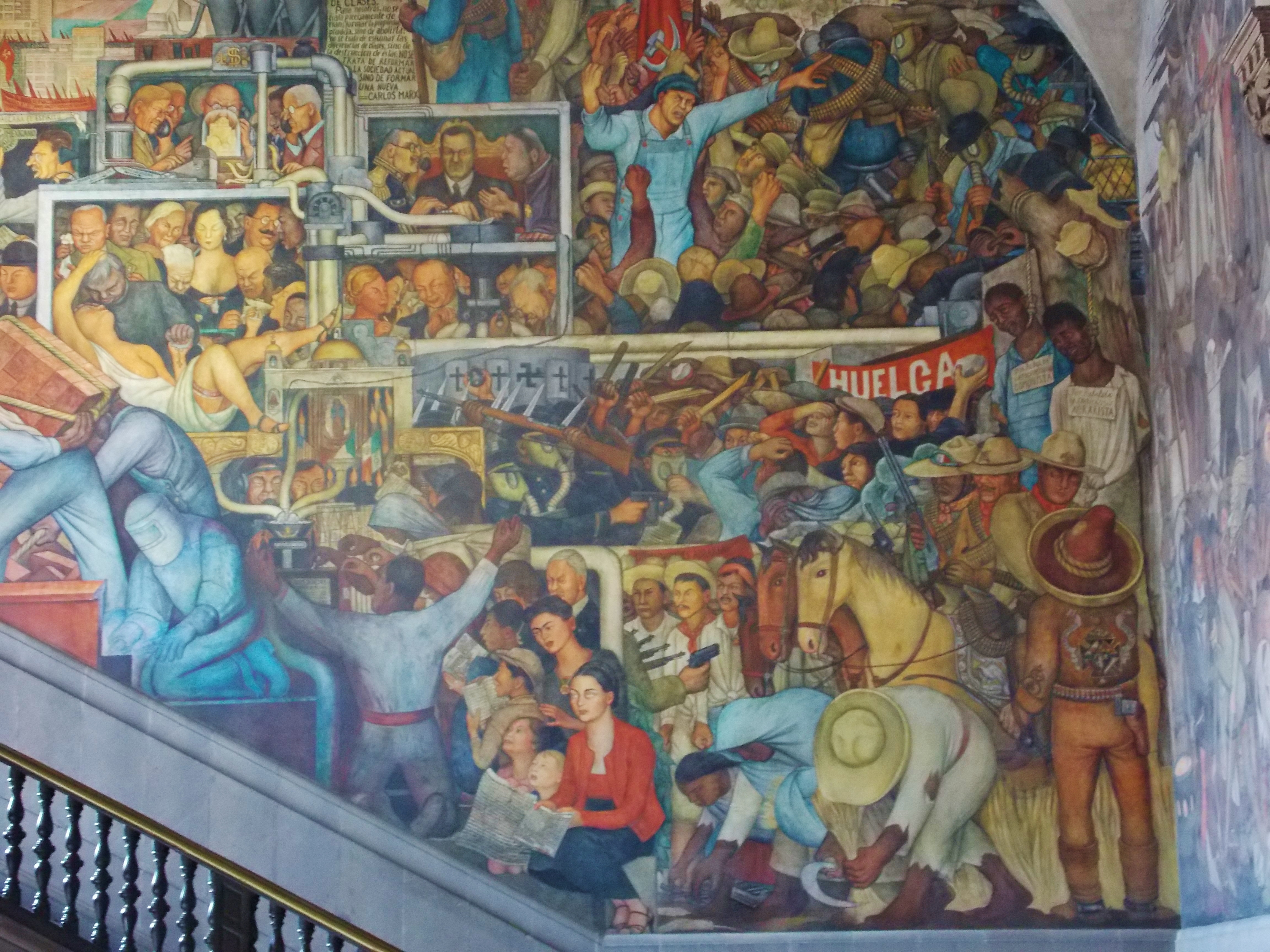
Part of the Diego Rivera mural - Palacio Nacional. Can you spot Frida Kahlo?

Part of the Diego Rivera mural – Palacio Nacional. Can you spot Frida Kahlo?

We cherry-picked a few, namely the Cathedral on the Zócalo and the Palacio Nacional, where the President’s office lies, and which houses a huge and wonderful mural on the main staircase by Diego Rivera depicting the history of Mexico – no mean feat. We followed this with the Templo Mayor, the remains of the centre of Tenochtitlan (the great Aztec city and which they believed to be the centre of the Universe). I marveled at not just the technical and engineering prowess of the Aztecs but also at the sheer audacity of the Spanish in casually razing the lot and putting a Cathedral over the top of it.

Panificadora La Vasconia - amazing cakes and iced ceiling tiles

Panificadora La Vasconia – amazing cakes and iced ceiling tiles

Before our next meaty chunk of culture we stopped at a bakery for coffee and a sweet treat (in fact Rich’s third cream horn in his time in this country – he’s quite the connoisseur now…)

The place was nothing short of a palace of cake (they’d even iced some of the ceiling tiles) and also picked up some damn fine cheese/ham/jalapeno pasties for lunch.

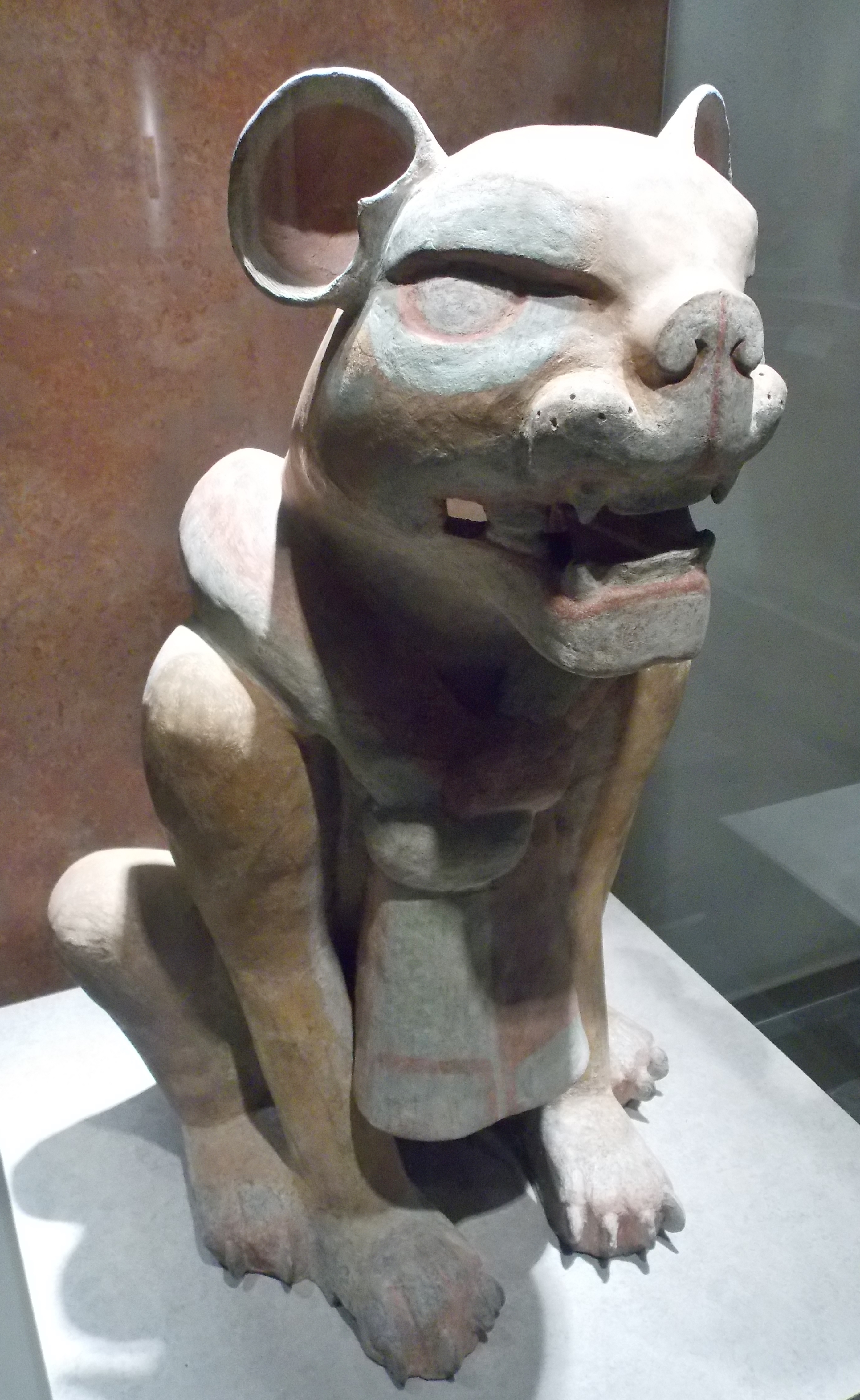
Ollie's favourite jaguar sculpture

Ollie’s favourite jaguar sculpture

Next stop was a gawp at the Palacio de Bellas Artes (just the exterior) before heading down to the Bosque de Chapultepec to visit the Museo Nacional de Antropología. The place documents all the peoples of what now make up Mexico throughout history. We started with the Maya, and continued on through the people of the Gulf Coast, Oaxaca and the North. The sheer volume and quality of the exhibits is astounding, as is the information (often also in English) that accompanies it. I was particularly struck by the beauty of so many of the objects found and the breadth of variety of cultures that came before the Spanish. It leaves you with a real sense of poignancy that such a rich history was so systematically and seemingly callously destroyed and dismantled in so few years by the Spanish. They don’t come off well.

By that point our brains were at saturation point and the rain had begun to fall so we sought shelter in a pool bar in Condesa called Malafama where I was delighted to find some red wine after weeks of beer and less delighted to be trounced at pool by Rich… We had planned to move on to a few other places in the area but the rain gods had other ideas – a spectacular lightning storm and torrential rain fell for a couple of hours while we watched from a sheltered spot with a drink in hand. Once it finally let up a little we hopped through the puddles to find a mezcal bar called La Clandestina that had been recommended to us. On arrival we found that it was full of English people, including the chaps that had told us about it a couple of nights previously. A couple of rounds later and after some chat with some expats things got a little blurred around the edges and we headed for home.

Rich standing over the ancients

Rich standing over the ancients

Mexico City is a shock to the system after beaches and sleepy mountain villages but comes recommended – you’ll blow your budget and you’ll expand your mind as well as destroy a few brain cells (if you take a liking to mezcal, that is…)

So on to Oaxaca, which the glutton in me is very much looking forward to as it’s known for being a real culinary hotspot. Before that, here are a few general things about Mexico that have struck me so far:

  • The food – Rich say he doesn’t like to write about food too much, but I do! Mexican food has really exceeded my expectations, and the variety available, particularly between regions, is fantastic. This may warrant a blog post all of its own…!
  • Social levels – it’s striking that everyone in advertising and almost everyone on television looks very European. The smart areas of DF reflected that as well. It seems that the mestizo majority, followed by indigenous groups are more invisible in the media and in how the wealth is spread. Many bars/restaurants have signs up stating that they do not discriminate in any way but it seems that perhaps this does occur more generally or subtly.
  • And on a lighter note…. VW Beetles! – Apparently Mexico was the last country to continue producing the old-style Beetles, well into the 1990s in fact. As a result, the country is full of them, often in fantastic condition and pimped up. These have been an unexpected but great visual highlight in the streets!


1 Comment

Uruapan – Riding horses up Volcán Paricutín, the ruins of Tingambato and the Parque Nacional de Cupatitzio

Ollie and the sneaky Nigel  #hoptgf“But we’ve never ridden horses before.  How are we meant to ride them up a volcano?”  This was a good question from Ollie when we were thinking about taking a trip to Angahuan to visit Volcán Paricutín.  That is a problem for future Rich and Ollie I said, so we decided to take a bus to Uruapan, Michoacan.  There was a heavy US State Department warning about all non-essential travel to this particular state due to the mayor having only recently been assassinated, but we thought that us being neither a government official or Americano, it mattered not.

All the pics, without the rabbit, click this

Our balcony view of the plaza

Our balcony view of the plaza

The bus to Uruapan was 4 hours from Guadalajara, driving through the Central Western Highlands of Mexico.  I know I keep saying this about Mexico, but this landscape was absolutely incredible.  The seemingly never ending green hills frame the landscape as we zipped up and down towards Uruapan, driving through some remote Purepechan towns on the way.  Arriving in Uruapan, a quick taxi ride takes us to the Central Plaza, where Ollie sniffs out the cheapest accommodation on the block at Hotel Colonial for M$200 a night overlooking the main plaza, while I sit in the plaza with the packs, watching the locals watching me.  The hotel being rough around the edges we decide to have a couple of drinks before an early night.

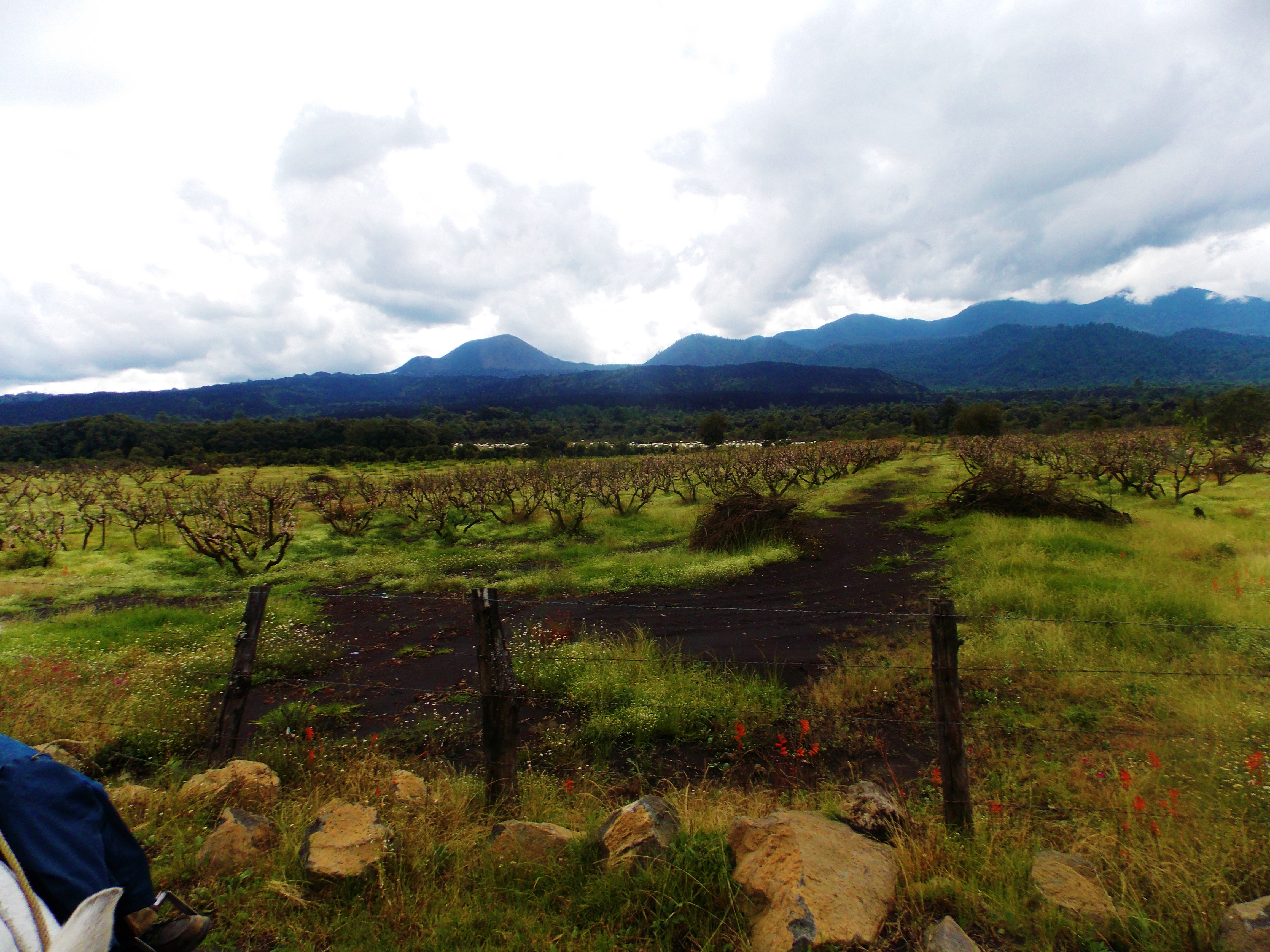
Volcán Paricutín appeared in 1943 out of nowhere and rose to 410m within a year.  This area of the highlands is populated by the Purepechan people and they all managed to escape with their lives, but the lava flow decimated two towns. The volcano then continued to grow until 1952, where its black cone still looms over the landscape at 2800m, still smoking in places, with two smaller ones next to it.   There are visible ruins of the church form one of the villages, sticking out of a lava flow still which we also intended to visit on our trip.
Ollie and Benito set off

Ollie and Benito set off

We took a bus to Angahuan, 1 hour out of Uruapan, and before we knew it we were greeted by some locals who had us on horses on moseying on towards the summit, after agreeing the price of M$900 for both of us for the day including a local guide, Benito. (It is impossible to be on a horse and not use words like ‘mosey’ or tip your hat in a way of greeting people.)  My horse, ‘El Capitan’, was a moody bastard but after some disagreements, we understood each other.  Ollie’s horse was smaller and I named him Nigel.  Mainly because he was sneaky, and continually wound El Capitan up.  The trip took us 2¾ hours through the pine forests of the highlands, with the

Approaching the Volcano

Approaching the Volcano

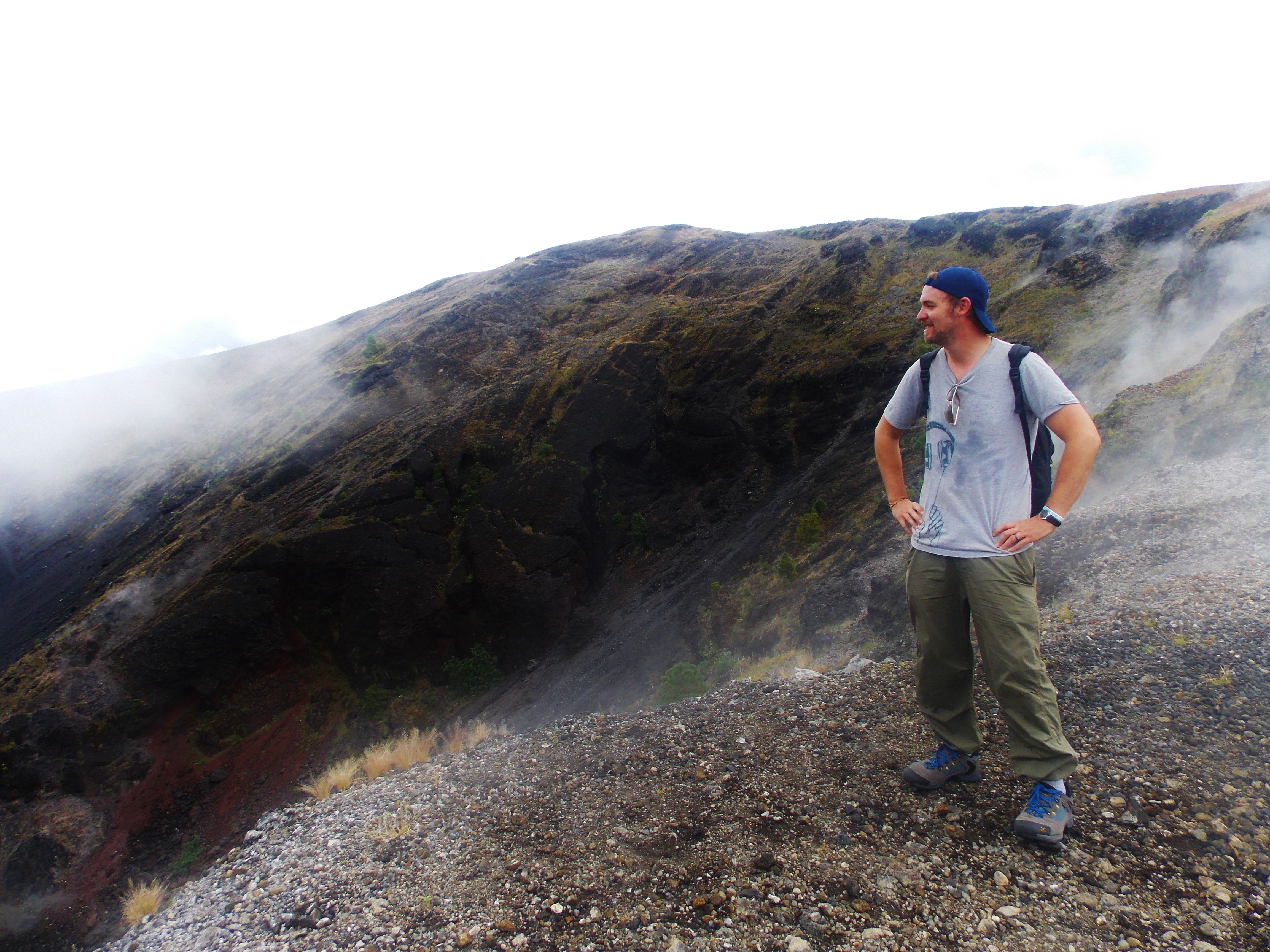
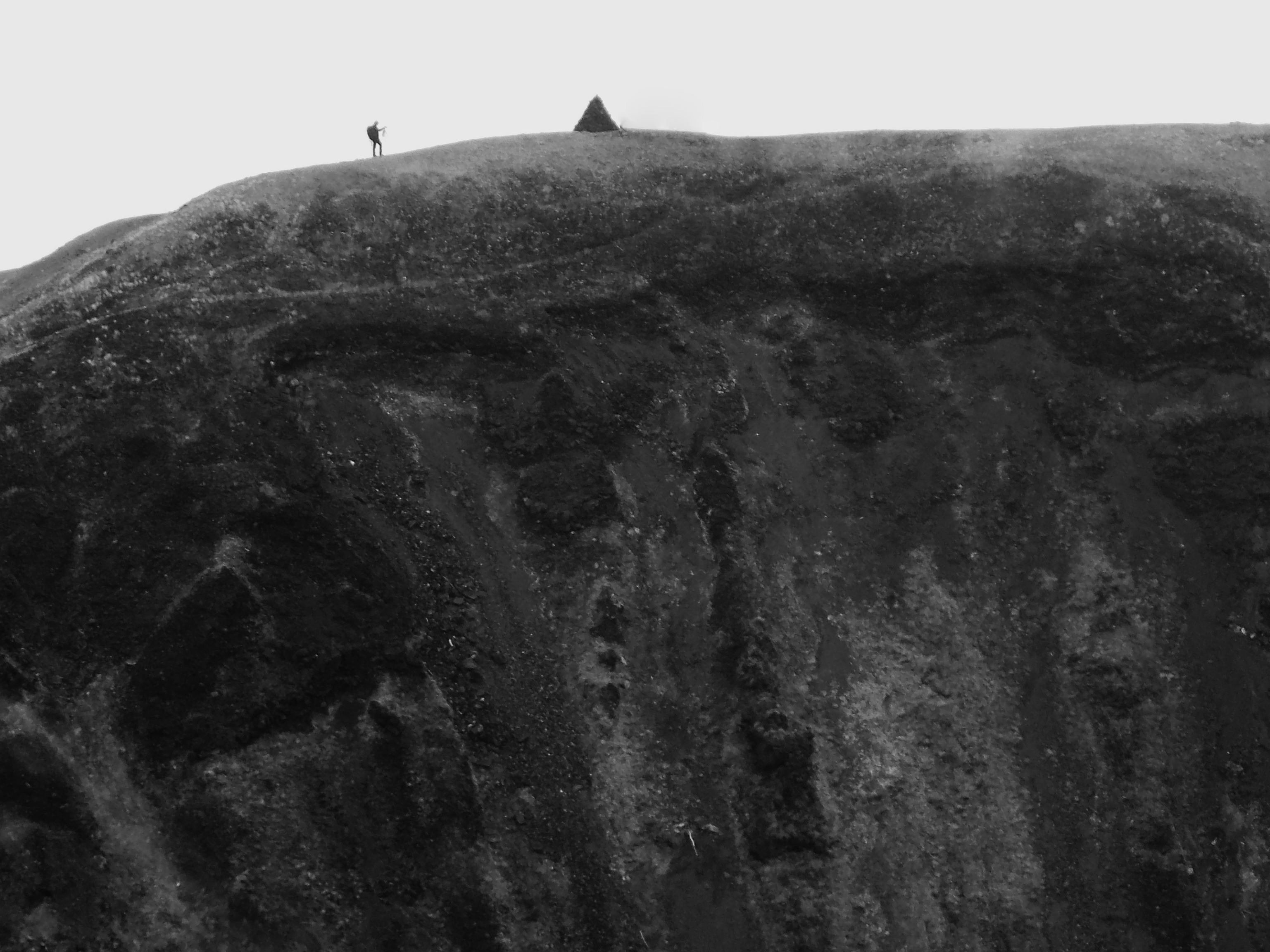
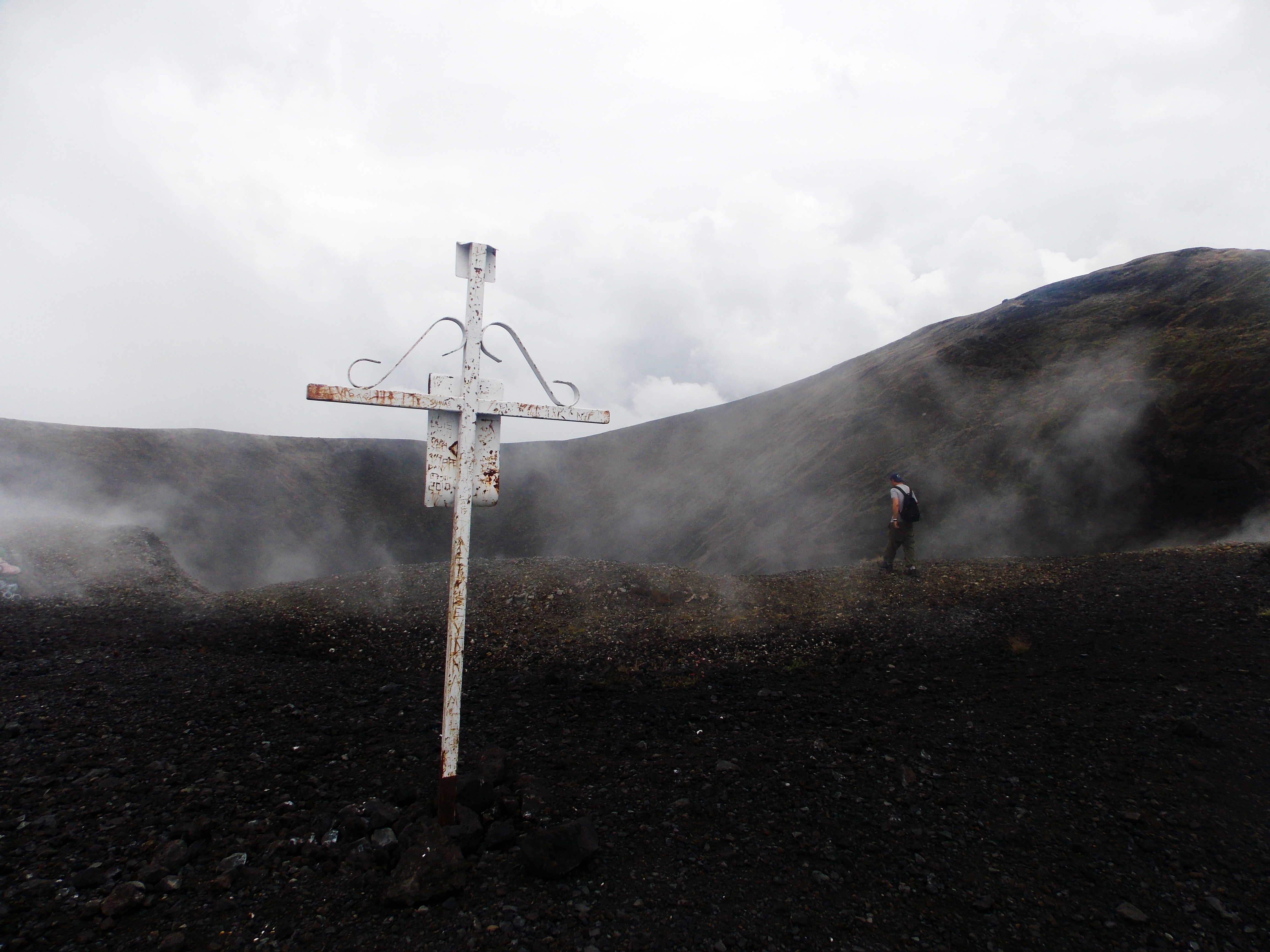
ground turning to black volcanic ash as we got closer.  The saddles were wood with a wafer thin strip of leather covering them, making the ride torturous at times.  When it was time to get off, about 300m from the summit, our bodies hurt in most places, but we were soon attacking the back of the Volcano with Benito showing us the way.  Passing through various steam vents, where the rocks all around us were hot to the touch and the floor felt hollow, he soon had us scrambling up a treacherous rocky slope, ignoring the set path.


A strong beast  #hoptgf In amongst it  #hoptgf

Getting a feel for the steam

Getting a feel for the steam

Starting the ascent  #hoptgf

A long way to go  #hoptgf

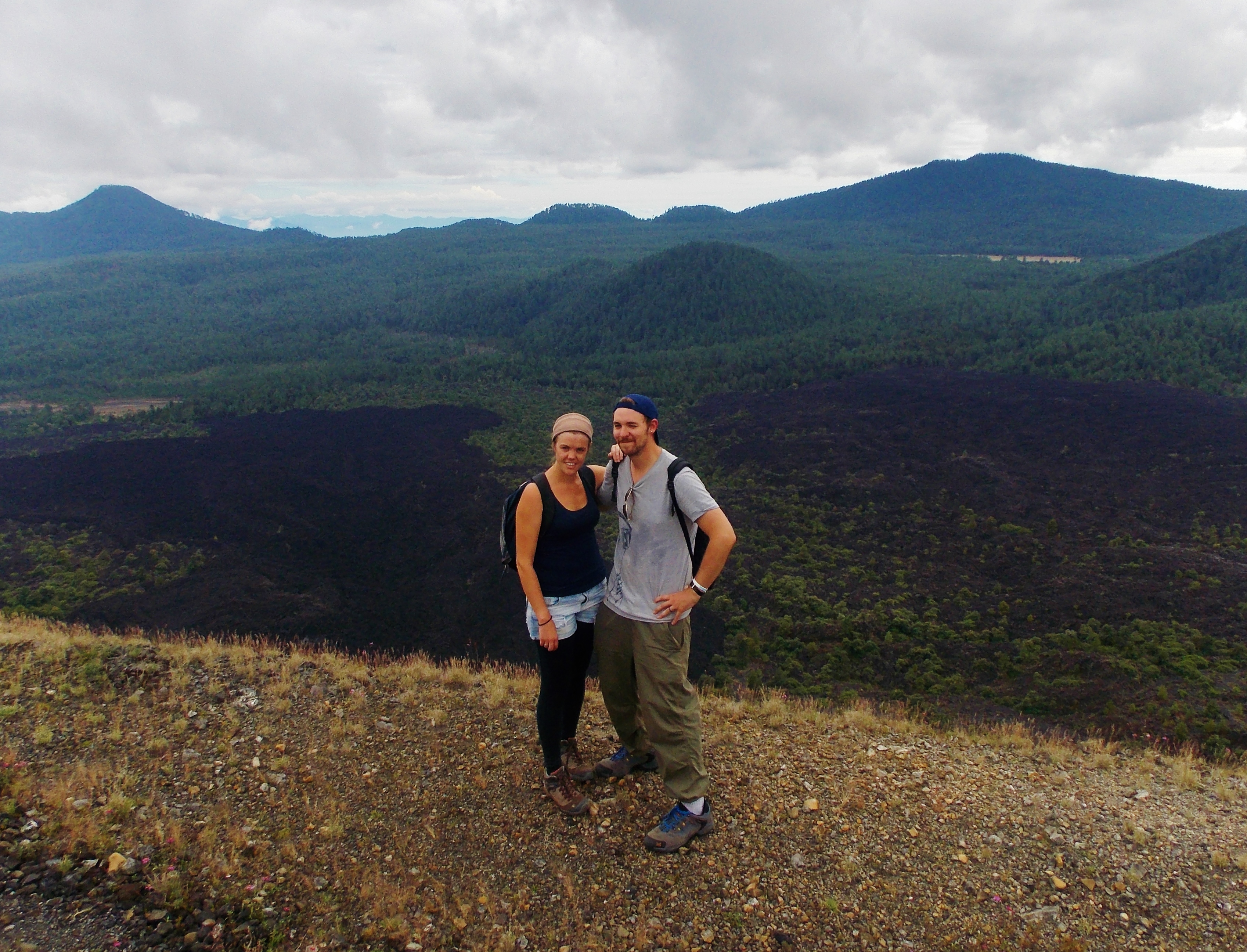
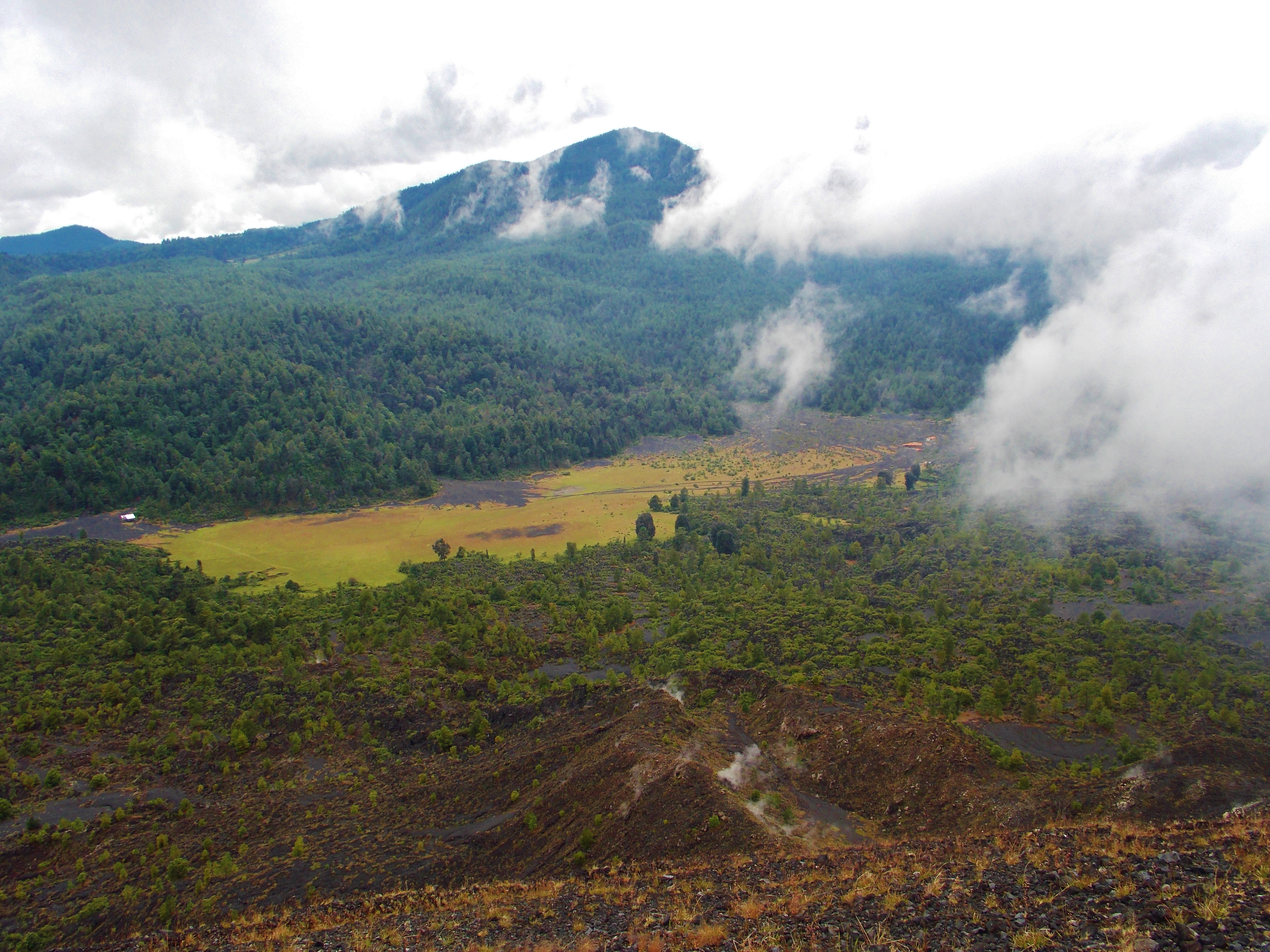
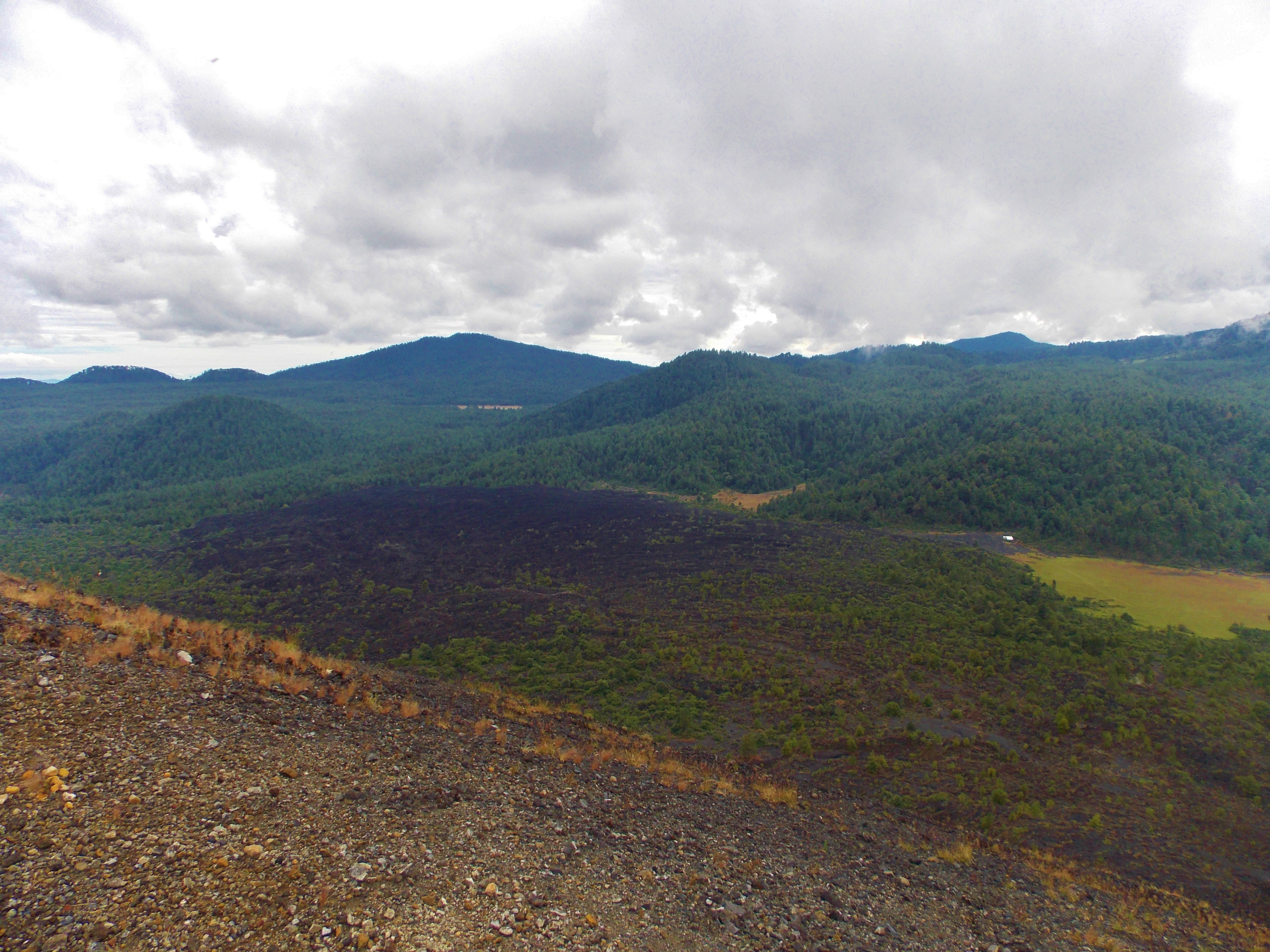
The view from the top was stunning, like a scene of a Tolkien novel, but with fewer Orks and more beauty.  The ground below was a black cooled lava field, with steam seeping through, but this would then relent, giving way to fields of green before reaching another black mound.  There was so much steam and cloud, it was hard to tell which was which.  After admiring the view from the top, it was time to descend and we almost skied down it in shoes.  It was great fun.

Relieved to have made it to the top  #hoptgf Mordor    #hoptgf Aware that we are quite close to the edge  #hoptgf More lava field  #hoptgf The summit of Paricutin  #hoptgf Smaller volcano at the bottom  #hoptgf Lava field  #hoptgf Cross from a miracle working bishop who stopped the lava in 2010  #hoptgf So is she  #hoptgf

Templo san huan parangaricuto

Templo san huan parangaricuto

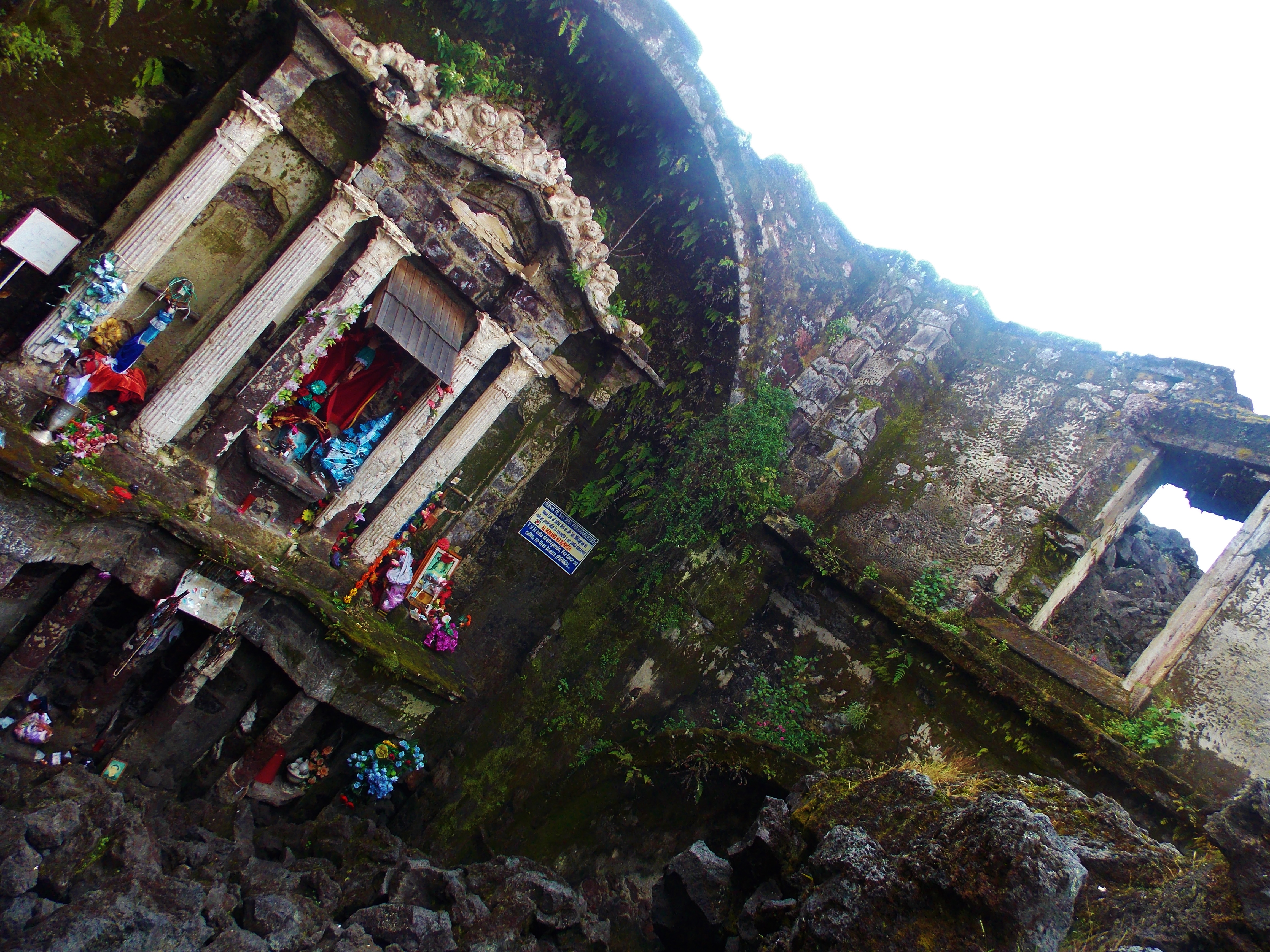
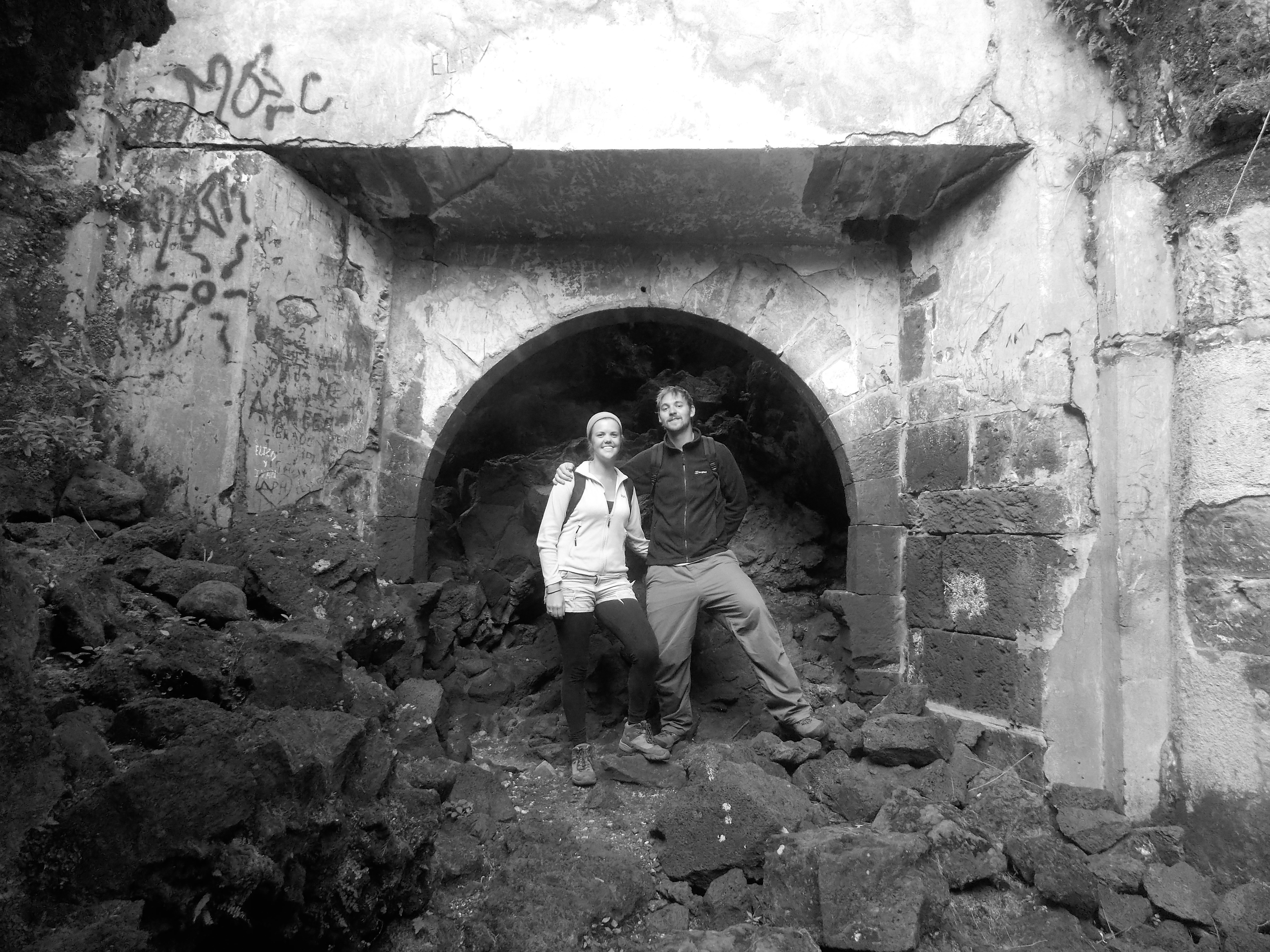
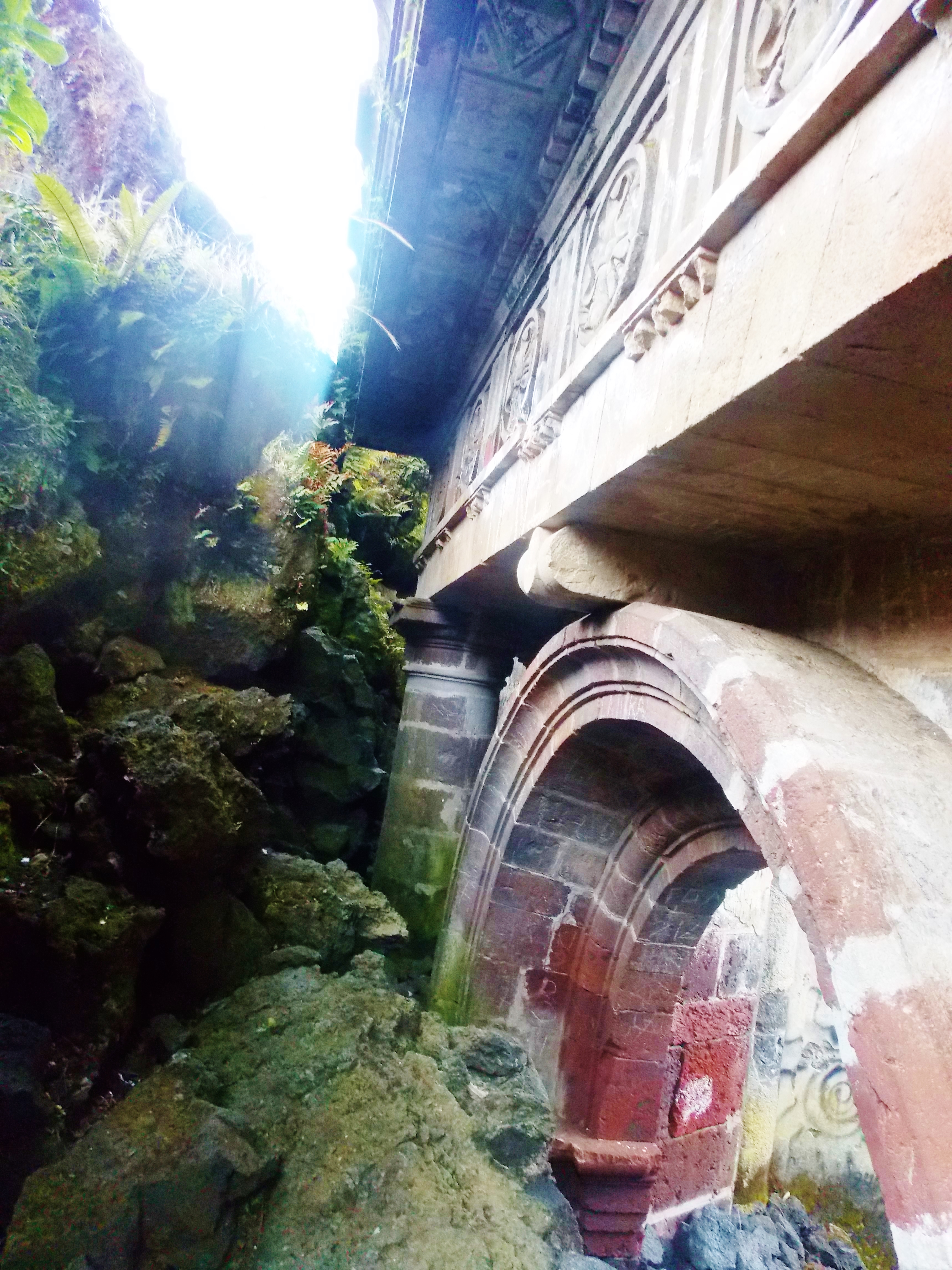
Back on the Captain and Nigel, we headed for the San Juan ruins of the Templo San Huan Parangaricuto.  After couple more hours, passing through the landscape of ash and pine, which soon turned into fields of avocado trees, the spire of the church was visible.  Benito took us on a tour over the black solidified lava to the church spire and through the doors, which were only just about visible.  The only other part of the church that survived was the altar.  The lava had come to a miraculous halt just in front of it, where it remains today, covered in decorations from the locals who still go there on holy days.  We both agreed that this is one of the strangest things we had ever seen.  After a quick quesadilla made with blue corn by a local Purepechan lady on top of an oil drum skillet and washed down with a  beer we were back in the saddle of pain and soon back to Benito’s village, where the local language is Purepechan.  We moseyed back into town, observing the local ladies in their colorful dresses and long platted hair carrying wood or babies, while children ran riot in the street. The air was filled with the smell of burning wood and the sounds of a woman’s voice in the native tongue announcing that she had rice for sale.  We said our farewells to Benito and hopped a mini-bus back into Uruapan for an early night.

Entering the church #hoptgf

the altar where the lava miraculously stops

the altar where the lava miraculously stops

Templo San Huan Parangaricuto,   from what was once the inside #hoptgf Inside #hoptgf Stone and lava #hoptgf about to fall on our guide #hoptgf Were once windows #hoptgf

The next day, we woke, unable to move.  Getting out of bed was almost impossible, but we headed to the Hotel Victoria, to have some coffee, eggs and a chance to exploit their free wi-fi. (The only place in town we have found where there is wi-fi, if you are planning on visiting and staying somewhere without…like us)

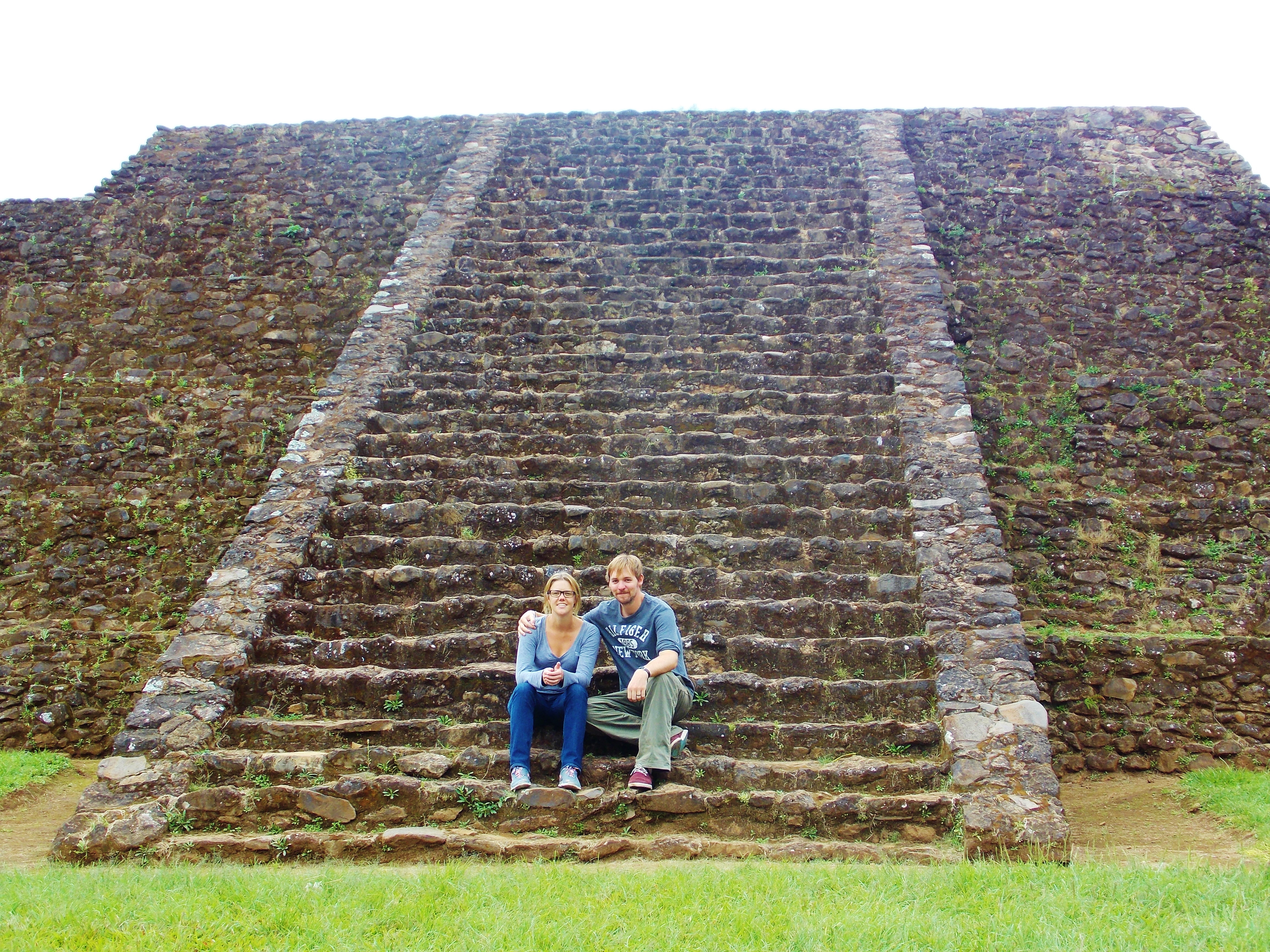
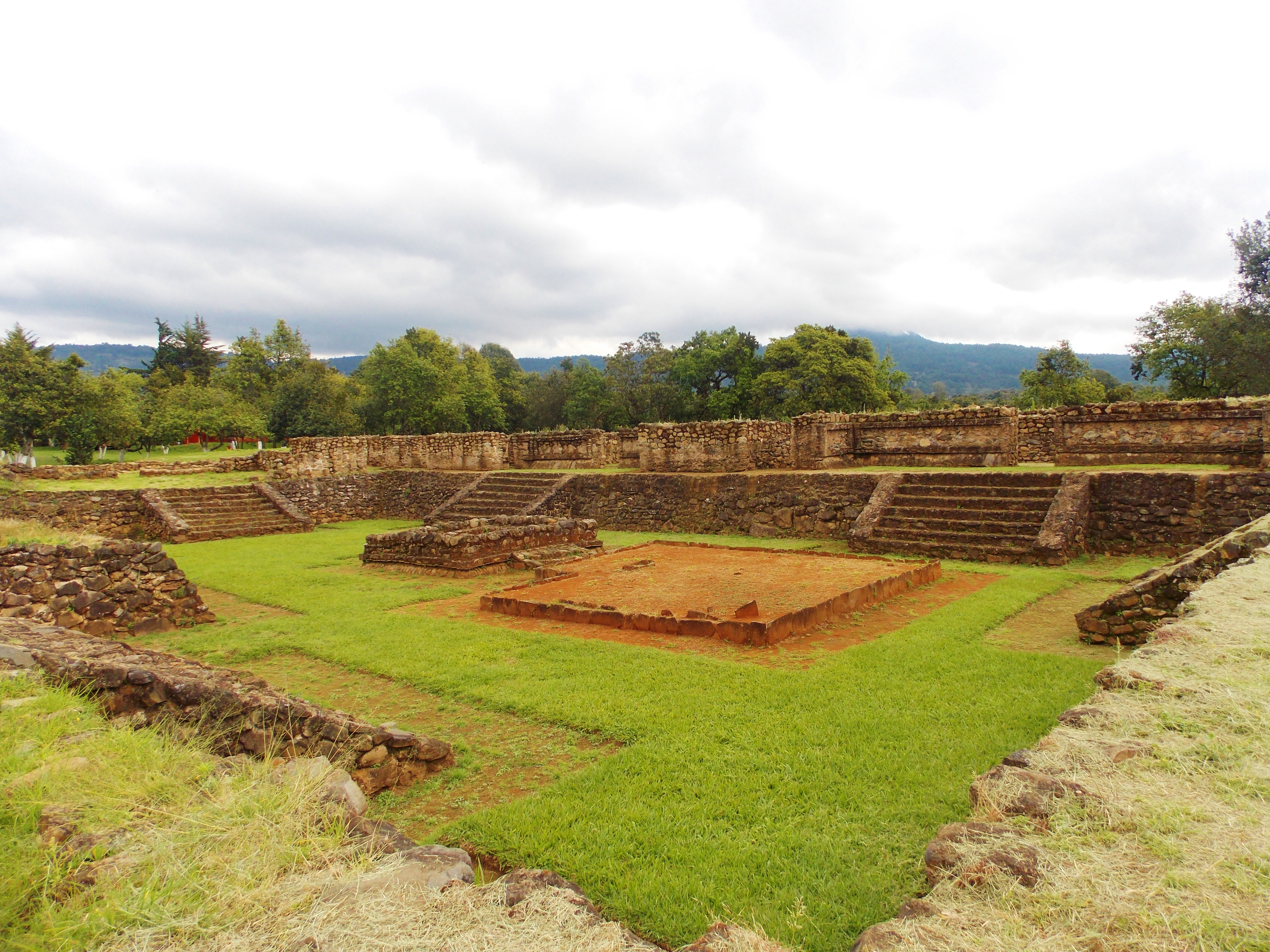
Moon pyramid of Tingambato ruins, #hoptgfAfter 5 cups of coffee and some damn fine eggs we got a bus to the town of Tingambato to see our first ruin. A beautiful little town set on what I would call the slope of a valley, with the ruins site at the bottom of the hill. The site is small and dates from around 450AD. But is well preserved and wonderfully kept.  We were the only people there so had freedom to wander around in peace.  Soon we decided to walk the mile back up hill through the town where we watched the locals all eye us with curiosity and a hint of suspicion (but never anything other than friendly)

A free Mexico #hoptgf

The plaza of Tingambato ruins #hoptgf Whatever you do, don't climb on the ruins #hoptgf

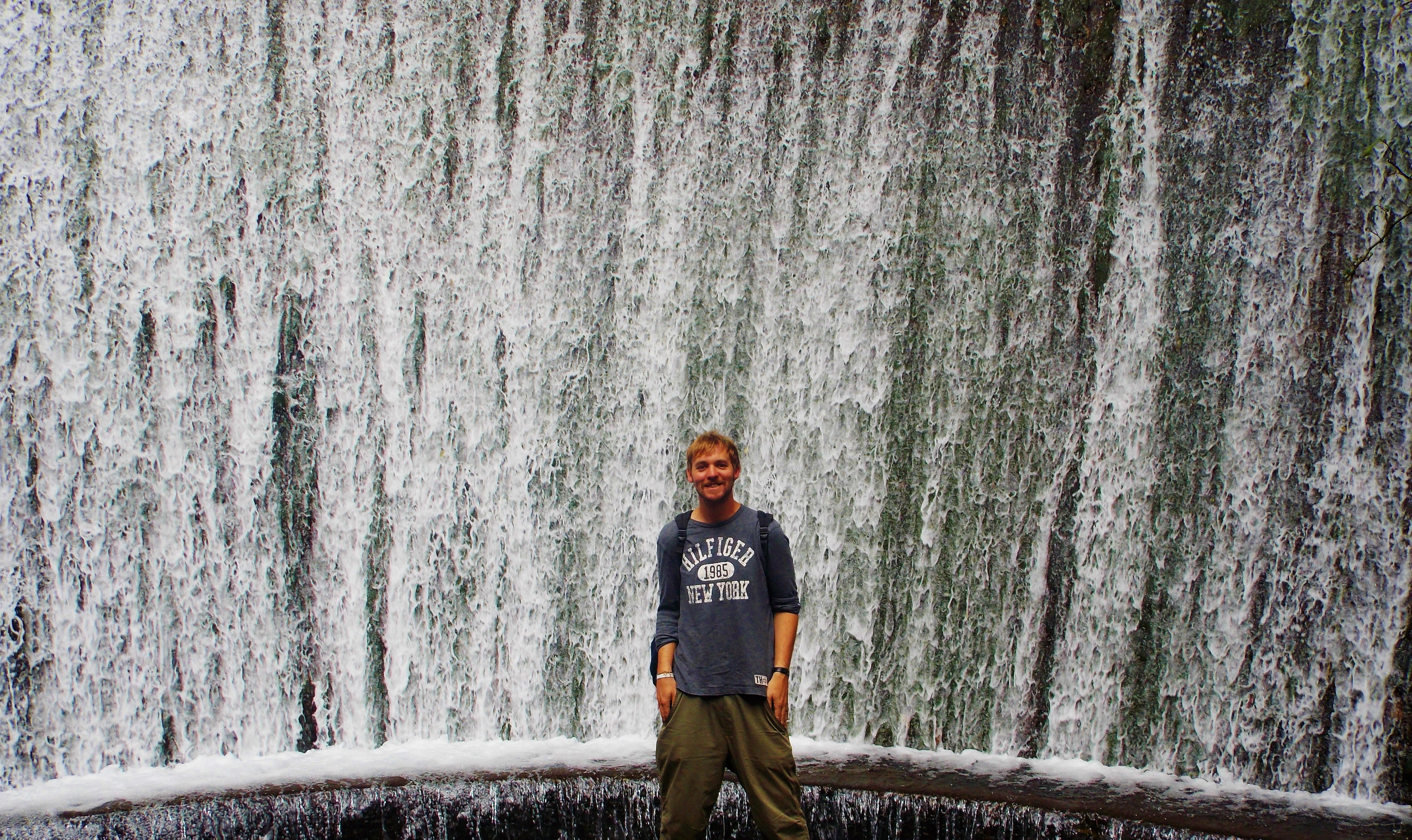
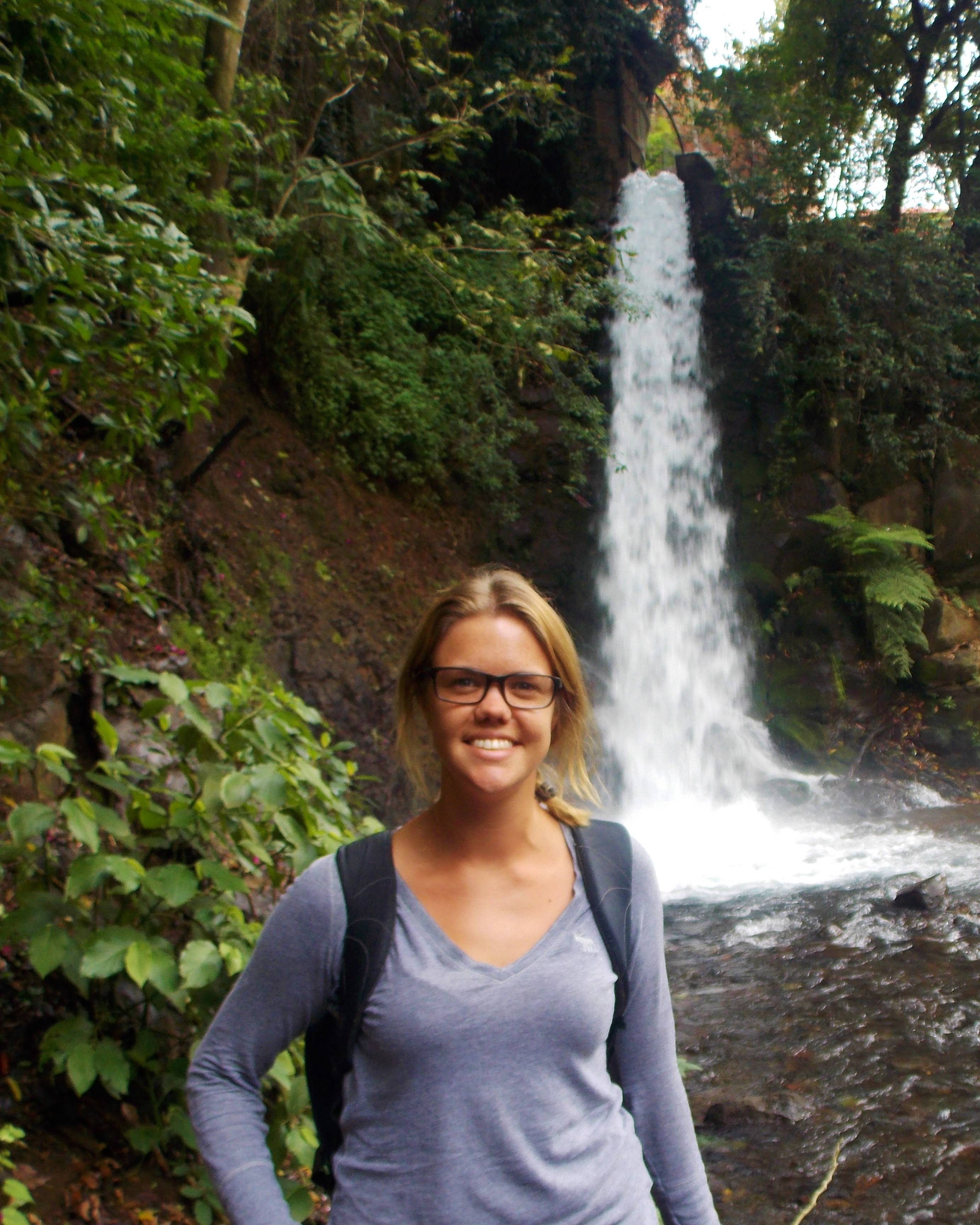
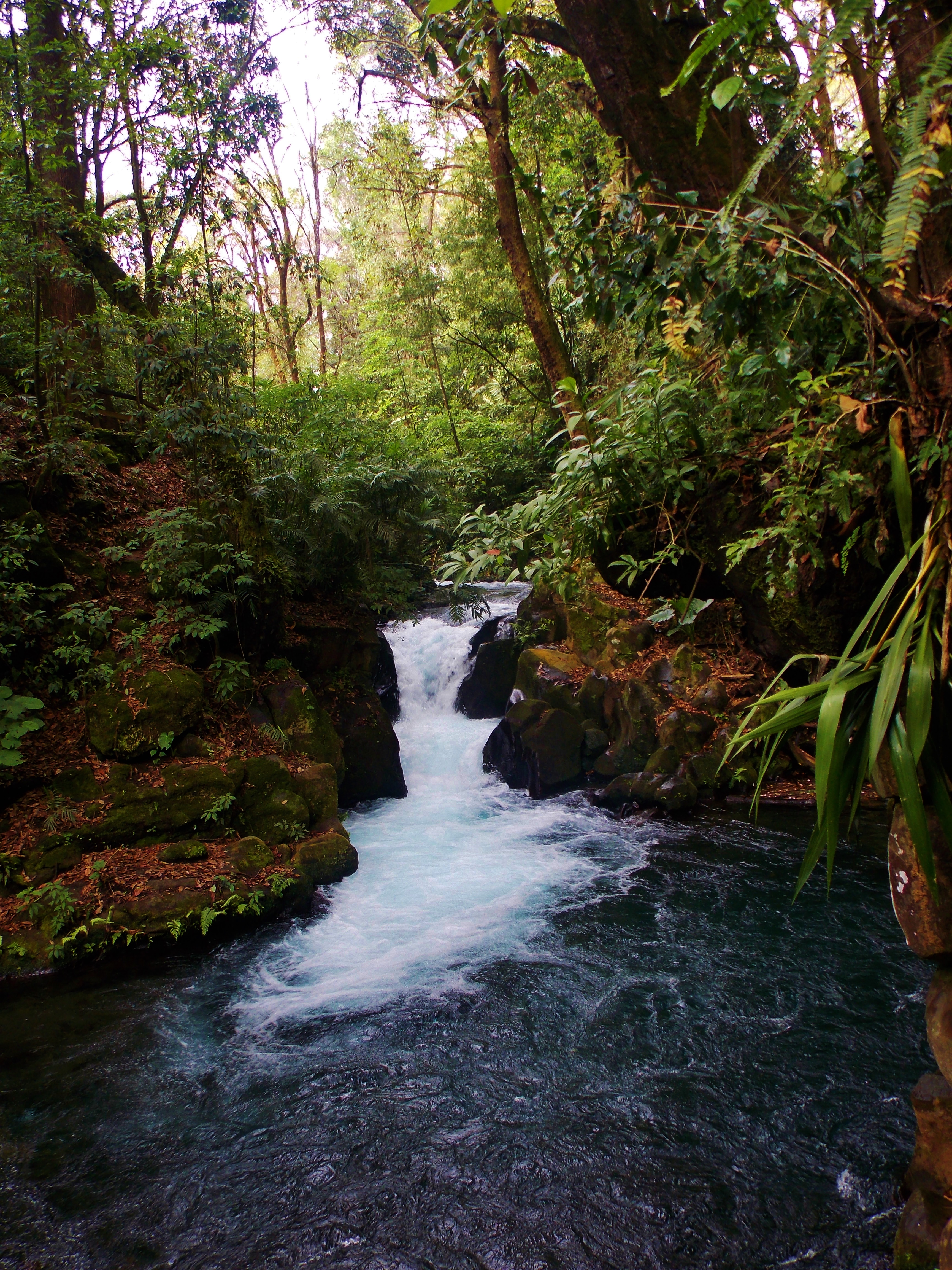
Deciding to give our aching bodies more punishment, we head back to Uruapan and for the Parque Nacional de Cupatitzio , which is only 1km from the main plaza.  Paying the M$25 gringo fee to enter, it’s like being in another world.  The river Cupatitzio thunders through in a series of waterfalls surrounded by tropical plants that cover the canopy above.  The locals get in free, and were out for a Saturday stroll taking photos in front of the many man-made water features.  If you were a kid, this place would be heaven.  It’s enormous and has endless areas to hide in.  You can get genuine peace and quiet here, despite the sheer amount of people walking around.  After losing a couple of hours wandering around, we decide to head back to back to our uncomfortable beds and rest our aching limbs in preparation for the journey to Mexico city

Parque Nacional de Cupatitzio #hoptgf One of many water features Nother waterfall shot, Parque Nacional de Cupatitzio #hoptgf The waterall shot, Parque Nacional de Cupatitzio #hoptgf

Rio Cupatitzio #hoptgf

Uruapan was a wildcard destination, and turned out to be spectacular.  It is certainly off the gringo trail of Mexico, but if you decide to go, you will be handsomely rewarded for the effort.

Calle Independencia, Uruapan

Calle Independencia, Uruapan

For all the pics, click here