

Painting of the Vista al Lago hostel and lake Suchitlan
Whilst Ollie was spending her time bobbing around with the turtles and the trumpet fish on Roatán, I found myself with quite a lot of spare time. I decided to plan our trip through El Salvador, including the public transport options. The buses are all numbered chicken buses and seemed to run on a pretty reliable and cheap network. So we set off to get a bus from Copán in Honduras to Suchitoto in El Salvador. As the crow flies, this is not a long way.
For just the full photo gallery, click here.
We started our journey on a 7am and after two cold bus rides through the moody Honduran landscape we found ourselves at the El Poy border. An uninterested Honduran official stamped us out with not so much as a grunt, we changed some money to US$ (as that is the currency of El Salvador since 2000), wandered through an army of stationary trucks (that we later found out were blocking the borders to vehicle traffic in protest at a new tax) and were then met by a small El Salvadoran official who greeted us warmly and welcomed us to his country. He showed us the way to the immigration office where we were met with another friendly official who took time to find out where we were going and told us to take off our fleeces as it was warm in his country. Already, we felt welcome in El Salvador.

Bienvenidos a El Salvador
Walking through the peaceful border we hopped on a #119 bus which chugged along for around 2.5 hours through the handsome town of La Palma and some other red tiled roofed communities stashed in the north of this hilly little country. We were soon off this bus and standing by a strange road in Aguilares, with no sign of the bus I knew we needed. We asked many people, including the child vendor Ollie nearly gutted with her pack dismounting the last bus, where the next one would stop. They all told us to wait where we were. The bus didn’t come so after 40 long minutes and after many hopeful cigarettes smoked (the theory being when you light a cigarette, your bus always comes) we followed another local’s advice who directed us through the heaving market. Packs getting heavier in the heat of the sun and the desire for a cold beer and a solid recline growing by the minute, the goal seemed out of reach. We finally found the #163 sitting there tucked away one block away, after we had of course done a lap of the market.

Iglesia Santa Lucia over Park Centenario
Suchitoto, our first overnight stop, was accessed by a pleasant 50 minute bus ride away from the chaos of Aguilares, west-bound through the peaceful countryside framed by the sun-kissed peaks of long extinct volcanos and hills. Arriving at about 5:30pm we were greeted by a colourful cobbled street colonial hideaway that overlooks a large manmade reservoir, Lake Suchitlán. We headed for our desired lodgings, Hostel Vista al Lago, which does indeed have a view of the lake. They were out of rooms, but the mother of the family-run hostel offered us her emergency room (a cupboard with a bed) for the night until a better option became available. Arrested by the stunning view of the sun setting over the mountains and the lake we happily agreed and tucked into a few bottles of the local brew called ‘Pilsner’ which tastes fine when ice cold and having done a 11 hour bus epic.

Our first view of Lake Suchitlan, El Salvador
This town, combined with the view from our room that we finally got, was the perfect combination for rest and relaxation. It’s an easy going place, and feels like it is El Salvador’s push for colonial town tourism. Except, there were not many foreign sightseers around. A few pasty Americans, who I assumed were on some kind of church/mission trip, were really the only tourists we saw.

Cobbled streets of Suchitoto

Bright colours of Suchitoto
We took a walk down to the quaint little tourism port of San Juan one morning, where they have a selection of restaurants, full of El Salvadoran families, and spent the rest of our time in the town just admiring the colours and taking in the tranquility the place seemed to ooze. A solid local market kept us in bananas and avocados and the town had a few excellent options for coffee so, we were set for three days…which turned into four. We spent one night out with an Aussie couple, Josh and Anna, who we swapped stories with over pupusas and tinnies in the town square, but the remainder of time was spent outside our room overlooking the captivating lake below us. We were going to visit a nearby waterfall, but it was the dry season, so it was not…erm, falling.

Puerto San Juan

Lake Suchitlan pose

Lanchas for hire on Lake Suchitlan

Zip line from main land to island
Pupusas are our favorite new thing. They are El Salvador’s way to serve beans and cheese, but instead of using the corn to make tortillas, the pack the ingredients inside the corn dough and then grill it, resulting in a cheesy, beany dough pocket, which you cover with chili sauce and pickled veg. We were dressing them like a pizza and eating them with cutlery until we observed locals eating with fingers and dipping/scooping their way through meals. At less than $1 a go, they are a fine backpacker snack.
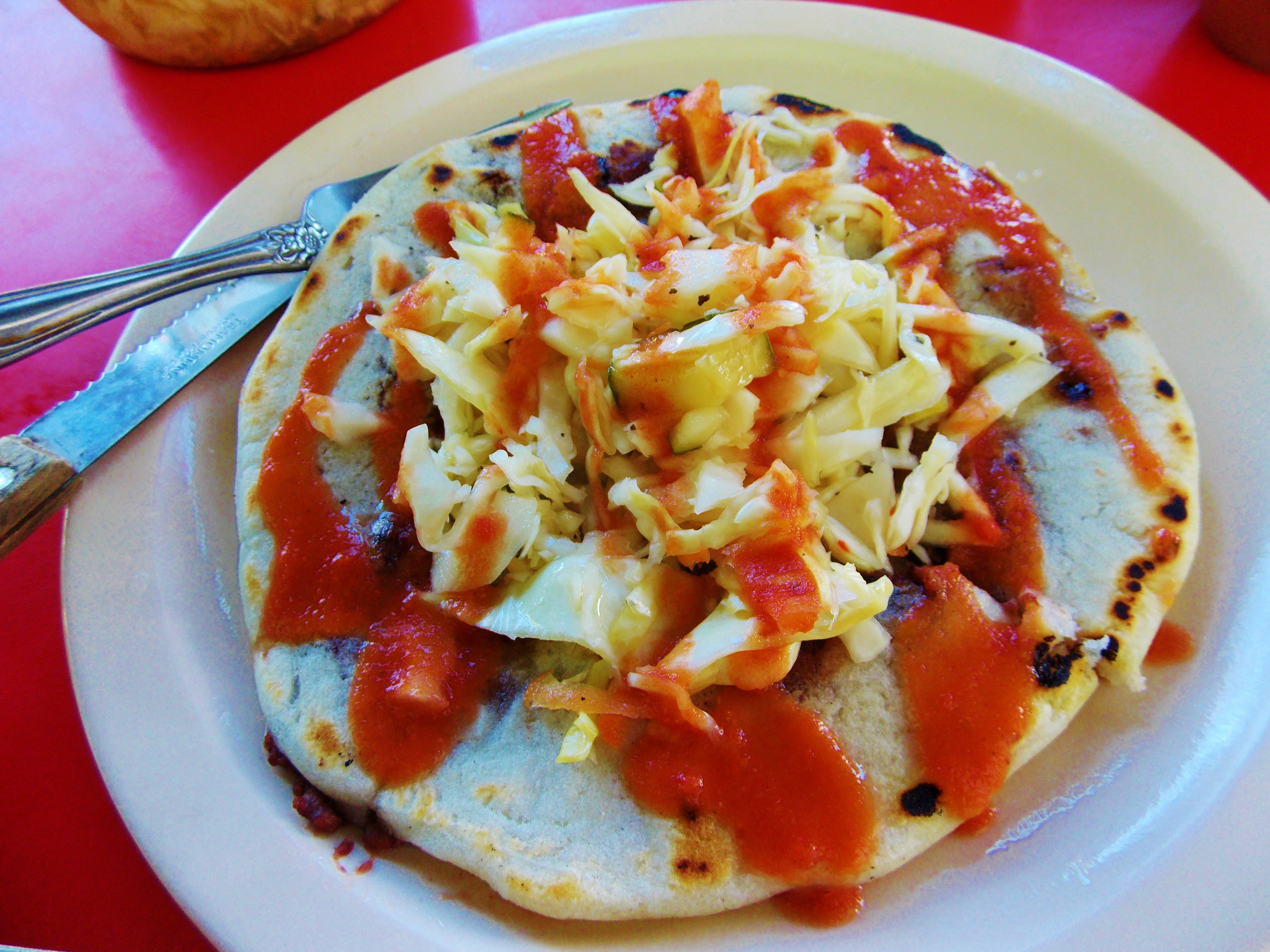
Not the traditional way to dress a Pupusa, but, it looks pretty

The Pupusa lady, she was awesome
This town is beautiful and you can really slow down here. I would go as far as to say my favorite stop so far on our whole trip. For our first experience in El Salvador, we certainly felt spoiled and had high expectations of the rest of the country.

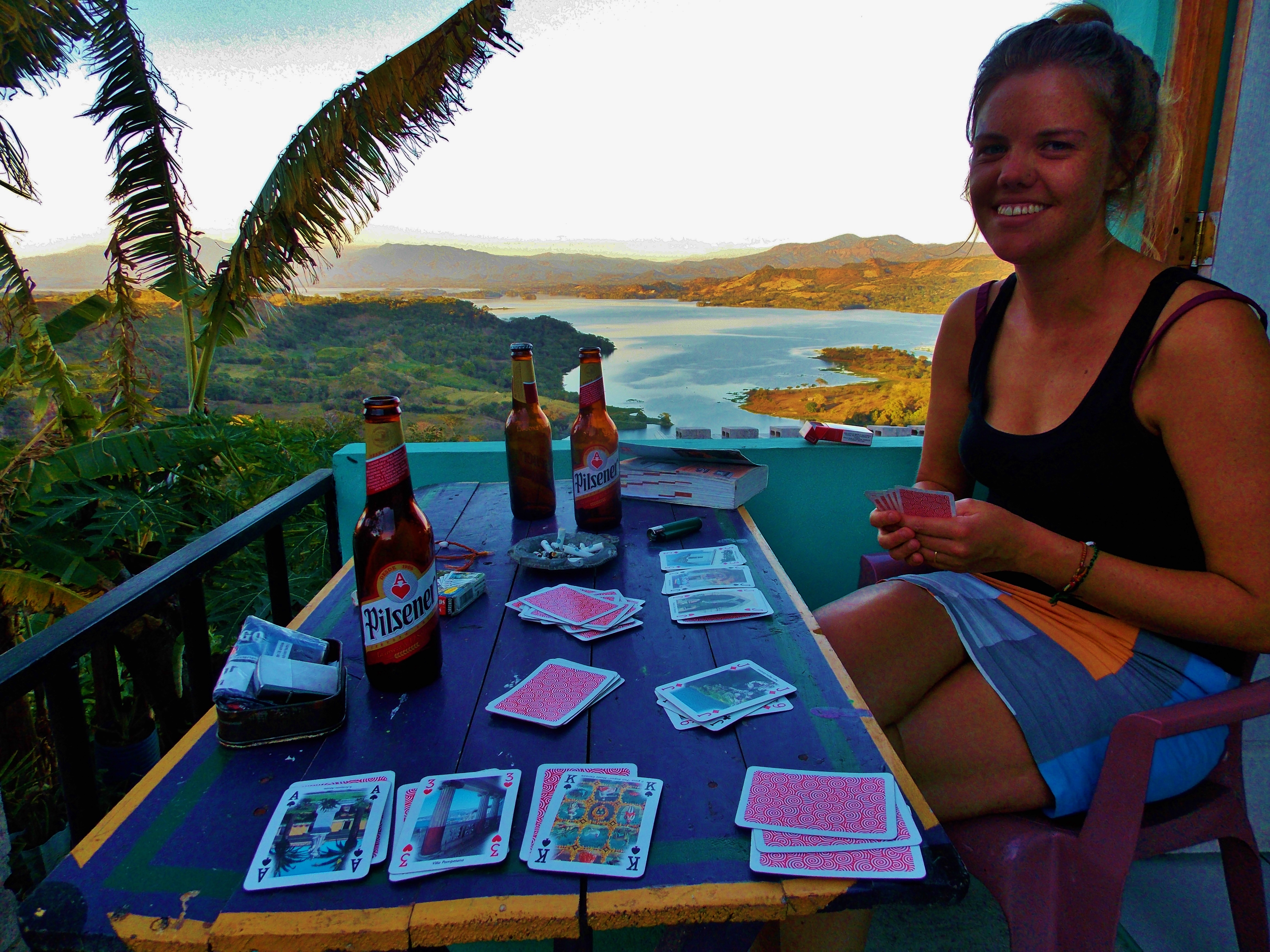
Our view at Hostel Vista de Lago. We got a better one the next day!

Anti Domestic violence stencils are outside most houses in Suchitoto

Santa Lucia at dusk
The day came to leave and we reluctantly jumped on a bus back to Aguilares, to continue the journey cross country to Santa Ana, El Salvador’s second city. It’s probably about 40km to the west of Suchitoto and I planned a route across country on three local buses to save time. Let me just say, I was not completely wrong, but one of the buses only goes once a day, so this journey turned into four buses over six hours. (If you’re planning this trip, just go to San Salvador and back up, faster and cheaper.)

Santa Ana, El Salvador
Eventually arriving in Santa Ana we were dropped off in the extreme south of the city, with no cabs in sight so started walking in the rough direction we thought we needed to go, until we were stopped by a local in his car advising us about walking a in a certain direction. He conceded we had to keep walking that way, but make sure we don’t stop. A busy local market scene confronted us with everything you can think of on sale, with all of the foul smells and soft underfoot feel to boot.
Casa Verde doesn’t have a sign, it’s just a green house, in a road full of different coloured houses. We walk into this gringo compound and are confronted by a group of middle aged Europeans in their pants eating watermelon and drinking red wine. It was a confusing moment to say the least and a bit of a contrast from the grubby streets of Santa Ana. However, the local owner, Carlos apologised for his lack of rooms (no apology needed!) and showed us to our dorm beds, whilst giving us a tour of his bachelor pad that any lad could only dream of. Along with the (clean) pool he had two incredible kitchens, free coffee for guests that you had to grind yourself, as well as a wine cellar and cheap frosty beer (it was Pilsner, but hey). I could go on, but just look at the Trip Advisor.

Street of Santa Ana
We had some drinks with other guests while the older German lady moaned about the Finnish (we think they were Czech) who were using the kitchens at all times in their pants without the decency to have a nice body. Up on the roof terrace at night, the city is dead. No sound at all from the second largest city of El Salvador gives a slightly eerie feeling, yet the endless vista of red tiled roofs under the moonlight with the cathedral poking out above all is a pretty special sight.
The next day, we ventured out to explore the town centre, and after quite possibly the cheapest breakfast ever of five pupusas for $1.30 at the side of one of the city squares (the trade-off being however that you must eat with about 30 El Salvadorans gawping at you throughout the entire meal) we checked out the neo-gothic cathedral as well as the sprawling central market that sells quite literally anything you could need. The city is hot, possibly too hot for us, so we retreated to the hostel to cool down.

Parque Mendez, Santa Ana. Great spot for Pupusa breakfast
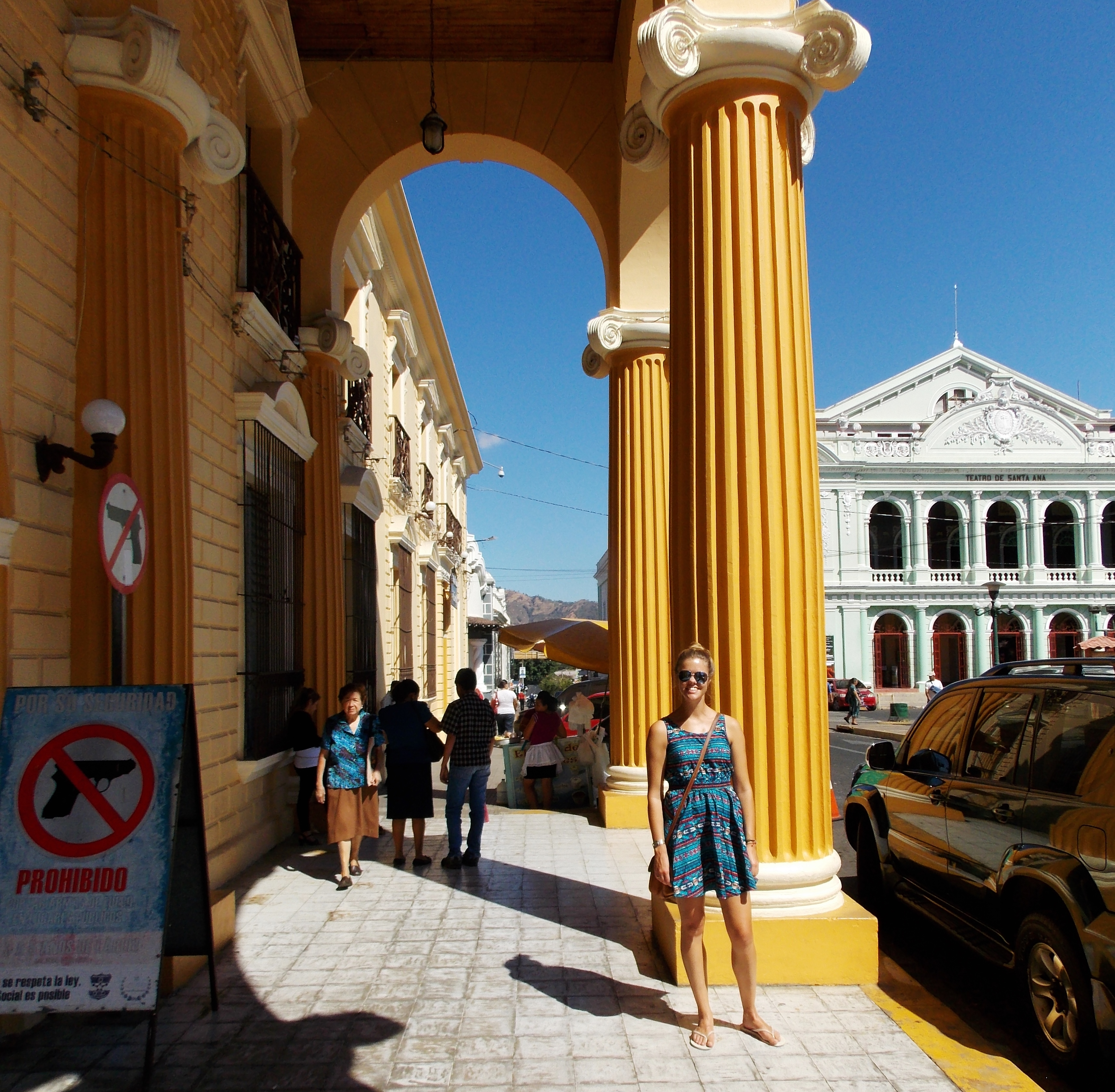
What, no gun? In the government offices? Outrage!!

Parque Libertad Santa Ana
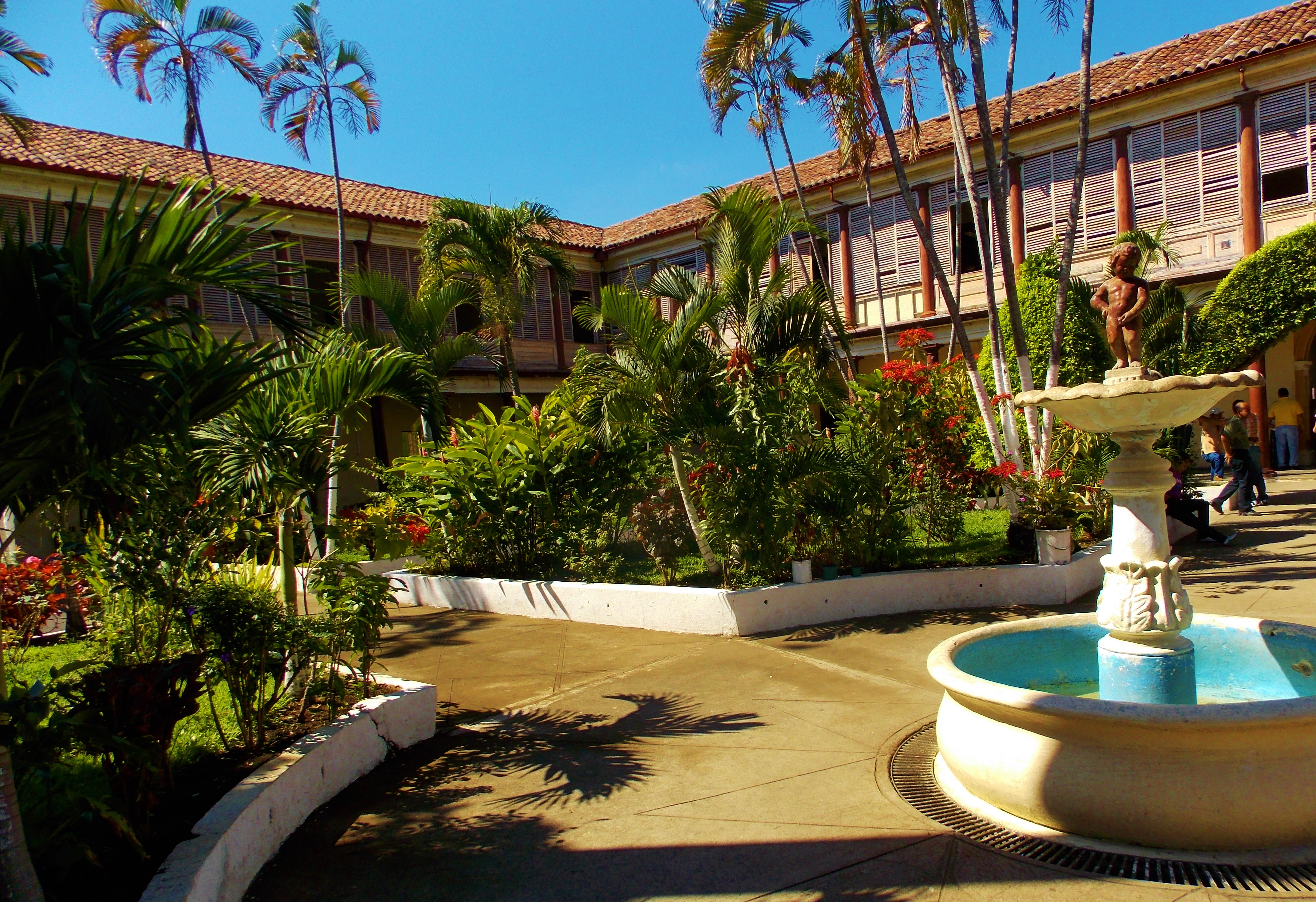
Inside the Alcaldia, Santa Ana

Catedral Santa Ana
Since crossing the border we have been amazed by the friendly nature of the El Salvadoran people. Of course the children stare at you like you have come from Mars some times, but everyone is incredibly friendly and most will greet you when you catch their eyes, in the places we have been anyway. Stark contrast from Honduras, our experience crossing the border is a perfect example of the two countries attitudes towards tourism. Despite being classed officially as one of the world’s top five most murderous countries, we have felt nothing but safe so far. There is an excellent tourist police visible and willing to help, as well as (so we’re told) one of the most effective and corruption free police force in the Americas. I just hope this great experience keeps up and so far hasn’t been a fluke. The El Salvadorans we have met want to help us, even when they have told us the wrong information about buses I get the feeling they are not being devious, they just wanted to assist in any way they can.
Thanks for reading.
For the full photo gallery, click here.






 hop on the good foot